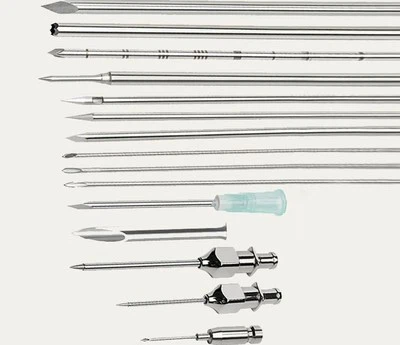
Tuohy Needles: Analyzing Precision Manufacturing And Global Quality Control Standards
Apr 22, 2026
Tuohy Needles: Analyzing Precision Manufacturing and Global Quality Control Standards
The journey of a seemingly simple Tuohy epidural needle is a precision trek spanning global supply chains, involving multidisciplinary engineering technology and stringent quality standards. From specialty alloy coils to sterile-packaged finished products, every step must adhere to a transnational philosophy of "zero defects." This article aims to deeply analyze the global manufacturing process and quality control systems of Tuohy needles, revealing how they become trusted "guardians of safety" in the operating room.
I. Raw Material Control under Globalized Supply Chains
Manufacturing begins with absolute control at the source. The quality of a high-end Tuohy needle is rooted in its raw materials.
Global Sourcing and Certification of Medical-Grade Stainless Steel: Core needle tubing is typically sourced from specialty steel suppliers compliant with ASTM (American Society for Testing and Materials) or ISO (International Organization for Standardization) standards, such as AISI 316L. Manufacturers require suppliers to provide chemical composition analysis reports and mechanical property test reports, ensuring their production systems are certified. All components entering the Bill of Materials (BOM) must possess fully traceable material certificates.
Pre-Validation of Biocompatibility: According to the ISO 10993 series standards, raw materials must have relevant biocompatibility evaluation data (including cytotoxicity, sensitization, and irritation tests) completed or referenced before entering production. This ensures the material itself is safe for human contact.
II. Core Manufacturing Processes: The Pursuit of Micron-Level Precision
Multi-Stage Cold Drawing and Annealing: Stainless steel tubes undergo cold drawing through multiple dies, gradually thinning and elongating. This process requires precise control of the reduction ratio and work hardening. Intermittent annealing processes are interspersed to restore material ductility. The final tube's inner diameter tolerance and wall thickness uniformity must reach micron levels, forming the basis for consistent drug flow rates and stable tactile feedback during puncture.
CNC Grinding: The "Soul Carving" of the Needle Tip: In climate-controlled cleanrooms, multi-axis CNC grinders perform the most critical operation-grinding the Tuohy needle's signature curved bevel and posterior eye. Programs, written by senior engineers based on fluid dynamics and mechanical models, ensure smooth transitions in angle and curvature. Precision is controlled within ±0.01mm. This means the needle tip's geometry must highly conform to the design model; any deviation can lead to abnormal puncture resistance or catheter misdirection.
Lumen Processing and Deburring: After tube cutting and posterior eye opening, microscopic metal burrs remain inside the lumen. Specialized processes (such as precision abrasive flow machining) must be used to ensure the inner wall is mirror-smooth and free of burrs. This is critical to preventing catheter insertion difficulties, tissue damage, and particulate contamination of medications.
III. Cleaning, Sterilization, and Packaging: The Final Fortress of Safety
Chemical-Level Cleaning via Electropolishing: In an electrified acidic electrolyte, the needle acts as the anode. Current density is highest at microscopic surface peaks, which are preferentially dissolved, achieving a leveling and polishing effect. This not only imparts a bright appearance but, more importantly, forms a uniform, dense passive chromium oxide layer-a permanent barrier against corrosion.
Multi-Stage Ultrasonic Cleaning: On the production line, needles pass sequentially through ultrasonic cleaning tanks containing different cleaning agents and ultrapure water. The "cavitation effect" generated by ultrasound penetrates the finest crevices, stripping away all organic and inorganic contaminants from previous processes. The ultrapure water used for the final rinse must achieve a resistivity of 18.2 MΩ·cm to ensure no ionic residue remains.
Sterilization Validation and Sterile Assurance: The most common methods are Ethylene Oxide (EO) gas or Gamma Irradiation. This is not simple "irradiation" or "fumigation" but a rigorously validated engineering process. Sterilant distribution tests, microbial challenge tests, and aeration cycle validations must be performed to ensure the sterilant reaches the most challenging areas of the product and ultimately reduces the Sterility Assurance Level (SAL) to 10^-6. Post-sterilization, EO residue levels must be tested to ensure they are below safety standards.
Packaging Integrity and Labeling: Final products are loaded into specially designed breathable sterilization pouches within an ISO Class 7 (Class 10,000) cleanroom. Packaging must pass seal strength tests and bacterial barrier tests to maintain sterility during transport and storage. Labeling information must comply with regulatory requirements such as UDI (Unique Device Identification) to enable full lifecycle traceability.
IV. Global Quality Standards and Regulatory Frameworks
As a Class II (typically) or Class III (high-risk) medical device used near the central nervous system, the Tuohy needle's production system must operate under strict global regulatory frameworks.
Quality System Certification: Manufacturing facilities must establish and continuously operate a management system compliant with the ISO 13485 (Medical Device Quality Management Systems) standard and obtain certification from third-party Notified Bodies. This is the entry ticket to global markets, especially the EU.
Regional Market Access: Products must meet specific target market regulations, such as FDA 510(k) Premarket Notification (demonstrating substantial equivalence) or PMA in the USA, CE Marking under EU MDR, and NMPA Registration in China. Each submission requires a massive technical dossier containing design files, process validation, performance testing, biocompatibility, and sterility data.
Post-Market Surveillance and Vigilance: Post-launch, manufacturers are obligated to establish post-market surveillance systems to collect global adverse event reports, conduct periodic risk-benefit reevaluations, and execute product recalls if necessary.
Conclusion
The global journey of a Tuohy epidural needle is a symphony of material science, precision mechanics, chemical engineering, microbiology, and quality management systems. Its value lies not only in its ingeniously curved tip design but also in the globalized ecosystem of precision manufacturing and quality control that allows this design to be realized safely, reliably, and repeatedly. It is this invisible,极致 (ultimate) rigorous management system and process standards that transform cold metal into a life-saving tool worthy of the physician's trust and a guardian of patient safety.