Exploring The Quality Control System Of Tuohy Epidural Needle From The Perspective Of Manufacturing Technology
Apr 23, 2026
Exploring the Quality Control System of Tuohy Epidural Needle from the Perspective of Manufacturing Technology
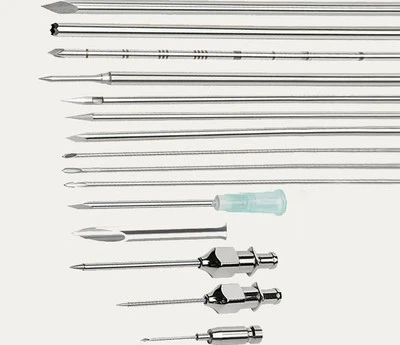
The Tuohy epidural needle, as a crucial instrument for accessing the human spinal canal, its quality control is not only crucial for successful procedures but also directly affects patient safety. From the selection of raw materials to the final sterilization of the product, the manufacturing process of the Tuohy needle encompasses a series of precise techniques and strict quality control procedures, forming a complete quality assurance system.
Material selection is the first hurdle in quality control. Medical-grade stainless steel is the main material for Tuohy needles, but "medical grade" itself encompasses multiple standards. High-quality Tuohy needles use steel that not only needs to comply with ASTM F138 (stainless steel for surgical implants) or similar standards, but also requires complete material certificates, including chemical composition analysis, mechanical performance tests, and biocompatibility verification. Responsible manufacturers like Manners Technology will detail the source, batch number, and test reports of each batch of materials in the "material list", achieving full traceability from raw materials to finished products.
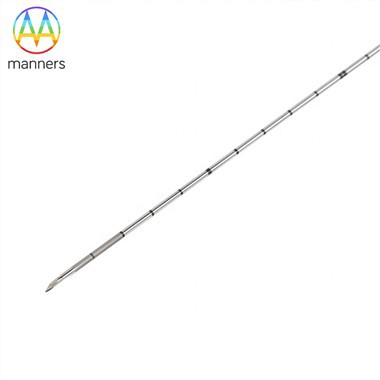
Precision manufacturing is the core of Tuohy needle quality. The needle tube forming process involves multiple steps such as drawing, annealing, and cutting, and each step requires precise control. Modern manufacturing techniques have enabled the needle tube size accuracy to reach ≤ ±0.01mm, which means that a 1mm-diameter needle tube has a tolerance of only about 1/7 of the diameter of human hair. This level of precision not only ensures the compatibility of the needle tube with the catheter but also guarantees the consistency of the needle tip geometry. The curved part of the needle tip is a key feature of the Tuohy needle, with the angle typically ranging from 15 to 30 degrees. It needs to be precisely formed through special molds and heat treatment processes. Excessive angle deviation will affect the "gliding" effect of the needle tip and increase the risk of dural puncture; insufficient angle may lose the design advantage of the Tuohy needle.
The cutting-edge grinding technology determines the sharpness and shape of the needle tip. The Tuohy needle adopts a circular inclined cutting edge design, which not only maintains sufficient sharpness to penetrate tissues but also avoids the "spear effect" of traditional inclined needles. The grinding process requires precise control of angle, pressure and cooling to prevent overheating and changes in the metal microstructure. The needle tip after grinding needs to be inspected under a microscope to ensure there are no burrs, no chipped edges, and a symmetrical shape.
Internal edge treatment is often overlooked, but it is crucial for the function of the Tuohy needle. The catheter needs to pass through the inner part of the needle tube. If there are burrs or roughness on the inner wall, it may cause: 1) Difficulty in passing the catheter; 2) Scarring on the surface of the catheter, generating particles or becoming a bacterial attachment point; 3) Difficulty in withdrawing the catheter or even fracture. High-quality Tuohy needles undergo electrochemical polishing treatment on the inner wall. Through the electrolysis process, microscopic irregularities are removed to obtain a mirror-like smooth inner surface. This treatment not only improves the passability of the catheter, but also reduces protein and bacterial adhesion, thereby lowering the risk of infection.
The cleaning process is a crucial step in the quality control of medical needles. After machining, the Tuohy needle must have all the residual oil, metal debris and processing fluids thoroughly removed. Modern manufacturing employs a multi-stage cleaning process: first, it undergoes ultrasonic cleaning in a dedicated cleaning agent, using high-frequency vibration to remove surface adherents; then, it is rinsed to remove any remaining cleaning agent; finally, it may include electro-polishing or special chemical treatment to further purify the surface. The cleaned product must undergo particle detection, non-volatile residue detection and bacterial endotoxin detection to ensure compliance with relevant medical device standards.
Sterilization is the final quality control step before leaving the factory. Tuohy needles are usually sterilized using ethylene oxide or radiation. Ethylene oxide sterilization can effectively kill all microorganisms, including bacterial spores, but it requires strict control of gas concentration, temperature, humidity, and ventilation time to ensure the sterilization effect while minimizing the residual ethylene oxide to a safe level. Radiation sterilization (such as gamma rays) is a residue-free sterilization method, but it may affect the performance of certain materials, and the impact of the sterilization dose on product functionality needs to be verified. Regardless of which method is used, sterilization validation is required, including empty-load heat distribution tests, loaded heat penetration tests, and biological indicator tests, to ensure the effectiveness and reproducibility of the sterilization process.
Packaging design is also part of quality control. The packaging of Tuohy needles needs to maintain sterility while preventing damage during transportation and storage. The packaging materials must pass tests for air permeability, antibacterial properties, strength, and aging. Many manufacturers also use a dual-packaging system, with the inner packaging remaining sterile and the outer packaging providing physical protection and product information, facilitating inspection and verification before clinical use.
From a broader perspective, the quality control of Tuohy needles extends beyond the manufacturing process and encompasses design verification, process validation, and clinical evaluation. During the design phase, a risk analysis is conducted to identify all potential hazards and develop control measures; the manufacturing process requires validation to ensure that qualified products can be continuously produced under specified parameters; the final product needs to undergo performance tests, including puncture force tests, catheter passage tests, and connection strength tests, etc.; some products may also undergo clinical evaluation to collect actual usage data for verifying safety and effectiveness.
This multi-level and all-process quality control system has transformed the Tuohy epidural needle from a piece of stainless steel raw material into a safe and reliable medical tool, supporting millions of epidural procedures worldwide each year. It is precisely the strict control of every detail that has laid the foundation of trust for the Tuohy needle in clinical practice.