The Clinical Application Spectrum And Core Medical Value Of Trocars
Apr 19, 2026
The Comprehensive Clinical Application Spectrum and Core Medical Value of Trocars
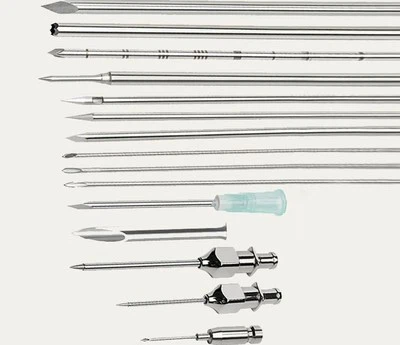
The core medical value of the Trocar lies in its function as a secure and stable access portal, serving as the physical gateway through which surgeons extend their vision and dexterity to perform intricate procedures within body cavities. Its applications have permeated nearly every surgical subspecialty, fundamentally transforming the paradigm of traditional open surgery into one defined by minimal invasiveness and precision.
General and Gastrointestinal Surgery
This domain represents the most extensive field of Trocar utilization. In procedures such as laparoscopic cholecystectomy, appendectomy, gastrectomy, and radical resection for colorectal cancer, the Trocar is the indispensable conduit for establishing pneumoperitoneum and introducing the camera, dissectors, and ultrasonic scalpels. For instance, in laparoscopic low anterior resection for rectal cancer, the use of a 12mm Trocar for prophylactic loop ileostomy has been demonstrated to significantly shorten the ostomy creation time, reduce blood loss, and alleviate postoperative pain. Furthermore, for diseases like hepatic cystic echinococcosis, the Trocar allows for direct puncture and drainage of the cystic cavity under laparoscopic visualization, facilitating effective treatment with minimal trauma.
Gynecological Surgery
Laparoscopy has achieved remarkable maturity in gynecology, where procedures including myomectomy, total hysterectomy, ovarian cyst enucleation, and surgery for endometriosis are heavily reliant on Trocars to establish pelvic access. The advantages of minimal invasion are particularly pronounced in this field, manifesting as dramatically reduced surgical trauma, accelerated recovery trajectories, and superior cosmetic outcomes that significantly improve patient satisfaction regarding abdominal aesthetics.
Urological Surgery
Radical retroperitoneoscopic nephrectomy, adrenal tumor resection, and radical prostatectomy stand as classic applications of the Trocar. Comparative studies evaluating the modified direct Trocar puncture technique against the traditional Hasson open technique for establishing retroperitoneal access have concluded that the former is notably more expedient, results in fewer complications, and exemplifies the continuous optimization of puncture methodologies to enhance patient safety.
Thoracic and Pediatric Surgery
In thoracic surgery, such as video-assisted thoracoscopic surgery (VATS) for lung lobectomy or mediastinal tumor resection, the Trocar plays an equally critical role. Innovations in domestic single-port robotic surgical systems, such as the "SHURUI SP," incorporate autonomously designed multi-channel Trocars specifically adapted for the delicate manipulation required via the intercostal pathway. Pediatric surgery imposes even stricter demands regarding instrument size and precision; consequently, the development of miniaturized and refined Trocars has rendered minimally invasive procedures feasible and safe for infants and young children.
Core Advantages and Clinical Value
The clinical benefits conferred by Trocars are multifaceted. Primarily, they facilitate the shift toward minimally invasive surgery, converting a single large incision into several small incisions ranging from 0.5 to 2 centimeters. This transition drastically reduces tissue trauma, intraoperative blood loss, and postoperative pain. Secondly, Trocars accelerate patient recovery, leading to markedly shorter hospital stays and enabling a quicker return to normalcy and productivity. Thirdly, they enhance the surgical field of view and operational precision; under high-definition magnification, anatomical structures are rendered with exceptional clarity, allowing for more meticulous dissection and superior protection of vital neurovascular bundles. Finally, the cosmetic results are significantly improved, particularly with transumbilical single-incision surgery where postoperative scarring is minimal or virtually invisible.
Of course, the act of Trocar insertion is not without inherent risks, including vascular injury, visceral perforation, and subcutaneous emphysema. Therefore, the application of this technique must be restricted to experienced surgeons who adhere strictly to established protocols. The judicious selection of Trocar type, size, and insertion site, coupled with the adoption of safer techniques such as optical-guided puncture, remains paramount to ensuring surgical safety and maximizing the profound medical value that these devices bring to modern healthcare.