Technical Evolution And Core Innovation Trends Of Trocar
Apr 19, 2026
Technical Evolution and Core Innovation Trends of Trocar
The technical evolution history of Trocar is a microcosm of the continuous pursuit of greater safety, higher precision, and minimal trauma in minimally invasive surgical procedures. From the initial simple sharp puncture instrument to today's intelligent surgical access system integrated with a variety of advanced technologies, its innovation runs through materials, design, functional integration, and coordination with the entire surgical ecosystem.
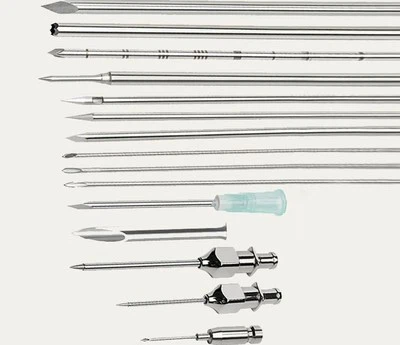
Iteration in Materials and Structure: Early Trocars were mostly made of medical stainless steel, focusing on sturdiness and durability. Today, material selection has become more diversified. Disposable Trocars widely adopt high-performance engineering plastics, which achieve lightweight and low-cost mass production while ensuring sufficient strength. Some products use composite materials or special coatings to reduce tissue friction resistance and facilitate puncture. In terms of structure, the classic combination of "Obturator + Cannula" remains the foundation, but the true innovation lies in the details. For example, the tip of the Optical Trocar is integrated with a miniature endoscope, allowing surgeons to penetrate the abdominal wall layer by layer under direct vision. This greatly improves the safety and accuracy of the first puncture and avoids the risk of vascular or organ injury that may be caused by blind puncture.
Revolution in Tip Design: From Cutting to Dilatation: The evolution of tip design is the core of Trocar safety. Traditional Bladed Trocars have gradually been eliminated due to their large tissue cutting damage and high bleeding risk. The mainstream of the current market is Bladeless Trocars. Its principle is to separate muscle and fascial fibers through a blunt, gradually expanding tip (such as conical or spiral shape) instead of cutting. This design can significantly reduce the damage to abdominal wall blood vessels and nerves, lower the incidence of postoperative port-site pain and hernia, and provide a smoother puncture feel. In addition, technologies such as radially expandable cannulas allow the placement of relatively large working channels through smaller initial skin incisions, further reducing tissue trauma.
In-depth Integration with Surgical Systems: Trocar is no longer an isolated instrument but is deeply integrated into specific surgical platforms. In the field of robot-assisted surgery, Trocar needs to meet the special requirements of robotic arms, such as stronger stability, anti-slip design, and possible interfaces for communication with robotic systems. For example, the Da Vinci Surgical System has its matching dedicated Trocar. The rise of Single-Incision Laparoscopic Surgery (SILS) has spawned multi-channel single-port Trocar systems. This system allows the placement of a multi-channel port through an incision of about 2-3 centimeters (usually via the umbilicus), and all surgical instruments enter through this port, achieving better cosmetic results and possibly lighter postoperative pain.
Future Trends: Intelligence and Precision: Cutting-edge technologies are endowing Trocar with new capabilities. The exploration of Magnetic Anchoring technology provides new ideas for "reduced-port" or even "single-port" surgery. By controlling in-vivo magnetic instruments with external magnets, the number of Trocars used can be reduced while achieving good surgical field exposure. The combination of artificial intelligence and image navigation is another major direction. Future Trocar systems may be linked with preoperative CT/MRI images and intraoperative real-time navigation systems to realize intelligent planning of puncture paths and sub-millimeter precise positioning, greatly reducing the reliance on the surgeon's experience. These innovations collectively point to a safer, more precise, and more personalized future of minimally invasive surgery.