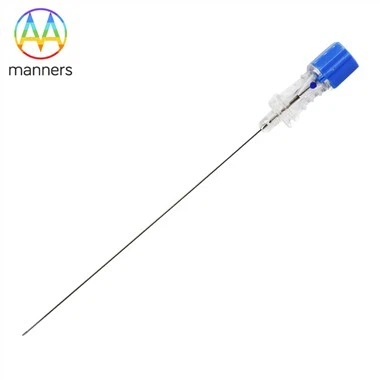
The Anatomy Of A 23G 90mm Sharp-Tip Thread
Nov 02, 2026
The Pain Point: Why "Cheap Threads" Are Expensive
Every aesthetic clinic has met her: the patient who returns 10 months after a "thread lift" wondering why her jawline dissolved. The answer is rarely the physician's skill alone. It lies in the thread itself. Low-grade PDO threads, dull needles, and oversized gauge mismatches produce three silent failures - poor anchoring, early absorption, and tissue trauma that mimics bruising for weeks. In a market flooded with unbranded PDO, the practitioner's real battle is not anatomy; it is material science.
The Principle: A Scaffold, Not a Sling
A 23G 90mm PDO sharp-tip needle is, at its core, a delivery system for a biodegradable scaffold. PDO (polydioxanone) has been trusted in cardiovascular surgery for decades because of its predictable resorption curve: approximately 180–240 days, with tensile strength degrading gradually rather than collapsing. When inserted into the subcutaneous layer, the sharp tip tracks along the SMAS-adjacent plane, and the thread's micro-barbs (or cog design) mechanically anchors to fibrous septa. But the true lift is only 30% mechanical. The remaining 70% emerges as the body responds: macrophages engulf the material, fibroblasts are recruited, and new collagen bundles form along the thread's axis. The needle, then, is not a weapon; it is a roadmap for regeneration.
Classification: Reading the Product Sheet Correctly
The specification "23G 90mm" is a language of its own. Gauge (23G) defines the outer diameter of the needle - approximately 0.6 mm - thick enough to deliver a cogged thread without excessive drag, thin enough to limit puncture trauma. The 90 mm length determines reach: sufficient for mid-face lifting, nasolabial fold correction, and temple anchoring, while remaining manageable for a single-entry fan technique.
Threads are classified by three axes:
- Material: PDO (classic, fast resorption), PLLA (collagen stimulator with delayed effect), PCL (longest lasting, up to 2 years), WPDO (braided, higher initial strength).
- Surface design: mono (smooth), cog (unidirectional barbs), screw (twisted), and mixed.
- Needle type: sharp-tip (pierces skin directly) versus blunt cannula (requires a pilot entry but causes less vascular damage).
- The 23G 90mm sharp-tip needle belongs to the direct-puncture family: fast, single-step, ideal for facial zones with dense fibrous tissue where cannula tunneling would be impractical.
Practical Guide: The Fan, The Pull, The Release
Step 1 - Marking: With the patient seated upright, draw vector lines from the malar eminence toward the temporal hairline. The 90 mm needle can cover a 3–4 cm fan per entry point.
Step 2 - Anesthesia: Use infraorbital and zygomatic blocks. The sharp tip will cross the zygomatic cutaneous nerve territory; do not rely on topical cream alone.
Step 3 - Insertion: Enter at 30°, advance to the pre-determined depth, then flatten to run subcutaneously. The tactile signature of the correct plane is a "gritty glide" - resistance without sharp catch.
Step 4 - Deployment: Push the thread, withdraw the needle, then gently tug to engage the cogs. Never over-pull; a visible dimple means the cog has hooked skin, not fascia.
Step 5 - Trimming and dressing: Cut flush, apply sterile tape, and instruct the patient to avoid extreme facial expressions for 48 hours.
Real-World Experience: What the Numbers Say
Practitioners report that a 23G 90mm sharp-tip needle reduces procedure time by roughly 30% compared with cannula-based lifts, because no pilot incision is required. Bruising incidence varies widely - from 5% in well-anesthetized, calm patients to 40% in patients on aspirin or omega-3 supplements. The most common complication is not vascular injury but superficial thread palpability, occurring when the thread is placed too superficially (<3 mm from skin surface). Seasoned injectors emphasize the "rule of 90": the needle should be fully advanced to the hub for mid-face work; partial insertion creates a bend that tears the cog mechanism.
Summary: The Needle Is the Message
A thread lift is a conversation between the physician's hand and the body's healing machinery. The 23G 90mm PDO sharp-tip needle is the grammar of that conversation. When the material is pure, the gauge is matched to the tissue, and the depth is disciplined, the result is not a "lift" - it is a renovation: old collagen removed, new collagen laid down, contours re-negotiated from within.
Outlook: Where the Industry Is Headed
The future of PDO threading is not thicker threads but smarter ones. Expect hybrid materials (PDO core with PCL shell), ultrasound-guided insertion for real-time depth verification, and "smart" threads that release growth factors locally. For the 23G 90mm format specifically, demand will shift toward sterile single-use kits with integrated guides - moving thread lifting from artisan craft toward standardized, replicable medicine.