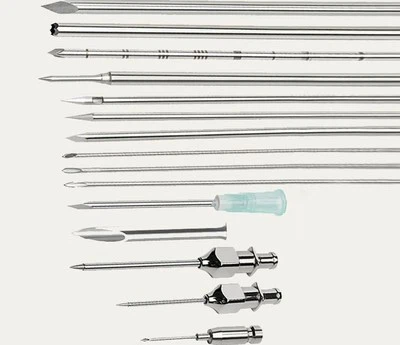
Technical Evolution And Innovation Trends Of Vacuum-Assisted Breast Biopsy (VABB) Needles
Apr 19, 2026
Technical Evolution and Innovation Trends of Vacuum-Assisted Breast Biopsy (VABB) Needles
The technical development history of vacuum-assisted breast biopsy (VABB) needles is an innovation journey evolving from a simple diagnostic tool to an integrated minimally invasive platform for both diagnosis and treatment. Since the U.S. FDA approved the first Mammotome system for clinical use in 1995, VABB technology has been continuously innovated, aiming to achieve more precise, safer, more efficient, and better-experience surgical operations.
Core Principle and System Composition: A VABB system usually consists of three parts: a vacuum negative pressure device, a rotating cutting knife (i.e., a biopsy needle), and a control host. The biopsy needle is a key executive component, which is usually for single use. Its working process is as follows: under real-time imaging guidance of ultrasound, mammography, or MRI, the biopsy needle is punctured to the edge of the lesion; the vacuum is activated to suck the tissue into the needle groove; the high-speed rotating inner cutting knife cuts off the tissue and sucks it out to the external collection groove; by rotating the direction of the needle groove, the lesion can be cut in multiple directions and multiple times until sampling or complete resection is completed.
Key Nodes of Technical Evolution:
1. From Diagnosis to Treatment: Early VABB was mainly positioned as a more accurate biopsy tool to replace traditional core needle biopsy (CNB). With the maturity of technology, its ability to completely resect small benign tumors (such as fibroadenomas) has been widely recognized, realizing the leap from "diagnostic biopsy" to "therapeutic resection" and avoiding secondary surgery.
2. Integration of Imaging Guidance Technology: It has evolved from the initial stereotactic mammography guidance to ultrasound guidance, and then to MRI guidance. MRI-guided VABB is particularly suitable for suspicious lesions in dense breasts that are difficult to display by mammography and ultrasound. It is a revolutionary tool for the detection of early breast cancer (such as ductal carcinoma in situ, DCIS), realizing precise intervention on malignant tumors invisible to traditional imaging.
3. Refinement of Needle Design: The specifications of the needle have developed from the early 14G to finer specifications (such as 16G) to reduce trauma. The design of the needle groove has been continuously optimized, with innovations such as bidirectional cutting and multi-grade adjustable knife grooves. For example, the Mammotome "Ruiyan" system is designed with a three-grade adjustable cutting knife groove and a five-grade bidirectional negative pressure vacuum suction system, which enables smoother resection of tumors of different textures (especially harder ones).
4. Improvement of Operational Safety and Convenience: The addition of a disposable sterile protective cover realizes the whole-process sterile operation and reduces the risk of infection. The introduction of continuous cutting mode has significantly shortened the resection time of solid tumors. The specimen collection and management system is also more scientific, facilitating pathological analysis.
Future Innovation Trends:
1. Intelligence and Precision Navigation: Combined with artificial intelligence (AI)-based image analysis systems, it can automatically identify lesion boundaries, plan cutting paths, and real-time evaluate the integrity of sampling, reducing inter-operator variability and improving the diagnosis rate.
2. Robot-Assisted Biopsy: Integrating the VABB system with a robotic platform can achieve more stable and precise puncture and cutting, especially suitable for deep lesions or lesions that are difficult to operate manually.
3. Real-Time Pathological Feedback: Research is underway to integrate technologies such as rapid on-site evaluation (ROSE) or optical coherence tomography (OCT) to initially judge in real time whether the sample is sufficient or contains malignant cells during the biopsy process, avoiding repeated puncture.
4. Material and Functional Innovation: Exploring more advanced materials to enhance the rigidity and cutting efficiency of the needle while reducing tissue damage. In the future, "smart needles" with sensing functions may be developed to real-time feedback tissue impedance or hardness information.
These technological innovations have jointly promoted VABB from an advanced biopsy method to a comprehensive diagnosis and treatment platform for breast diseases integrating precise diagnosis, minimally invasive treatment, and intelligent management.