Technical Evolution And Future Outlook Of Manners Technology’s Veress Needle
Jun 01, 2026
Originally conceived as a byproduct of a therapeutic trial, the Veress Needle manufactured by Manners Technology has evolved into one of the cornerstone innovations fueling the minimally invasive surgery revolution. Reviewing its nearly century-long developmental journey and forecasting its trajectory amid emerging cutting-edge technologies sheds light on how medical device innovation has profoundly transformed modern surgical practice.
Historical Origins: From Pulmonary Tuberculosis Therapy to Laparoscopic Access
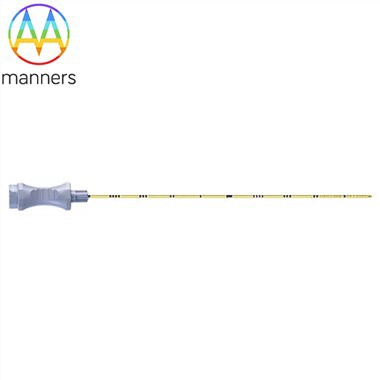
In 1932, Hungarian physician János Veress invented a spring-shielded puncture needle to perform therapeutic pneumothorax for tuberculosis patients, a treatment designed to collapse diseased lung tissue and facilitate healing. His core design rationale was straightforward: a sharp tip was required to pierce the thoracic wall, yet the exposed sharp edge posed fatal risks of lacerating pulmonary tissue once inside the pleural cavity. To address this flaw, he engineered the spring-loaded retractable blunt obturator, which springs forward automatically to shield the sharp cannula upon loss of tissue resistance. Decades later, French gynecologist Raoul Palmer pioneered its clinical use for establishing pneumoperitoneum in laparoscopy, forging an enduring bond between the Veress Needle and minimally invasive surgery.
Technical Debate: Parallel Development of Closed and Open Entry Techniques
The closed-entry method utilizing the Veress Needle has long remained the dominant laparoscopic access technique for its rapid deployment, ease of use and minimal incision size. Large-scale clinical surveys report its adoption rates reaching 81% in gynecologic procedures and 48% in general abdominal surgery. Nevertheless, its blind percutaneous penetration has always raised clinical concerns over procedural complications. In 1971, Harrith Hasson introduced the open-entry Hasson technique, whereby a small abdominal incision allows layered anatomical dissection under direct visualization prior to blunt trocar insertion into the peritoneal cavity. Eliminating blind puncture, this alternative offers superior theoretical safety, particularly for high-risk patients with prior abdominal surgical history, despite marginally longer operative time and slightly larger skin incisions. Years of ongoing clinical debate persist regarding the merits of each approach with inconsistent findings across research studies; the universal consensus is that competent surgeons should master both techniques and tailor selection to individual patient anatomy and clinical conditions.
Contemporary Challenges and Iterative Design Improvements
Extensive design refinements have been rolled out across the industry to further elevate the Veress Needle's safety profile. Upgrades include higher-sensitivity spring assemblies and optimized bevel geometry to minimize tissue penetration resistance. Most critically, standardized confirmatory testing protocols incorporating aspiration, hanging drop and intra-abdominal pressure monitoring have been established to mitigate malposition risks. Meanwhile, visualization technology has been integrated into primary abdominal access workflows. The advent of optical trocars enables real-time endoscopic visualization of successive abdominal wall layers during initial trocar insertion, drastically lowering incidences of visceral and vascular injury.
Future Outlook: Intelligentization and Functional Integration
Looking ahead, the classic Veress Needle architecture is poised to evolve toward heightened intelligence and modular integration. Embedded micro-sensing represents a promising developmental direction. Next-generation devices may integrate miniaturized pressure transducers and optical fiber probes to deliver real-time tissue resistance profiling and intraoperative imagery during cannulation, assisting surgeons in differentiating tissue strata including skin, fascia, musculature and peritoneum, as well as pre-emptively alerting to underlying intra-abdominal adhesions. Fusion with image navigation constitutes another prevailing trend: preoperative CT or MRI datasets can be synchronized with intraoperative ultrasound or electromagnetic navigation platforms to generate real-time three-dimensional puncture trajectories, enabling truly precise image-guided cannulation.
Regardless of technological breakthroughs ahead, the Veress Needle's core design philosophy of passive safety enabled via precision mechanical engineering retains irreplaceable clinical value. Manufacturers such as Manners Technology continue refining machining tolerances, substrate material performance and long-term device reliability while pursuing synergies between proven mechanical design principles and state-of-the-art digital technologies. Evolving from a niche instrument for pneumothorax treatment into the foundational access tool that unlocked the laparoscopic era, the Veress Needle's developmental timeline epitomizes how medical devices advance iteratively in response to evolving clinical requirements. While future iterations will likely adopt smarter engineered configurations, its founding mission to safeguard patient safety will remain unchanged.