Full-Spectrum Clinical Applications And Diagnostic Value Of Manners Technology Breast Biopsy Needles
Jun 01, 2026
Far from a basic puncture instrument, the breast biopsy needle manufactured by Manners Technology serves as the critical bridge between radiological findings and histopathological diagnosis, functioning as an indispensable precision interventional tool within the contemporary breast disease diagnosis-and-treatment framework. Deployed across the full clinical continuum from screening abnormality follow-up to therapeutic response surveillance, its core clinical value lies in minimally invasive tissue procurement to deliver gold-standard evidence for clinical decision-making.
Core Diagnostic Role: From Suspicious Imaging Lesions to Definitive Pathological Confirmation
Primary to breast biopsy is establishing an accurate final diagnosis. Biopsy needles are indicated whenever mammography, ultrasound or magnetic resonance imaging (MRI) identifies indeterminate breast lesions with unconfirmed pathological nature.
- Characterization of suspicious solid masses: For solid lesions categorized BI-RADS 4 (suspicious for malignancy) or select BI-RADS 5 (highly suggestive of cancer), core needle biopsy (CNB) or vacuum-assisted biopsy (VAB) harvests adequate intact tissue cores to differentiate benign from malignant histology (e.g., fibroadenoma versus invasive carcinoma), alongside critical parameters including pathological subtype and tumor grading.
- Sampling of microcalcifications: Clustered, tiny and morphologically irregular microcalcifications frequently signal ductal carcinoma in situ (DCIS). Thanks to its capacity to retrieve large contiguous tissue specimens, vacuum-assisted biopsy stands as the preferred modality for calcification sampling, guaranteeing inclusion of target calcifications within harvested samples; specimens undergo specimen radiography prior to formal histopathologic processing.
- Workup of complex breast cysts: Complex cysts featuring internal solid components, thickened septations or irregular walls on ultrasound are sampled via fine-needle aspiration (FNA) or core biopsy: cyst fluid is aspirated for cytology and cyst wall tissue procured to rule out intracystic papilloma or malignant transformation.
- Image-guided sampling of non-palpable lesions: Most early-stage breast cancers present solely as occult imaging abnormalities without palpable lumps. Real-time guidance via ultrasound, stereotactic mammography or MRI enables precise needle targeting of these radiographically visible lesions, underpinning revolutionary progress in early breast cancer detection.
Indispensable Adjunct for Therapeutic Planning and Long-Term Disease Management
Clinical utility of biopsy needles extends well beyond initial diagnostic confirmation.
- Neoadjuvant treatment response monitoring: For locally advanced breast cancer receiving preoperative neoadjuvant chemotherapy, mid-treatment core biopsy of residual tumor tissue facilitates pathological complete response (pCR) assessment, informing subsequent surgical planning and adjuvant regimen design.
- Confirmation of locoregional recurrence and distant metastasis: Biopsy remains the sole reliable modality to verify suspected breast cancer recurrence or metastatic lesions (e.g., hepatic or pulmonary nodules); harvested tissue enables biomarker profiling including ER, PR and HER2 status to guide subsequent targeted therapy selection.
- Genetic and molecular profiling: Biopsy-derived specimens support routine histopathology as well as advanced molecular testing encompassing next-generation sequencing (NGS) and multi-gene assays such as Oncotype DX and MammaPrint. These molecular data quantify recurrence risk, predict chemotherapeutic benefit and guide targeted agent prescription (e.g., PARP inhibitors for BRCA-mutated patients), forming the cornerstone of personalized precision oncology and tailored treatment for patients with identical histologic diagnoses.
Niche Clinical Indications
Biopsy needles also evaluate pathological nipple discharge via ductal lavage or targeted biopsy of suspicious lactiferous ducts to identify intraductal neoplastic changes. For inflammatory breast changes, biopsy differentiates benign infectious mastitis from rare inflammatory breast carcinoma.
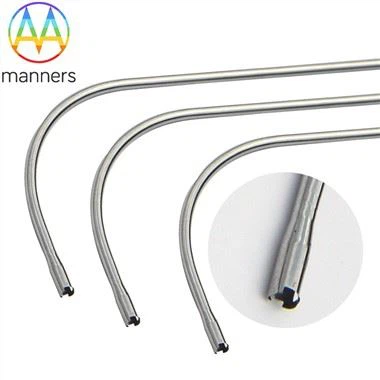
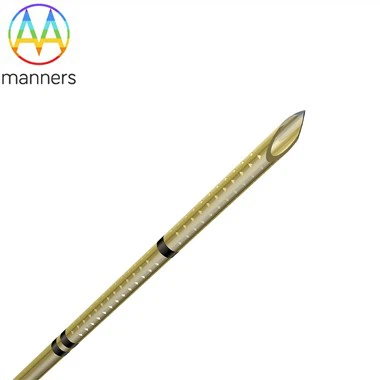
Products engineered by Manners Technology are purpose-built to align with the aforementioned diverse clinical requirements. Vacuum-assisted biopsy devices retrieve multiple tissue cores per single insertion to elevate diagnostic yield for microcalcification sampling; a comprehensive gauge portfolio of core needles accommodates lesion sampling spanning large palpable masses down to minuscule occult lesions; non-magnetic titanium alloy biopsy needles engineered exclusively for MRI environments resolve technical barriers to accurate biopsy within high-strength magnetic fields. By delivering end-to-end biopsy solutions covering initial diagnosis through post-treatment surveillance, Manners Technology empowers clinicians to move beyond mere radiographic visualization of lesions toward precise tissue acquisition, converting radiological suspicion into definitive pathological proof and enabling evidence-based individualized treatment regimens for every breast cancer patient.