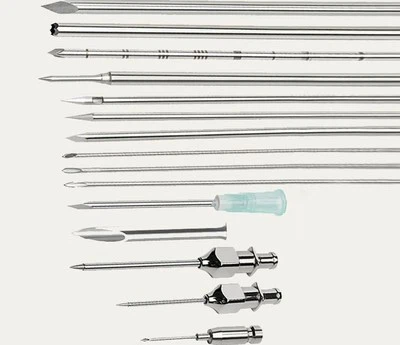
Analysis Of Major Manufacturers in The Trocar Industry
Apr 19, 2026
Market Landscape and Competitive Analysis of Major Manufacturers in the Trocar Industry
As a core access instrument in minimally invasive surgery, the global Trocar (cannula/trocar) market continues to expand, driven by the dual forces of the widespread adoption of minimally invasive surgical techniques and relentless technological innovation. According to a report by Grand View Research, the global Trocar market was valued at approximately 1.204billionin2023andisprojectedtosurgeto3.83 billion by 2032, exhibiting a significant compound annual growth rate (CAGR) during the forecast period of 2024–2032. Another report forecasts that the market size will reach $2.32 billion by 2030. The core drivers of this market growth include the increasing global aging population, the rising reliance on laparoscopic and other minimally invasive surgeries, and favorable reimbursement policies in developed nations.
From the perspective of product type, the disposable Trocar segment commands an absolute dominant position, contributing the largest revenue share of approximately 63.9% in 2023. Its advantages lie in the complete elimination of cross-infection risks, the simplification of hospital logistics by obviating the need for cleaning and sterilization, and ensuring consistent instrument performance for every procedure. Reusable Trocars, conversely, still retain a presence in budget-constrained regions due to their lower initial procurement costs. However, they face mounting challenges from increasingly stringent infection control standards and diminishing cost-performance ratios compared to their disposable counterparts.
In terms of tip design, the bladeless Trocar has emerged as the market mainstream and the prevailing future trend, securing the largest revenue share in 2023. The bladeless design utilizes blunt dissection rather than sharp cutting to separate tissue, significantly reducing tissue trauma during penetration, lowering the risks of bleeding and postoperative hernia, and providing superior tactile feedback. This makes them highly favored by surgeons who prioritize patient safety and procedural precision.
The competitive landscape of the market is characterized by a high degree of consolidation, with a dense concentration of international conglomerates. Medtronic stands as one of the market leaders, occupying a pivotal position bolstered by its comprehensive portfolio of minimally invasive surgical solutions and a robust global distribution network. Johnson & Johnson and its subsidiary Ethicon represent an equally formidable force; they not only offer an extensive range of Trocar products but also actively promote the proliferation of minimally invasive surgery through initiatives such as their "reimbursement support programs." B. Braun Medical Inc. and Stryker are also key market participants, consistently investing in product innovation and pursuing strategic acquisitions to strengthen their foothold.
Other significant manufacturers include CONMED Corporation, Cook Medical, Olympus, Karl Storz, and Applied Medical Resources Corporation. Competition among these entities is fierce, with strategic focuses centered on developing innovative products with enhanced characteristics. These innovations include safer tip designs, more ergonomic handles to reduce surgeon fatigue, and specialized Trocar systems tailored for Single-Incision Laparoscopic Surgery (SILS) or robot-assisted surgical platforms. Mergers, acquisitions, and collaborations remain common strategies employed to expand market share and consolidate industry standing.
Regarding regional markets, North America-particularly the United States-dominated the global market in 2023 with an estimated revenue share of around 31.5%. This dominance is underpinned by advanced healthcare infrastructure, high healthcare expenditure, a strong preference for minimally invasive procedures, and the clustering of major industry manufacturers. The European market is similarly mature, governed by rigorous regulatory frameworks. Meanwhile, the Asia-Pacific region is widely regarded as the fastest-growing market, presenting immense opportunities for innovation and expansion. This growth is fueled by improving healthcare infrastructure, economic stabilization, and a burgeoning volume of surgical procedures driven by the sheer scale of the population.
In summary, the Trocar market is a dynamic and competitive arena shaped by the interplay of technology, regulation, and clinical demand. The ongoing evolution of surgical practices and the continuous push for better patient outcomes ensure that this market will remain vibrant and essential to the future of global healthcare delivery.