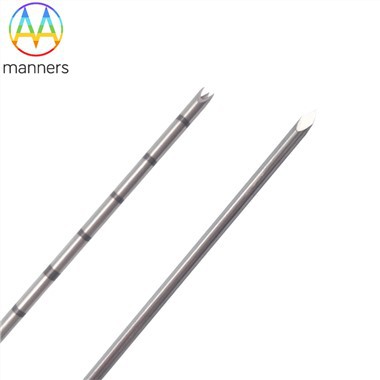
Surface Integrity Of Skived Hypotubes: Impact On Fatigue Life And Biocompatibility
Sep 06, 2026
Introduction: Identifying the Pain Points
In the realm of implantable and interventional medical devices, the surface of a component is not merely a boundary; it is an active interface with the biological environment. For hypo tubes used in applications ranging from coronary angioplasty to structural heart interventions, the surface integrity-defined by its roughness, residual stress state, and the presence of micro-defects-directly dictates the device's fatigue life and biocompatibility. The pain point for manufacturers is that traditional machining and even some laser cutting processes can leave behind a legacy of surface damage. Laser cutting, for instance, often produces a recast layer, micro-cracks, and a heat-affected zone that can reduce the fatigue strength of the material by up to 50%. Similarly, conventional grinding can induce tensile residual stresses that make the tube susceptible to stress corrosion cracking. In a field where device failure can be catastrophic, the need for a process that produces a surface of the highest integrity is paramount.
Principle of Surface Generation in Skiving
Skiving is unique among manufacturing processes because it is a pure shear operation. Unlike abrasive processes that plow through the material, skiving uses a sharp blade to sever the metal along its grain boundaries. This results in a surface that is not only smooth but also characterized by a layer of compressive residual stress. The principle of surface generation in skiving is to control the cutting parameters-speed, feed, and depth of cut-to ensure a continuous, clean shear. When executed correctly, the process induces a work-hardened layer that is free of thermal alteration. This compressive layer acts as a barrier to fatigue crack initiation, as cracks cannot easily propagate in a compressively stressed environment. Furthermore, the smooth, unblemished surface reduces the sites for platelet adhesion, thereby enhancing the hemocompatibility of the device.
Classification of Surface Enhancement Equipment
To achieve and verify the highest levels of surface integrity, a range of specialized equipment is employed:
High-Precision Skiving Lathes with Active Damping: These machines are designed to eliminate vibration, which is the primary cause of surface irregularities like chatter marks. Active damping systems counteract any oscillations in real-time.
In-Process Burnishing Tools: These are often used in conjunction with skiving. A hard roller or ball is dragged along the freshly skived surface, plastically deforming the peaks and valleys to create an even smoother finish and impart additional compressive stress.
Electropolishing Systems: As a post-process, electropolishing removes a controlled amount of material electrochemically, eliminating any remaining micro-roughness and creating a passive, oxide-rich surface that is highly biocompatible.
X-Ray Diffraction (XRD) Systems: These are used for non-destructive measurement of residual stresses, ensuring that the skiving process has imparted the desired compressive layer.
Practical Operation Guide
Achieving optimal surface integrity begins with the tool. The skiving blade must be ground to a specific geometry with a polished rake face to prevent material from sticking or building up on the edge. The cutting speed is set to ensure a continuous chip formation rather than a built-up edge, which can transfer to the workpiece and create defects. Coolant is delivered under high pressure to both cool the interface and flush away chips, which could otherwise be re-cut and cause surface damage.
After the skiving operation, the tube is thoroughly cleaned to remove all traces of lubricant. It then undergoes electropolishing, where it is submerged in an electrolyte bath and subjected to an electric current. This process preferentially removes the "high spots" on the surface, further reducing roughness. The final step is passivation, where the tube is treated with an acid solution to remove free iron and enhance the formation of the chromium oxide layer. Throughout the process, surface roughness testers (profilometers) are used to measure parameters like Ra and Rz, ensuring they meet the stringent requirements of the medical industry.
Real-World Experience
In our production of hypo tubes for transcatheter aortic valve replacement (TAVR) delivery systems, surface integrity is a critical concern. These devices must withstand significant bending and compressive forces as they are tracked through the aortic arch. We conducted a comparative study between laser-cut and skived tubes. The laser-cut tubes showed a recast layer of approximately 5-10 microns, which had to be removed by electropolishing-a process that added cost and time. The skived tubes, however, came off the machine with a surface finish that was already superior to the final finish of the laser-cut tubes.
Under fatigue testing, the skived tubes demonstrated a 60% longer life. The key was the compressive residual stress layer induced by the skiving process, which was verified using XRD. We also found that the skived surface was less prone to corrosion in simulated body fluid. However, we learned that the skiving process is highly sensitive to tool wear; a dull tool can quickly turn a compressive surface into one with tensile stresses. This led us to implement a strict tool management system, replacing tools after a set number of parts regardless of their apparent condition.
Summary and Sublimation
The surface of a skived hypo tube is a testament to the fact that in medical manufacturing, the invisible matters most. It is a functional layer that stands between the patient and potential harm. The pursuit of surface integrity through skiving is not just a technical challenge; it is a moral imperative. It reflects a commitment to quality that goes beyond mere compliance, aiming for a level of excellence that ensures the safety and efficacy of the device. The skived hypotube, with its pristine surface, is a symbol of this commitment-a component that is as beautiful in its finish as it is robust in its performance.
Prospects and Suggestions
As devices become more complex and are subjected to more demanding physiological environments, the importance of surface integrity will only grow. We recommend that manufacturers invest in advanced surface characterization techniques, such as atomic force microscopy (AFM), to better understand the nano-scale topography of skived surfaces and its effect on cell adhesion. Additionally, the development of new, environmentally friendly cutting fluids that leave no residue could further enhance the biocompatibility of the final product. The future of skived hypotubes will be defined by surfaces that are not just smooth, but actively bio-integrative, paving the way for devices that are truly harmonious with the human body.