Hybrid Manufacturing: Combining Skiving And Laser Cutting For Optimal Hypotube Performance
Sep 06, 2026
Introduction: Identifying the Pain Points
In the hyper-competitive landscape of interventional cardiology and peripheral vascular devices, the performance bar is constantly being raised. Physicians demand catheters that offer unparalleled trackability, torque response, and pushability, while also requiring features like side ports for fluid delivery or complex articulation zones. Historically, manufacturers have had to choose between two primary processes: laser cutting, which offers unmatched design freedom for creating intricate patterns, and skiving, which provides superior mechanical properties and surface finish. The pain point is that neither process alone can deliver the complete package. Laser cutting can create complex geometries but often at the cost of a heat-affected zone that weakens the material and reduces fatigue life. Skiving produces a pristine mechanical surface but lacks the ability to create the multi-axial, interrupted features that are often necessary for extreme flexibility. The industry needs a way to marry these two technologies into a single, seamless manufacturing workflow.
Principle of Hybrid Manufacturing
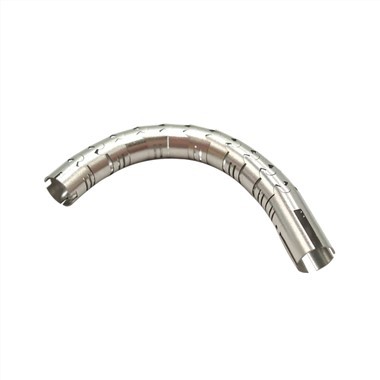
Hybrid manufacturing, in the context of hypo tube fabrication, involves the strategic combination of skiving and laser cutting to leverage the strengths of each. The principle is to use skiving as the foundational process to establish the base mechanical characteristics of the tube. For example, a helical skive can be used to create a continuous coil that provides 1:1 torque transmission and column strength. Once this "backbone" is created, laser cutting is employed to add specific, localized features. This might include cutting slots or windows in the skived lands to increase flexibility in a specific zone, or creating side holes for embolic protection.
The critical challenge in this hybrid approach is managing the thermal effects of the laser. The laser parameters-pulse duration, energy, and frequency-must be meticulously tuned to minimize the heat-affected zone and prevent any alteration to the work-hardened surface created by the skiving process. Often, this requires the use of "cold" ablation techniques, such as picosecond lasers, which remove material via non-thermal mechanisms. The sequence of operations is also vital; typically, skiving is performed first to ensure the tube has maximum structural integrity during the subsequent laser processing.
Classification of Hybrid Equipment
The equipment required for hybrid manufacturing ranges from integrated systems to sophisticated transfer lines:
Integrated Skiving-Laser Machining Centers: These are single machines that combine a high-precision, multi-axis skiving lathe with a fiber laser source. The tube can be transferred between processes without being removed from the chuck, ensuring perfect concentricity and alignment.
Robotic Interfacing Systems: For high-volume production, separate skiving and laser stations can be linked by robotic arms equipped with vision systems. These robots can load, unload, and orient the tubes with micron-level accuracy, allowing for complex process flows.
Ultra-Short Pulse Lasers: These are essential for the hybrid process, as they can ablate material with minimal heat diffusion, preserving the integrity of the skived surface.
In-Line Optical Inspection: Vision systems that perform a 360-degree scan of the tube after each process step, verifying that the skived dimensions and laser-cut features meet the stringent tolerances required for medical devices.
Practical Operation Guide
Implementing a hybrid process begins with a detailed design for manufacturability (DFM) analysis. Engineers must decide which features are best produced by skiving and which by laser. The skiving process is set up first, with the tube mounted in a high-precision lathe. The tool path is programmed to create the desired helical or tapered profile. After skiving, the tube is thoroughly cleaned using a ultrasonic bath to remove all cutting fluids and micro-chips, as any residue could interfere with the laser cutting or cause burning.
The tube is then transferred to the laser workstation. The laser parameters are optimized for the specific material-whether it is 304 stainless steel, 316L, or Nitinol. A "soft" cutting profile is often used around the skived areas to avoid creating micro-cracks that could propagate from the laser cuts into the skived lands. After laser cutting, the tube undergoes a passivation process to restore the chromium oxide layer, especially if stainless steel is used. Finally, the part is subjected to a series of functional tests, including torque response and flexibility assays, to ensure the hybrid process has achieved the desired performance.
Real-World Experience
Our factory has successfully deployed hybrid manufacturing for the production of steerable ablation catheters. The shaft required a high-torque proximal section and a highly flexible, articulating distal section with side ports for irrigation. By skiving the entire length of the tube to create a continuous helical ribbon, we established a robust torque backbone. We then used a picosecond laser to cut precise slots in the distal section, transforming the continuous ribbon into a series of linked segments that could bend in multiple planes.
The key lesson we learned was the importance of managing the "interface" between the two processes. We initially experienced issues with corrosion at the junction of the skived and laser-cut zones due to the redeposition of vaporized metal. This was solved by introducing a plasma cleaning step immediately after laser cutting, which removed the nano-scale debris and restored the surface chemistry. The resulting catheter demonstrated a 40% improvement in torque transmission compared to a purely laser-cut design, while retaining the flexibility needed for complex cardiac anatomies.
Summary and Sublimation
Hybrid manufacturing represents the maturation of medical device fabrication. It is a recognition that the pursuit of perfection often requires a synthesis of different technologies. The skived and laser-cut hypotube is more than just a component; it is a harmonious integration of mechanical refinement and geometric complexity. It embodies the principle that the whole is greater than the sum of its parts, delivering a device that is both strong and supple, precise and adaptable. This approach is not just a manufacturing technique; it is a new paradigm for innovation in interventional medicine.
Prospects and Suggestions
The future of hybrid manufacturing lies in the further integration of digital technologies. We suggest that manufacturers invest in the development of "digital twin" simulations that can model the entire hybrid process, predicting how the material will respond to the mechanical stress of skiving and the thermal stress of laser cutting. This would allow for the optimization of process parameters before a single part is made, drastically reducing development time and cost. Additionally, the exploration of new laser sources, such as those in the UV spectrum, could open up possibilities for processing advanced polymers and bioresorbable materials in a hybrid manner, paving the way for the next generation of smart, multi-functional medical devices.