Supply Chain And Standards Perspective | Medical Needles
Apr 10, 2026
Supply Chain and Standards Perspective | Medical Needles: The Standardized Unit and Safety Cornerstone of the Global Medical Industry
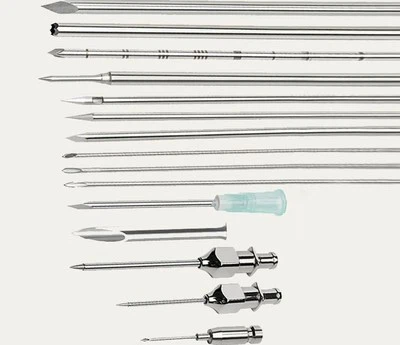
Within the global medical device supply chain, a medical needle is far more than a simple metal product. It is a standardized industrial unit with a complete quality identity, compliant with global regulations, and capable of seamless international circulation. Its value lies not only in its physical form but also in the full-chain traceability, regulatory compliance, and supply chain efficiency attached to it. This article examines the deeper significance of the needle as a globalized commodity from the macro perspective of industry and standardization.
The Industrial Nature of Medical Needles: A Unification of Standardization and Customization
In the industrial landscape, the needle is both a mass-produced "standard item" manufactured according to international standards like ISO 7864 and ISO 9626, possessing universal dimensional series, and a "critical functional component" that can be deeply engineered and customized according to the system integration needs of downstream medical device manufacturers. Its core industrial value lies in the ability to stably, efficiently, and economically provide products of highly uniform quality while flexibly supporting the innovative product development of OEM clients.
Industrial Significance of Core Specifications: The Common Language of Global Procurement and the Anchor Point of Quality
Standardized Coding of Specifications: Descriptors like "22G x 3.5 inches" or "0.7mm x 90mm" serve as the common language in global purchase orders and technical documentation. This ensures unambiguous, shared understanding of the product's core dimensions between customers and suppliers across different continents, significantly reducing the technical communication costs and mismatch risks of international trade.
Global Consensus on Materials: The widespread use of AISI 304/316L stainless steel stems not only from its performance but also from its mature global supply chain, vast production capacity, consistent quality, and its long history of recognized safe use by major global regulatory bodies like the US FDA and the EU MDR. This provides manufacturers with a reliable, low-risk raw material foundation and paves the way for the global registration and market launch of the final medical device product.
Quality and Regulatory Systems Throughout the Product Lifecycle
Incoming Material Control: The raw material (needle tubing) must be accompanied by a full material certificate compliant with ISO 9626 and a factory inspection report, serving as the first control point in the quality system.
Process and Final Product Inspection: During manufacturing, dimensional specifications are critical process parameters requiring real-time monitoring via Statistical Process Control (SPC). Finished products must undergo a rigorous series of performance tests for dimensions, sharpness, patency, break force, etc.
Sterilization and Packaging: After packaging in a controlled cleanroom environment, the product must undergo a fully validated Ethylene Oxide (EO) or Gamma irradiation sterilization process. Comprehensive sterilization validation reports must be provided to prove a Sterility Assurance Level (SAL) of 10⁻⁶ is achieved.
UDI and Full-Chain Traceability: Each smallest sales unit must be labeled with information including the product code, specification, lot number, expiration date, and Unique Device Identifier (UDI). The specification is a key data element in the UDI traceability system, enabling any individual needle to be traced backwards from the point of clinical use to the production batch, and even to the raw material melt number, achieving full lifecycle management.
Core International Standards Supporting Industry Operations
ISO 13485: The general requirements for the quality management system of medical devices, providing the overarching framework for all manufacturing activities.
ISO 7864: The dedicated standard for single-use hypodermic needles, specifying general safety and performance requirements.
ISO 9626: The foundational standard for medical-grade stainless steel needle tubing, defining all dimensions (from 10G to 34G), mechanical properties, and material requirements, serving as the fundamental basis for design and procurement.
ISO 6009: The standard for needle hub colour coding, establishing a globally unified visual error-prevention system, a crucial safeguard for clinical safety.
Conclusion
From the perspective of the globalized medical industry, a medical needle is the crystallization of standardization systems, regulatory oversight, and modern lean manufacturing. What healthcare institutions purchase is not just a pack of needles, but the internationally-standard-backed quality assurance system, the sterilization safety commitment, and the globally recognized compliant identity behind it. The global standardization of its specifications, materials, and processes is the cornerstone for ensuring patient safety, achieving the efficient global allocation of medical resources, and fostering innovation and compatibility in medical device technology. This seemingly tiny needle is a classic microcosm and a reliable pillar of the modern, highly complex, and precisely coordinated global medical industry.