Structural Origins Of Pencil Point Needles And The Fluid Dynamic Secrets Of Non-Cutting Puncture
Jul 21, 2026
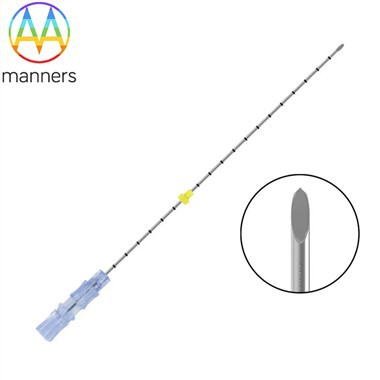
The Pencil Point Needle stands as a classic innovation within the realm of precision invasive instruments. Its name aptly describes its morphology-resembling a sharply pointed pencil, characterized by a closed, tapered distal end. Unlike conventional cutting-bevel hypodermic needles, the Pencil Point Needle does not rely on a sharp blade-like edge to incise tissue. Instead, it utilizes a sophisticated cold-forming process known as rotary forging to gradually swage, close, and polish the cannula tip into a smooth conical profile. This unique geometry, combined with one or two circular coaxial side ports located just proximal to the apex, fundamentally alters the mechanical interaction during puncture, achieving a "non-coring" or "atraumatic" penetration effect.
From a microscopic fluid dynamics perspective, the operational intelligence of Pencil Point Needles is profound. When the needle contacts and penetrates a membrane-such as the silicone septum of an implantable port-or soft tissue, the closed conical tip acts as a guide and a dissector rather than a scalpel. It radially compresses and separates dense fibrous material instead of shearing out a core (coring). The primary advantage of this mechanism is the creation of a tight physical interference fit at the puncture site. Upon withdrawal, the elastic memory of the tissue causes it to recoil, often resulting in a self-sealing entry. This characteristic is critical for implantable drug delivery systems (e.g., chemotherapy ports, insulin pumps), as it significantly extends device longevity by preventing drug extravasation and mitigating the risk of silicone particulate embolization caused by repeated coring injuries.
The manufacturing backbone of the Pencil Point Needle is the rotary forging process. Far from simple metal cutting, this is a high-precision cold-forming technique. At ambient temperatures, rotating dies apply immense radial pressure to the end of a stainless-steel tube (typically 304 or 316 grade). This synchronized force reduces both the outer and inner diameters simultaneously, progressively forming a seamless closed cone. This method is applicable to nearly all workable alloys and, crucially, preserves the continuity of the metal's internal grain structure, eliminating the micro-fissures and heat-affected zones associated with laser cutting or grinding. The forged needle tip angle is typically maintained within a precise range of 12° to 15°. This specification represents an optimized equilibrium validated by both fluid dynamics and material science: an angle too acute increases insertion resistance, while an angle too obtuse compromises tip strength and the integrity of the self-sealing mechanism.
In clinical applications, the Pencil Point Needle has proven indispensable, most notably as the gold standard for spinal anesthesia (e.g., Whitacre and Sprotte needles). The atraumatic, blunt conical tip traverses the dura mater by separating collagen fibers along their natural lines of cleavage rather than transecting them. This histological respect significantly reduces the incidence of Post-Dural Puncture Headache (PDPH)-a debilitating complication caused by persistent cerebrospinal fluid (CSF) leakage. In the industrial sector, these needles serve as precision dispensing tools for gases, pastes, and liquid adhesives. The side-port configuration allows for laminar, lateral fluid egress, preventing the turbulent jetting or spraying associated with end-port needles, thereby ensuring metered accuracy. Furthermore, the versatility offered by manufacturers like Manners-providing diverse hub connections such as 1/4" or 1/8" NPT threads, Luer locks, and other threaded interfaces-ensures seamless integration into complex automated fluid transfer systems. Ultimately, the Pencil Point Needle serves as a vital bridge between precision engineering and clinical safety; every successful puncture is a practical demonstration of the engineering philosophy of "overcoming rigidity with gentleness."