Future Technological Trajectories For Back Eye Needles: Nano-Coatings, Intelligent Visualization, And Green Micromachining
Jul 21, 2026
https://litfl.com/huber-point-needle/
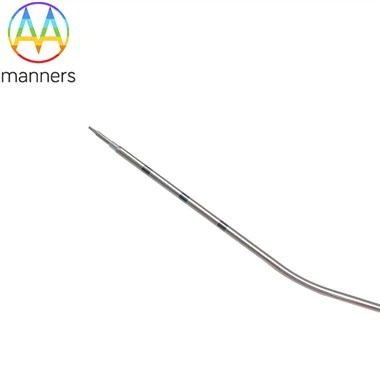
While clinically ubiquitous for decades, the Back Eye Needle-often perceived as a mature commodity-is currently poised at the cusp of a transformative technological renaissance, propelled by synergistic advances in materials science, surface engineering, and digital fabrication. Over the coming decade, industry evolution will pivot resolutely around three cardinal axes: Safer Flow Paths, Smarter User Interaction, and Hyper-Precise Customization. This progression signifies not merely incremental product refinement, but a profound response to persistent clinical pain points and an embrace of sustainable healthcare paradigms.
The vanguard of progress lies within Surface Nanotechnology and Antithrombotic Coatings. Current 304 stainless steel Back Eye Needles, despite electropolishing, remain susceptible to platelet activation and adhesion under high shear stress. Next-generation iterations will feature sophisticated bio-interactive coatings lining the side port lumen and edges. Hydrophilic Lubricious Coatings (PVP/PEG-based) will swell upon aqueous contact, forming a low-friction hydrogel interface that slashes insertion resistance by over 60%. This promises enhanced patient comfort and attenuated endothelial trauma during prolonged indwelling periods typical of dialysis or port therapy. Venturing further, Bio-Mimetic Anticoagulant Coatings (e.g., heparin-bonded or phosphatidylcholine analogues) will impart localized inhibition of Factor XII activation, suppressing fibrin mesh formation around the side port. This extends safe dwell times and drastically curtails occlusion rates and unplanned removals. Seamlessly integrated with the needle's precision architecture, these coatings will forge genuinely "intelligent flow conduits."
Parallel strides in Ultrasound/CT Visible Enhancement will banish Back Eye Needles from radiographic obscurity. Within interventional radiology and deep-tissue access, real-time visualization of the needle tip and side port location is critical. Future designs will incorporate Laser Micro-Dimpling patterns surrounding the back eye. These arrays of microscopic craters act as potent acoustic reflectors, dramatically enhancing the back eye's conspicuity under ultrasonography, granting clinicians "eyes" to track the port's position. Concurrently, Barium/Iodine-Infused Stainless Steel Composites will transition from research to clinical reality. By homogeneously dispersing radiopaque particles within the 304 alloy matrix, the entire needle shaft-particularly the side port region-will achieve vivid fluoroscopic visibility, preventing visceral perforation stemming from back eye positional misinterpretation. Such "what-you-see-is-what-you-get" interventional precision will redefine safety benchmarks.
Underpinning these innovations is the ascent of Digitized Micromachining and AI-Powered Optical Inspection. Escalating demand for bespoke Back Eye Needles (spanning the 0.25mm–30mm continuum) renders conventional die-stamping inadequate for micro-diameter side ports. Femtosecond Laser Micromachining will dominate. As a "cold ablation" process generating negligible thermal damage, it permits creation of micron-scale elliptical back eyes on 0.25mm capillaries with auto-passivated, burr-free edges. Ensuring zero-defect outputs across million-unit batches mandates AI-Augmented Micro-Visual Inspection. Deep learning algorithms, trained on vast defect libraries, will autonomously scan for marginal micro-fissures, burrs, and geometric deviations-surpassing human visual fatigue limits to enable 100% inspection. Integrated blockchain ledgers will immutably archive each needle's manufacturing genealogy-laser parameters, polish currents, passivation times-accessible via QR codes for全生命周期 traceability.
Finally, Green Manufacturing and Sustainable Packaging philosophies will permeate Back Eye Needle production. Evolving ISO 13485 standards prioritizing environmental stewardship will phase out cyanidic passivation in favor of eco-benign chromium-free alternatives. Packaging transitions will abandon PVC plastics for biodegradable polymers like PLA (Polylactic Acid) and adopt minimalist "reduced-plastic" designs. Supply chains will embrace lean "Make-to-Order" models. Client 2D/3D schematics will seamlessly interface with flexible manufacturing execution systems (MES), triggering just-in-time production runs that slash intermediary waste. In summation, the future trajectory of Back Eye Needles converges nanotechnology, artificial intelligence, and ecological mindfulness. Unwavering in its core mission-securing stable fluid pathways with minimal tissue insult-this evolution continuously redefines the horizons of safety and efficiency in modern medicine.