Strict Quality Control Of Precision Dimensions, Professional Specifications Of Veress Needles Matching Standardized Clinical Procedures
Apr 20, 2026
Strict Quality Control of Precision Dimensions, Professional Specifications of Veress Needles Matching Standardized Clinical Procedures
The dimensional accuracy, shape compliance, and cavity adaptability of minimally invasive abdominal puncture instruments are directly related to the smoothness of intraoperative puncture, the effect of pneumoperitoneum sealing, and the degree of damage to the patient's abdominal wall tissue. As a core component of laparoscopic surgery, Veress Needles play a crucial role in establishing pneumoperitoneum and creating a safe surgical field, so their dimensional stability and specification standardization are essential for clinical safety. Regular professional manufacturers of Veress Needles in the industry always adhere to the bottom line of micron-level dimensional quality control, uniformly and standardizedly calibrate the core shape and cavity parameters of the entire series, and establish a strict incoming inspection and outgoing inspection system to prevent non-standard dimensional instruments from entering clinical scenarios. This effectively avoids practical hidden dangers such as adaptation jams, excessive puncture depth, and pneumoperitoneum pressure imbalance, ensuring that the puncture link of each laparoscopic surgery is precise, controllable, safe and compliant, and laying a solid foundation for the smooth progress of minimally invasive operations.
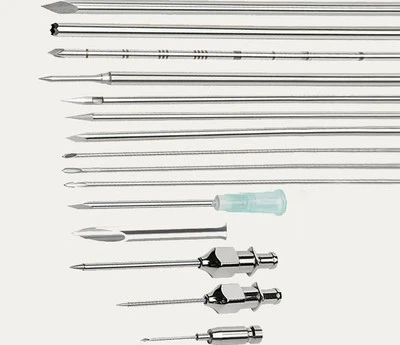
In terms of standardized control of core length, leading manufacturers strictly lock in the clinically common and compliant range for medical use, based on the physiological anatomical characteristics of the human abdominal wall and the requirements of different surgical types. The conventional effective working length of mass-produced Veress Needles is stably controlled between 80mm and 150mm, which can fully cover the abdominal wall puncture depth needs of most conventional laparoscopic minimally invasive surgeries in clinical practice, including cholecystectomy, appendectomy, and gynecological laparoscopic procedures. To meet differentiated clinical needs, manufacturers also subdivide gradient specifications of short, conventional, and extended models on demand, accurately adapting to thin-abdominal wall ordinary adult patients, thick-abdominal wall obese patients, patients with limited special positions, and special procedures for deep abdominal cavity targeted puncture. Mass production with uniform length across batches eliminates process defects such as inconsistent length and center of gravity deviation of individual needles, ensuring that physicians can exert force evenly when holding the puncture instrument, the approach angle is precisely controllable, and effectively avoiding the risk of accidental scratches to abdominal organs caused by uncontrolled puncture depth.
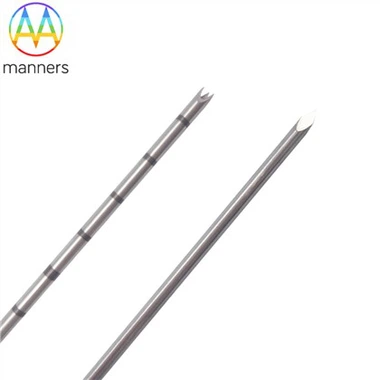
The refined adaptation control of the inner and outer double-layer tube diameters is a key process for manufacturers to control the core performance of Veress Needles. The outer diameter of the outer puncture cannula is strictly controlled within the standard medical range of 2.5mm to 5mm, and its thickness is carefully designed to be consistent with the physiological anatomical structure of the human abdominal wall fascia and muscle layer. This design can not only ensure the rigidity and strength of the needle body, preventing bending or deformation during puncture, but also minimize the area of the puncture wound, reduce blunt tear damage to the abdominal wall soft tissue, and promote postoperative wound healing. The inner diameter of the inner special ventilation lumen is precisely controlled within the exclusive range of 1.5mm to 3mm, and the inner wall is polished to be smooth and flat, without blockage, diameter reduction, or burrs and protrusions. This ensures the uniform and stable infusion of carbon dioxide gas, making the speed of pneumoperitoneum formation uniform and controllable, and completely avoiding abdominal tissue stress damage caused by poor ventilation and sudden local pressure changes. It is fully compatible with the linkage use of high-precision intelligent pneumoperitoneum pressure control equipment, further improving the safety and stability of intraoperative pneumoperitoneum management.
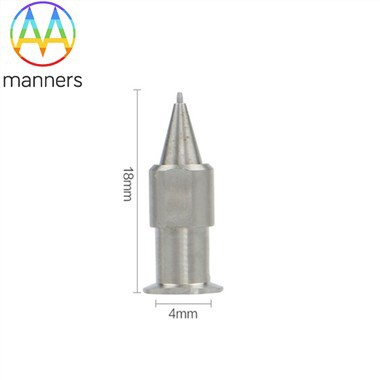
The standardized forming of the conical integrated cannula shape empowers safe and smooth puncture operations in clinical practice. Manufacturers adopt an integrated taper seamless processing technology, combined with high-precision CNC machining equipment, to create a streamlined gradient conical needle tip structure, which has no edges, burrs, or abrupt hard protrusions. During the puncture process, this structure can penetrate the multi-layer abdominal wall composite tissues of the skin, fat, and fascia with low resistance and stability, without the need for violent forced advancement of the instrument, thus maximizing the integrity of the abdominal wall blood vessels and peripheral nerves. This not only reduces the risk of intraoperative bleeding, but also lowers long-term discomfort complications such as postoperative abdominal wall numbness and chronic tingling. All specifications and dimensions of Veress Needles are verified uniformly across all batches, with supporting dimensional traceability test ledgers to ensure full-process quality traceability. Manufacturers can provide professional full-specification selection schemes on demand, accurately matching the standardized laparoscopic surgery supporting instrument procurement lists of hospitals at all levels, and adapting to batch bidding and unified warehousing and use.