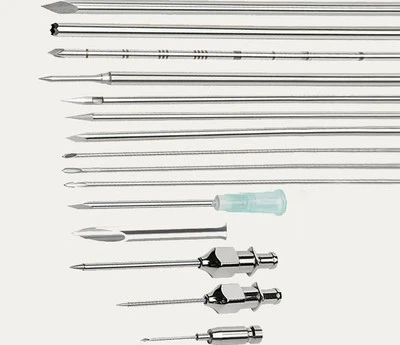
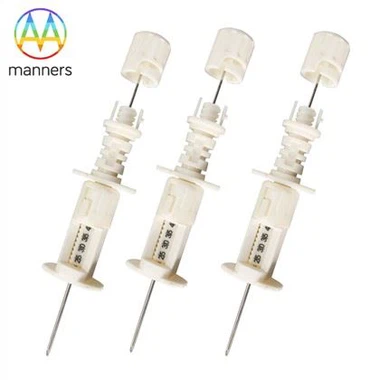
One-stop Direct Supply From The Original Manufacturer, Veress Needles Offer High Cost Performance And Are Suitable For Centralized Procurement By Medical Institutions.
Apr 20, 2026
One-stop direct supply from the original manufacturer, Veress Needles offer high cost performance and are suitable for centralized procurement by medical institutions.
Under the dual background of the continuous promotion of high-value medical device volume-based procurement and the in-depth implementation of DRG/DIP payment reform by the National Healthcare Security Administration, as well as the continuous increase in the popularity of minimally invasive surgical techniques, the procurement demands for core laparoscopic puncture devices such as Veress needles in medical institutions at all levels across the country - from minimally invasive surgery centers in tertiary hospitals, regional medical group operating platforms, to county medical consortium central operating rooms and day surgery points in grassroots health centers - are showing four major trends: increased volume, improved quality, stable prices, and stricter management. On the one hand, the annual growth rate of routine minimally invasive surgeries such as laparoscopic cholecystectomy, hernia repair, and gynecological laparoscopy and hysteroscopy combined surgeries exceeds 12%, driving the annual consumption of Veress needles per hospital to rise from several hundred to several thousand. On the other hand, the clinical requirements for the accuracy of instrument puncture, the stability of pneumoperitoneum establishment, and the controllability of tissue damage are increasing day by day. Coupled with the continuous strengthening of full life cycle supervision by regulations such as the "Medical Device Supervision and Administration Regulations", "Medical Device Unique Identification System Rules", and "Medical Device Management Measures for Medical Institutions (Trial)", procurement decisions have shifted from simple price comparison to a comprehensive value assessment of "reliable quality, traceable process, controllable cost, and accessible service". At this industry evolution node, directly connecting with the legitimate source manufacturers of Veress Needles that possess the "Medical Device Production License", "ISO 13485 Quality Management System Certification", "CE MDR Certification", and domestic NMPA Class II Medical Device Registration Certificate, and adopting the "factory - hospital/centralized procurement platform" direct connection model for bulk centralized procurement, has become the optimal path that takes into account policy compliance, clinical safety, and operational economy.
Veress needle enterprises with genuine source manufacturing capabilities are not merely engaged in simple assembly or OEM branding, but have established a vertical integrated production system covering six key links: "material - processing - assembly - sterilization - inspection - delivery". Take a leading manufacturer in the industry as an example: the medical-grade stainless steel base material is strictly limited to 316LVM (vacuum-melted medical grade) that meets ASTM F138/F139 standards or customized low-nickel high-molybdenum alloys. For each batch of raw materials, a spectral analysis report and metallographic test chart are retained simultaneously upon entry into the warehouse. The precision turning process uses German imported five-axis CNC equipment, with the needle tip cone angle error controlled within ±0.3° and the needle tube wall thickness tolerance ≤ ±0.01mm, ensuring uniform resistance and no deviation or vibration during puncture. The handle is made of medical-grade polycarbonate (PC) and thermoplastic elastomer (TPE) through a dual-material injection molding process. The depth of the anti-slip texture and the grip arc have been verified by human factors engineering to fit the different palm widths of surgeons for long-term operation. All sealing components use FDA-certified silicone O-rings, which have undergone 100 cycles of -40°C to 121°C cold and hot cycle tests without aging or deformation. The sterilization process strictly follows the ISO 11135 (ethylene oxide) and ISO 17665 (steam) dual-process verification, and each sterilization batch is accompanied by a complete printed record of the biological indicator culture results and physical parameters. The final products must pass 100% full inspection - including a 0.5N constant force puncture simulation test (the resistance curve of puncturing the pig peritoneum meets the standard), maintaining a pressure of 0.01MPa for 15 minutes under a 10L/min air flow without leakage, no burrs or residues under 100x magnification of the inner cavity under a microscope, and the deviation of the three-dimensional laser scanning of the size from the original CAD model is less than 0.02mm. The entire production line is managed by an electronic batch record (EBR) system, and each needle is assigned a unique UDI-PI code. By scanning the code, the complete digital file of the product from the steel smelting furnace number, machine operation parameters, quality inspection employee number, sterilization cabinet number to the original data of the factory inspection can be retrieved, completely avoiding the common hidden risks in traditional distribution channels such as batch mixing, specification mismatch, and performance degradation, providing quantifiable, reproducible, and auditable hardware guarantees for the safety of surgeries throughout the hospital.
The direct supply model significantly reduces procurement costs and aligns with the policy orientation of medical insurance cost control. According to a third-party report on the cost breakdown of medical supplies supply chains, in the traditional distribution chain, the cost of the middle circulation link accounts for as high as 38% to 45% of the terminal procurement price of a compliant Veress needle: among which, the regional general agent adds about 12% to 15%, the secondary distributor adds 8% to 10%, and the combined cost of warehouse logistics sorting losses and capital occupation during the account period is about 9% to 12%, with the rest being market promotion and channel maintenance expenses. The direct supply model from the source achieves cost restructuring through three mechanisms: first, "production based on demand", after the hospital or centralized procurement platform submits an order, the manufacturer flexibly initiates production based on the surgical scheduling cycle (such as weekly or monthly plans), avoiding the redundant inventory and stockpiling by distributors to cope with uncertainties; second, "direct delivery", after the finished products are vacuum-sealed aseptically, they are transported by the manufacturer's own cold chain logistics or cooperative medical logistics lines, bypassing multiple levels of transfer such as regional warehouses, city warehouses, and hospital warehouses, reducing the transportation cost per unit by more than 23%; third, "tiered discounts", for different annual procurement volumes of 5,000, 10,000, and 20,000 units or more, differentiated rebates and priority supply rights are set, and the combined effect of scale procurement in reducing unit energy consumption and labor costs is achieved. Under the premise of the same registration certificate qualifications, the same testing standards, and the same sterilization levels, the terminal procurement unit price is reduced by an average of 26.5% to 34.8% compared to the traditional channel. Taking a provincial or municipal tertiary hospital as an example, if it procures 12,000 Veress needles annually, after implementing direct supply from the source, the annual medical supply expenditure will be reduced by approximately 870,000 yuan, and the saved funds can be simultaneously used to upgrade the pressure sensing module of the pneumoperitoneum machine or supplement new disposable puncture devices, effectively supporting the department in continuously improving the level of minimally invasive techniques under cost control constraints.
A complete set of compliance documents and dedicated after-sales service, suitable for the full process of centralized procurement compliance operation and maintenance
Direct supply from the source is not only a price concession but also a systematic upgrade of the service system. Each direct supply order is accompanied by a standardized compliance package of "five certificates, one code, and one report": "Five certificates" refer to the medical device registration certificate (including the technical requirements in the attachment), production license, ISO 13485 system certificate, biocompatibility test report (the full set of GB/T 16886 series), and aseptic validation report (ISO 11737); "One code" means that each box is attached with a UDI-DI main code label, supporting the hospital's SPD system to automatically scan and store the goods and synchronously associate with the supplier's qualification database; "One report" is the summary report of the factory inspection of the current batch, listing the sampling quantity, inspection items, qualified judgment conclusion, and the authorized signature page. All documents are stamped with the manufacturer's fresh seal, and the electronic version is simultaneously uploaded to the hospital's consumables management platform, meeting the hard requirement of "100% online archiving of consumables qualifications" in the performance assessment of tertiary public hospitals. In terms of after-sales service, the manufacturer has configured a cross-functional technical response team: clinical application engineers can go to the operating room to conduct compatibility joint debugging of Veress needles with different brands of insufflators and puncture cannulas, provide practical training on puncture angle calibration, insufflation pressure threshold setting, and emergency handling of sudden air leakage; supply chain specialists connect with the hospital's SPD center, support the VMI (Vendor Managed Inventory) model, replenish goods dynamically based on the number of operating tables, and the inventory warning threshold can be customized; for urgent needs such as emergency, foreign aid, and unexpected events, a green channel is activated - order confirmation is completed within 2 hours, and delivery is made to 95% of prefecture-level cities across the country within 48 hours, with 24-hour express delivery covering provincial capital cities and key regional central hospitals. This model has been successfully applied to multiple provincial medical consumables centralized procurement alliances, city medical group centralized procurement directories, and county medical community unified distribution systems, covering various scenarios such as tertiary general hospitals, cancer specialty hospitals, maternal and child health care hospitals, traditional Chinese medicine hospitals, and township central health centers, truly achieving "purchasing with peace of mind, using with confidence, managing with ease, and cost satisfaction".