Standardized Operation Procedure: Core Techniques Of Veress Needle Insertion And Step-By-Step Detailed Explanation
Jun 18, 2026
https://en.wikipedia.org/wiki/Veress_needle
Introduction: Why Does the First Step Determine the Fate of the Entire Laparoscopic Surgery?
One of the fundamental differences between laparoscopic surgery and traditional open surgery lies in the fact that it also conceals its greatest source of risk - the first entry into the abdominal cavity must be a "controlled blind puncture." Statistical data show that about 40% to 50% of serious complications during laparoscopic surgery occur during the establishment of pneumoperitoneum and the insertion of the first puncture device. And the Veress needle (pneumoperitoneum needle) is currently the core instrument of the most widely used closed puncture method worldwide. The standardization degree of its insertion technique directly determines the safety bottom line for patients and the confidence upper limit for the surgical team.
The Structural Logic of the Veress Needle: Why Can It "Blindly Pass Through" Yet Remain Relatively Safe?
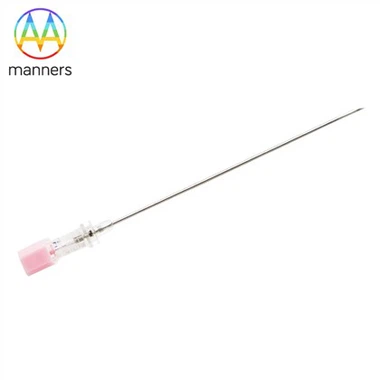
To understand the concept of insertion technology, one must first understand why this needle was designed in this way. The Veress needle was initially proposed by Hungarian surgeon János Veress in 1938, and through iterations, it has evolved into its current standard form:
Outer sharp cannula: Responsible for piercing through all layers of the abdominal wall. The cutting edge is precisely ground to ensure minimal tissue tearing.
Inner spring-loaded blunt tip core (blunt stylet): When the needle tip encounters no resistance, the inner core retracts and the sharp outer sheath is exposed; once it penetrates the peritoneum and enters the free abdominal cavity, the resistance drops sharply. The internal spring will push the blunt tip out, covering the sharp end of the tube - this is the true "safety soul" of the Veress needle.
Side hole design: Gas escapes from the side hole near the proximal end of the needle tip, rather than being ejected from the front surface, further reducing the risk of jet-like injury to soft tissues such as the intestinal tract.
The full length: Typically 80–150 mm, with an outer diameter of approximately 2.5–5 mm. The lumen takes into account both CO₂ flow and mechanical strength.
Step-by-Step Operation Procedure
Step 0: Preoperative Assessment and Screening of Contraindications
Before touching the skin, it is necessary to confirm: Is there a history of extensive abdominal adhesions (multiple laparotomies, history of peritonitis, radiation-induced enteritis)? Is there a large abdominal wall hernia? In such cases, the Veress needle closure puncture method should be downgraded to a relative or absolute contraindication, and the Hasson open method should be considered instead.
Step 1: Positioning and "Sheeting" of the Abdominal Wall - Physically Creating a Safe Distance
The patient lies in a supine position with both arms folded. The key point is: Use two towel clips to hold the skin and subcutaneous fat on both sides of the umbilicus, and lift the abdominal wall upwards, creating an artificial "air gap" between the abdominal wall and the posterior aortic bifurcation and inferior vena cava. The physical significance of this step cannot be overemphasized - just below the umbilicus is the anatomical projection area of the abdominal aorta bifurcation. Pulling the abdominal wall can expand this distance from a few millimeters to several centimeters.
Key points for BMI classification: In patients with normal weight or underweight, the aortic bifurcation is almost directly below the umbilicus; while in obese patients with BMI > 30, the umbilicus is actually located 2-3 cm below the bifurcation. At this point, a more vertical (close to 90°) needle insertion angle can be used.
Step 2: Incision Creation and Needle Insertion Angle
Make a 2-3 mm incision at the lower edge of the umbilicus (or the upper edge, depending on the surgeon's preference and anatomical variations). Use a hemostat to gently separate the subcutaneous tissue up to the fascia layer. The Veress needle is held in a pen-like grip (dart grip) - the thumb and index finger hold the needle handle, while the ring finger and little finger lightly rest against the abdominal wall as a fulcrum.
Normal weight: The needle insertion direction should be approximately 45° from the vertical line of the abdominal wall and tilted towards the pelvic cavity to prevent the needle tip from "creeping" inside the abdominal wall for a while before directly penetrating deep.
Obese patients: It should be closer to 90° for vertical insertion, because the thick subcutaneous fat layer itself is already inclined. If it is tilted further, the needle path will deviate within the fat layer, which will instead increase the failure rate.
Step 3: Experience the "Double Emptiness Sensation" and the "Double Clicking Sound"
This is the most crucial moment of the entire operation, lasting just a few seconds:
The tip of the needle cuts through the dermis and subcutaneous fat → encounters the anterior sheath of the rectus abdominis muscle (the first round of dense resistance).
As it passes through the fascia, the fingers experience the first sense of failure, while listening/feeling the first "click" of the spring mechanism.
Continue to advance steadily for approximately 0.5-1 cm, and upon passing through the peritoneum, encounter the second sense of failure and the second click.
⚠️ Important principle: The part of the needle that enters the abdominal cavity only needs to be 2–3 cm long. Never push the entire needle shaft all the way in – the excess depth will only increase the risk of intestinal puncture without any benefit.
Step 4: Three-Step Positioning Verification (Not Optional, Mandatory)
This is also the most fatal step that beginners tend to overlook - never turn on the air supply before confirming the position:
Test Operation Correct Meaning Retract test Draw back 5 mL syringe without blood, intestinal contents, or urine = Not entering blood vessels or organs. Droplet test (Hanging Drop) Open the tail valve of the syringe and drip in 1 drop of normal saline. The droplet is "sucked" into the syringe cavity = Negative pressure exists in the abdominal cavity. Initial inflation pressure Connect the pneumoperitoneum machine, start at a low flow rate of 1 L/min. The initial pressure ≤ 8–10 mmHg = Most likely in the abdominal cavity.
The evidence-based medical research indicates that the initial inflation pressure reading of less than 10 mmHg is the most reliable single indicator (with both sensitivity and negative predictive value reaching 100%), while the sensitivity of the water drop test is only about 50%, and it cannot be relied upon alone.
Step 5: Controlled Inflation and Palpation Confirmation
After verification, the CO₂ flow rate was increased to 2–4 L/min, with the target pneumoperitoneum pressure being 12–15 mmHg (for adults). During this period, abdominal percussion was continuously performed with the hands - symmetrical tympanic expansion was the most intuitive feedback.
Summary
The essence of the Veress needle insertion technique is not about "finding a specific point," but rather a closed-loop system that consists of a series of interconnected anatomical understanding → physical operation → multiple validations. Each step can be standardized, and it must be standardized - because it not only protects the intestines and blood vessels, but also the career of the surgeon itself.