Spinal Needles + Manufacturers: A Deep Dive Into Global Market Structure And Competitive Landscape
Apr 21, 2026
Spinal Needles + Manufacturers: A Deep Dive into Global Market Structure and Competitive Landscape
As the core instrument for lumbar punctures and spinal anesthesia, the spinal needle occupies a pivotal position in the global neurosurgical and anesthesiology medical device market. With the increasing number of spinal surgeries, the intensifying aging population, and the popularization of minimally invasive surgical concepts, the spinal needle market is demonstrating steady growth, emerging as a key segment within the neurointerventional device field.
Global Market Distribution and Regional Dynamics
From a global perspective, the spinal needle market exhibits significant regional variations. North America commands the largest global market share due to its advanced medical technology, high penetration rate of spinal surgeries, and robust healthcare infrastructure. The European market, represented by Germany, France, and the UK, boasts a mature medical regulatory system and high technology acceptance. Meanwhile, the Asia-Pacific region, particularly China, Japan, and India, is experiencing the fastest growth, driven by improving medical standards, an aging demographic, and enhancements in medical infrastructure. Although markets in Latin America and the Middle East/Africa are currently smaller, their growth potential remains substantial.
Market Size and Segmentation
The global spinal needle market continues to expand. According to industry research reports, the spinal anesthesia needle market was estimated at 1.07billionin2023∗∗andisprojectedtogrowfrom∗∗1.11 billion in 2024 to $1.5 billion by 2032, exhibiting a CAGR of approximately 3.83% during the forecast period. As one of the fastest-growing regions globally, the Chinese market reached a significant scale in 2024 and is expected to maintain a high growth rate.
Competitive Landscape Analysis
The competitive landscape is characterized by diversification and established barriers to entry:
Global Giants: Key players such as Boston Scientific Corporation, B. Braun Melsungen AG, Medtronic plc, Smiths Medical, and Stryker Corporation hold significant market positions through their comprehensive product portfolios and global distribution networks.
Specialized Manufacturers: Companies like ARGON MEDICAL, Myco Medical, Cook Medical, and Novo Nordisk A/S build competitive advantages in specific niches.
Emerging Market Players: Local enterprises leverage cost advantages and localized services to gradually expand their market share.
Product Classification and Application Spectrum
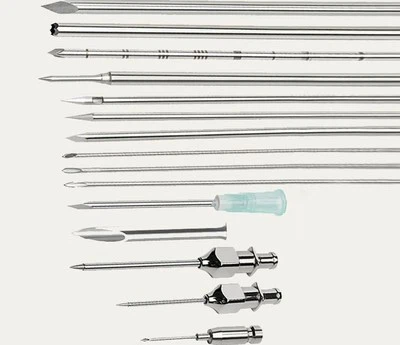
In terms of product types, spinal needles are primarily categorized into Non-Coring (atraumatic) needles, Quincke (cutting) needles, and Pencil-point needles.
Pencil-point Needles dominated the market in 2023, accounting for over 40% of global revenue, owing to their widespread use in various spinal anesthesia procedures.
Non-coring Needles are favored for their ability to reduce tissue damage.
Gauge Segmentation: The 18-gauge segment held the largest share in 2023 and is expected to maintain its dominance, while the 19-gauge and 20-gauge segments are also witnessing significant growth.
Regarding applications, hospitals are the primary end-users, commanding the largest market share, while clinics are gradually increasing their usage. From a clinical perspective, general surgery holds the largest share due to the high volume of procedures requiring spinal anesthesia. Orthopedic surgery is another critical field, driven by the rising number of joint replacements and spinal surgeries. Obstetrics and gynecology represent a growing segment due to increasing demand for analgesia during labor and cesarean sections.
Market Drivers and Technological Innovation
Multiple factors are driving the market:
Rising Prevalence of Spinal Diseases: Increasing incidence of spinal stenosis, disc herniation, and spinal cord injuries, particularly among the aging population.
Technological Advancements: Innovations in needle design and materials have improved the safety, efficacy, and ease of use of spinal anesthesia.
Patient Preference: Higher awareness and acceptance among patients and healthcare professionals regarding the benefits of spinal anesthesia-such as faster recovery, reduced postoperative pain, and fewer complications compared to general anesthesia.
Leading manufacturers continuously launch differentiated products, including various tip designs (e.g., Sprotte, Whitacre, Tuohy) and specialized sizes to enhance surgical outcomes and create product differentiation.
Regulatory Environment and Supply Chain Challenges
The regulatory environment significantly impacts market development. Stringent standards from the US FDA, EU MDR, and China's NMPA have raised market entry barriers, promoting industry standardization. Manufacturers must establish robust Quality Management Systems (QMS) to ensure compliance, which has become a core component of corporate competitiveness.
However, supply chain management and cost control remain significant challenges. The production of spinal needles involves precision machining, material science, and sterile packaging. Fluctuations in raw material costs and high production standards pose challenges to cost management. Furthermore, the global trend of healthcare cost containment puts downward pressure on prices, forcing manufacturers to optimize cost structures without compromising quality.
Future Market Trends
The future of spinal needles points toward intelligence, personalization, and further minimization of invasiveness.
Intelligent Puncture Systems: Real-time monitoring of puncture depth and angle, providing operational feedback.
Personalized Design: Customizing needle parameters based on patient anatomy and pathology.
Disposable Dominance: The popularization of single-use products will change the market landscape. While increasing per-procedure costs, disposables significantly reduce reprocessing expenses and the risk of cross-infection, improving overall healthcare safety and efficiency.
Opportunities in the Chinese Market
The Chinese market presents unique opportunities. The advancement of the tiered diagnosis and treatment system and the improvement of primary healthcare capabilities will expand the demand for lumbar punctures and spinal anesthesia at the grassroots level. Supported by national policies for domestic medical device innovation, local manufacturers can leverage technological advancements and cost advantages to accelerate import substitution and build competitiveness in the international arena.
Conclusion
In summary, the spinal needle market is maintaining steady growth globally, driven by technological innovation and robust clinical demand. Professional manufacturers are building competitive advantages through product differentiation and market expansion. With the continued popularization of spinal surgical techniques and the growing demand for precision medicine, the market prospects for spinal needles and related instruments are exceptionally broad, offering safer and more effective treatment options for patients worldwide.