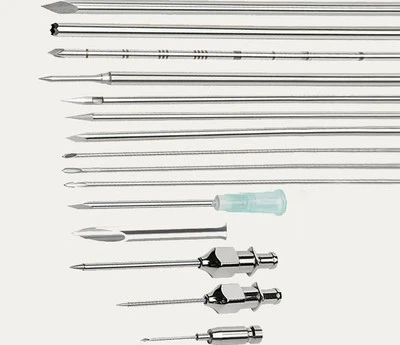
Spinal Needles + Manufacturers: In-depth Analysis Of Technological Evolution And Precision Manufacturing Processes
Apr 21, 2026
Spinal Needles + Manufacturers: In-depth Analysis of Technological Evolution and Precision Manufacturing Processes
The technological evolution and manufacturing processes of spinal needles directly determine the product's performance, safety, and reliability, and are an important embodiment of a manufacturer's core competitiveness. From material selection to precision processing, from design optimization to quality control, each link requires a high level of professional technology and strict standard control, which together shape the technical landscape of modern spinal needles.
Materials science is the foundation and core of spinal needle manufacturing. The needle shaft is usually made of medical-grade materials, providing strength, durability, and biocompatibility [citation: provided by user]. Common materials include stainless steel, which has corrosion resistance and ensures sharpness [citation: provided by user]. More advanced designs may use titanium alloy or special coating materials to further improve corrosion resistance and mechanical performance. Material selection must balance multiple factors: sufficient mechanical strength to maintain needle shape stability, excellent biocompatibility to avoid tissue reactions, and corrosion resistance to ensure long-term safety. The development of modern materials science enables manufacturers to develop composite materials with better performance to meet increasingly complex clinical needs.
Length design reflects the precise combination of engineering and human anatomy. The length of spinal needles varies according to the patient's body type and anatomical variations, ranging from a few centimeters to more than ten centimeters [citation: provided by user]. Short needles are suitable for children or patients with smaller body types, medium-length needles for standard adult punctures, and long needles for obese patients or those with special anatomical structures. Length design must consider the anatomical structure of the puncture path, the depth of the target tissue, and the ergonomics of operation. Manufacturers use Computer-Aided Design (CAD) and Finite Element Analysis (FEA) to simulate the mechanical behavior of needles of different lengths in tissues, optimizing length parameters to ensure the accuracy and safety of puncture.
Diameter (gauge) selection reflects the diversity of clinical applications. Spinal needles have a wide range of diameters, from as thin as a hair (27G) to thicker ones (18G), and the selection depends on the specific procedure and the required flow rate of cerebrospinal fluid or drugs [citation: provided by user]. Thinner needles are usually used for diagnostic purposes, such as cerebrospinal fluid collection; thicker needles may be used for therapeutic procedures, such as drug injection [citation: provided by user]. Diameter design needs to balance multiple factors: a smaller diameter reduces tissue damage but limits flow rate, while a larger diameter improves treatment efficiency but increases the risk of trauma. Modern manufacturing technology enables the mass production of ultra-fine needles while maintaining sufficient structural integrity and functional performance.
Needle tip design is a key innovation in spinal needle technology. According to the information provided by the user, the design of the spinal needle tip directly affects the puncture effect and patient safety. Pencil-point needles (such as Whitacre, Sprotte, etc.) have a blunt and rounded tip, reducing the risk of dural damage; Quincke needles have a sharp bevel, facilitating tissue penetration. More advanced designs adopt special tip structures, such as the function of automatically closing the puncture hole, which significantly reduces cerebrospinal fluid leakage. The precise control of the needle tip shape directly affects tissue penetrability and safety; a sharp bevel design facilitates tissue puncture, while a smooth tip reduces tissue damage.
Precision manufacturing processes are the core of quality assurance. Modern spinal needle manufacturing adopts advanced technologies such as multi-axis Computer Numerical Control (CNC) machine tools, laser cutting, and Electrical Discharge Machining (EDM) to achieve micron-level processing precision. 5-axis CNC machining technology allows the processing of complex geometric shapes in a single clamping, minimizing positioning errors and achieving high-precision manufacturing [citation: provided by user]. Laser cutting technology can achieve a small cutting seam width (15-30 microns) and high processing precision (≤±10 microns), ensuring the consistency of needle body dimensions and surface finish [citation: provided by user].
Surface treatment technology is crucial to product performance. The surface of spinal needles needs to have appropriate roughness to ensure good contact with tissues while reducing tissue adhesion. Electropolishing technology removes micro-irregularities on the surface through an electrochemical process to obtain a smooth and clean surface finish [citation: provided by user]. Ultrasonic cleaning uses the cavitation effect generated by high-frequency sound waves to thoroughly remove contaminants on the product surface without grinding, vigorous scrubbing, or high-pressure spraying [citation: provided by user]. These surface treatment technologies not only improve the biocompatibility of the product but also reduce tissue friction resistance, making the puncture operation more smooth.
The quality control system is the guarantee of a manufacturer's reputation. From the warehousing of raw materials to the delivery of finished products, each link has strict testing standards. Dimensional accuracy testing ensures that the needle length and diameter meet the design requirements; sharpness testing verifies puncture performance; biocompatibility testing is carried out in accordance with ISO 10993 standards to evaluate material safety; sterilization verification ensures the sterile state of the product. International standards such as the ISO 13485 quality management system and FDA 21 CFR Part 820 quality system regulations provide a framework and guidance for quality control.
Technological innovation directions show that spinal needle manufacturing is developing towards intelligence, integration, and personalization. Intelligent puncture systems integrate pressure sensors, position sensors, and imaging guidance to real-time feedback puncture depth and angle; integrated design combines spinal needles with ultrasound, CT, or MRI guidance systems to improve puncture accuracy; personalized manufacturing customizes needle parameters based on the patient's CT or MRI data to achieve precise puncture. These technological innovations not only improve surgical results but also drive the progress of manufacturing processes.
Environmental sustainability has become an important consideration in manufacturing processes. With the improvement of environmental awareness, manufacturers need to pay attention to energy consumption, waste disposal, and material recycling during production. Green manufacturing technologies such as water-saving processes, waste gas treatment, and material recycling are being adopted by more and more enterprises. At the same time, product design also needs to consider environmental factors, such as the use of recyclable materials and simplified packaging.
Against the background of manufacturing in China, manufacturers of spinal needles face unique development opportunities and challenges. China's complete manufacturing industrial chain and cost advantages provide a good foundation for product manufacturing; however, problems such as reliance on imported high-end materials, insufficient precision processing technology, and imperfect quality control systems restrict industrial upgrading. Domestic manufacturers need to improve manufacturing levels and product competitiveness through technological innovation, talent training, and international cooperation.
The future development of manufacturing processes will focus more on digitalization and automation. The introduction of the Industry 4.0 concept makes the production process more intelligent and flexible; digital twin technology can simulate and optimize the manufacturing process in a virtual environment; artificial intelligence and big data analysis can improve the efficiency and accuracy of quality control. The application of these technologies will promote the manufacturing of spinal needles to a higher level.
In general, the manufacturing process of spinal needles is a complex systematic engineering involving multiple disciplines, including materials science, precision processing, and biomedicine. Through continuous technological innovation and process optimization, professional manufacturers continuously improve product performance and quality, providing reliable tools for lumbar puncture and spinal anesthesia. With the advancement of manufacturing technology and changes in clinical needs, the manufacturing process of spinal needles will continue to evolve, bringing safer and more effective treatment options to patients.