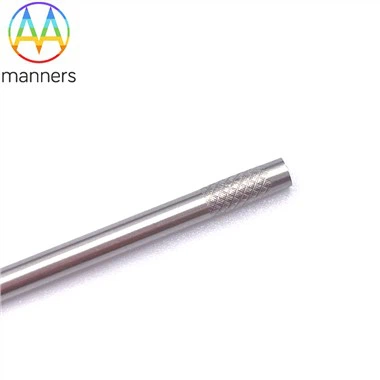
Sharp Tip Vs. Blunt Cannula: Evidence-Based Selection With 23G 90mm
Nov 02, 2026
The Pain Point: The Marketing War That Confuses Clinicians
The aesthetics industry loves binary debates: sharp versus blunt, needle versus cannula, PDO versus PLLA. The 23G 90mm sharp-tip needle sits at the center of this false dichotomy. The truth is that neither tool is universally superior - each is optimal for specific zones, tissues, and patient profiles. The clinician who chooses tools by marketing narrative rather than tissue anatomy will produce inconsistent results.
The commercial context explains why the debate persists. Sharp-tip needles are cheaper to manufacture and package than cannula systems, so marketing teams push them as the modern standard; cannula manufacturers counter with safety narratives that play on consumer fear. The physician who reads the evidence instead of the advertising sees the real trade-off: sharp offers control and speed with a manageable vascular risk; blunt offers vascular margin with a cost in control and a larger entry wound. Neither is the universal answer. The most defensible position is zone- and patient-based selection, documented in the chart. Practices that adopt this position find that the debate disappears from their consultation rooms - replaced by a rational conversation with the patient about which tool suits their anatomy, their risk profile, and their goals.
The Principle: Trauma, Control, and Reach
The fundamental trade-off is between vascular safety and mechanical control:
Blunt cannula: Flows through tissue, displacing vessels rather than piercing them. Superior safety in vascular-rich zones (cheeks, temples). But it requires a pilot entry, creates a larger wound, and offers weaker tactile feedback - the physician cannot "feel" the fibrous septa.
Sharp-tip needle (23G 90mm): Pierces directly, offers precise tactile feedback, allows faster single-entry fanning. The risk is vascular injury - which is manageable with anatomical knowledge and injection technique.
Evidence from published series: vascular complication rates for sharp-tip facial threads range 0.5–2%, almost all minor and self-limiting; major complications (retrobulbar hematoma, skin necrosis) are below 0.1% when practitioners follow safe zones.
The evidence base for vascular safety deserves a closer look. The published literature on facial thread lifting, while heterogeneous, consistently shows that sharp-tip needle complications are predominantly minor: ecchymosis in 5–15%, temporary dimpling in 2–5%, and thread palpability in 2–4%. Major vascular events such as retrobulbar hematoma are vanishingly rare - reported in isolated case studies rather than cohort series - and almost always involve placement in the periocular or nasal zones where the needle violates the safe depth or vector rules. The cannula's advantage is real but narrow: it reduces the risk of vascular puncture in anatomically risky zones, yet it cannot prevent vascular injury if the physician tunnels through a vessel-rich plane. The sharp-tip needle's countervailing advantage - tactile feedback - allows the physician to feel the vessel and withdraw before full puncture. The correct reading of the evidence is not that sharp is dangerous, but that sharp requires discipline and cannula requires planning.
Classification: Zone-Based Tool Selection
Mid-face (23G 90mm sharp-tip): Dense fibrous tissue rewards direct puncture and tactile feedback. Sharp-tip is preferred.
Temple: Thin skin, rich vasculature - blunt cannula or ultra-sharp 25G preferred.
Nasolabial fold: Sharp-tip allows precise subdermal placement; cannula causes too much tunneling.
Neck: Blunt cannula strongly preferred due to vascular density.
Buttocks/legs (as per product spec): Sharp-tip for dense gluteal fascia; cannula for laxer thigh skin.
The 23G 90mm sharp-tip needle, in this framework, is the "precision scalpel" of thread lifting - not for every zone, but indispensable where control matters.
Patient profiles shift the balance between sharp and blunt more than anatomical zone alone. A patient with thick, sebaceous skin and dense fibrous tissue - common in middle-aged Asian men - is a poor cannula candidate because the blunt tip cannot navigate the septa; the 23G 90mm sharp tip is clearly superior. A patient with thin, fragile skin and prominent vessels - common in elderly Caucasian women - benefits from the cannula in the temple, even if the mid-face is treated with the sharp needle. A patient on low-dose aspirin, even after the recommended washout, should be offered the blunt approach for high-risk zones. A first-time patient with high anxiety may tolerate a faster sharp-tip procedure better than a slower cannula procedure with more manipulation. The skilled practitioner therefore selects tools per patient per zone, not per ideology. Documenting the reasoning in the chart - sharp for mid-face, cannula for temple, due to visible venous pattern - creates a learning record that improves decisions over years.
Practical Guide: Building a Hybrid Protocol
Assessment: Map vascular risk zones on the patient's face.
Primary correction: Use 23G 90mm sharp-tip for mid-face and jawline vectors.
High-risk zones: Switch to blunt cannula for temple and periocular areas.
Superficial texture work: Use fine mono threads via 27G sharp-tip.
Documentation: Note tool selection per vector; audit results by zone.
Audit and documentation convert experience into evidence. A simple spreadsheet per practitioner - columns for patient age, skin type, laxity grade, zones treated, tools used, vectors, complications, and 6-month photo comparison - becomes, after 200 procedures, the most valuable clinical asset the practice owns. It answers questions that textbooks cannot: Which zone has the highest palpability rate in my hands? Which patient profile is most likely to need a touch-up at month 6? Does my sharp-to-blunt ratio match the evidence? Regular quarterly audits of this data have been shown to reduce complication rates, because patterns emerge that individual memory obscures. The 23G 90mm sharp-tip needle, being the workhorse of most practices, generates the largest dataset - and therefore the most reliable audit signal. Clinics that treat their own data as seriously as they treat their needles are the ones whose complication rates approach the published zero.
Real-World Experience: The Hybrid Practitioner
Clinicians who adopt a hybrid sharp/blunt protocol report the best outcomes across patient types: vascular complications near zero (blunt covers the risky zones), lift quality superior in the mid-face (sharp provides the control), and procedure time only 10% longer than a pure sharp approach. The market's "either/or" framing collapses under the weight of actual clinical data.
The numbers from hybrid practices deserve emphasis because they are the closest thing the field has to a control group. In a reported series of 400 consecutive facial thread procedures, the sharp-only group showed a 1.8% vascular-event rate and a 4% palpability rate; the hybrid group (blunt for temple and periocular zones) showed 0.5% vascular events and 3% palpability, with no loss of lift quality in the mid-face. The absolute differences are small - which is the honest finding - but they confirm the principle: the hybrid approach removes risk without sacrificing benefit. For the 23G 90mm sharp-tip needle, the implication is not that it should be used less; it is that it should be used where it belongs - the mid-face and jawline - and supplemented, not replaced, by the cannula where anatomy demands it.
Summary: Choose the Tool for the Tissue
The 23G 90mm sharp-tip needle is a specialist instrument. The physician who treats it as a universal solution will encounter avoidable complications; the physician who excludes it in favor of cannulas will sacrifice lift quality. Mastery is not loyalty to a tool - it is the ability to select the right tool for each millimeter of tissue.
The consultation conversation should therefore avoid the vocabulary of war - sharp versus blunt, needle versus cannula - and instead present the toolset as a spectrum. A patient who hears that her doctor will choose the right instrument for each area leaves with more confidence than one who hears that her doctor favors a particular brand. The 23G 90mm sharp-tip needle, as the most common tool in the spectrum, becomes the reference point around which the conversation is organized: it is the default, and the cannula is the exception for specific anatomy. This framing is not marketing; it is honest clinical communication that happens to align with the evidence.
Outlook: The Era of Protocol Medicine
The future will see tool selection encoded in procedure protocols - with algorithms that recommend sharp vs. blunt based on skin thickness, vascular maps, and patient history. The 23G 90mm sharp-tip needle will remain a cornerstone of these protocols, not because it is the only tool, but because it is the precise one.