Safety Mechanisms Of The Veress Needle— Spring Protection, Position Verification, And Systematic Complication Prevention
Jul 12, 2026
https://en.wikipedia.org/wiki/Veress_needle
The core value of the Veress needle lies in providing a relatively safe access route under "blind" conditions. This safety is not monolithic but constructed upon a multi-layered system integrating physical protection, tactile feedback, and biochemical verification. Mastering this system is fundamental for every laparoscopic surgeon.
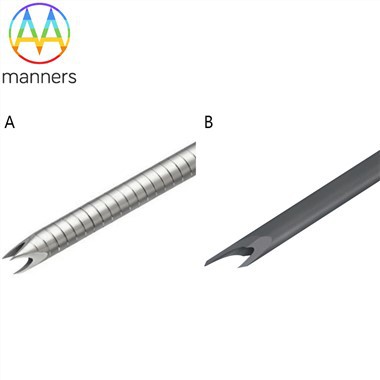
Physical Protection is the primary safeguard-the iconic spring-loaded stylet. As detailed, the blunt stylet tip protrudes beyond the sharp cannula under constant tension, enforcing a "blunt-sharp-blunt" logic. Encountering dense tissue (skin, fascia) forces stylet retraction, exposing the cutting edge. Upon breaching the peritoneum into the low-resistance cavity, resistance vanishes, and the spring instantly re-deploys the blunt tip, physically shielding viscera. Advanced needles add locking mechanisms post-insertion to prevent inadvertent stylet movement.
Tactile Feedback serves as the neural link between device and surgeon. The quintessential cue is Loss of Resistance (LOR). Advancing under steady pressure, the surgeon perceives sequential resistance from skin, fat, and fascia. Piercing the peritoneum elicits an abrupt LOR-like puncturing a taut membrane. Modern Veress needles optimize force transmission, faithfully relaying these subtle tissue changes to the surgeon's fingertips.
Biochemical Verification provides the "gold standard" for tip location via three canonical tests:
- Aspiration Test: Post-insertion aspiration. Blood suggests vascular injury; bowel contents/urine indicate visceral puncture; return of air implies peritoneal entry.
- Hanging Drop Test: A saline drop on the hub is drawn inward if intraperitoneal (negative pressure); immobility suggests extra-peritoneal or intravascular placement.
- Initial Pressure Monitoring: Opening pressure should be <8 mmHg. Sustained elevation (>15 mmHg) warns of malposition (pre-peritoneal, vascular, or solid organ).
Despite these safeguards, risks persist (vascular injury, bowel perforation, subcutaneous emphysema, gas embolism). Systematic prevention is crucial: select safe entry sites (e.g., Palmer's Point) to avoid epigastric vessels; firmly elevate the abdominal wall to maximize safety distance; employ a "two-step" technique (pierce fascia, then redirect). Only by synergizing mechanical safety, astute tactile interpretation, and disciplined technique can the Veress needle's full potential be realized, ensuring a secure surgical commencement. This is not merely technical display, but a profound reverence for life.