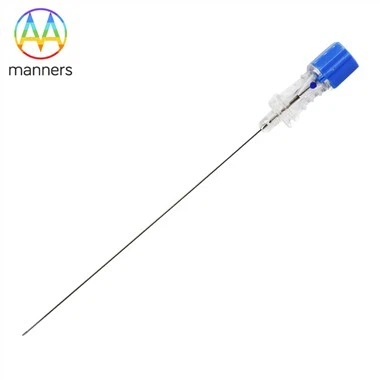
Risk Control In Cervical Biopsy Using Histological Biopsy Needle PTC
Nov 11, 2026
1. Clinical Pain Points
Bleeding and secondary infection are the two most common complications of colposcopy-directed cervical biopsy. Using oversized or dull biopsy needles tears vascular-rich cervical stroma, leading to persistent spotting that lasts for more than one week. Multiple blind sampling attempts expand the wound area. Some clinicians perform biopsy casually without strict triage: they skip CTC screening and directly sample benign erosion, bringing unnecessary trauma. If the needle tip is uncontrolled, accidental deep penetration may damage the endocervical canal. Patient anxiety rises when complications occur, and many women refuse follow-up screening. Without standardized needle selection and sampling protocols, the definitive diagnostic advantage of biopsy is offset by safety risks.
2. Working Principle
Histological biopsy needle PTC creates a tiny controlled wound to harvest cervical tissue under 40× colposcopic magnification. Biopsy is only indicated when CTC returns suspicious results or diagnosis remains unclear. The needle's sharp cutting edge produces a clean, small incision that heals quickly. Smaller needle diameter reduces the cross-section of the wound and bleeding risk. Smooth surface minimizes additional mucosal tearing. After sampling, the tissue is sent for histology to confirm benign change, dysplasia or cancer. The core safety logic is to limit sampling range, depth and wound size while obtaining diagnostic tissue. Poor needle control or improper specification selection breaks this balance and triggers complications.
3. Classification of Histological Biopsy Needle PTC for Risk Control
Low-trauma fine needles (0.25–1.2 mm): first choice for routine triage biopsy after abnormal CTC, minimal wound area, lowest bleeding risk, suitable for superficial erosion and thin cervical epithelium. General-purpose medium needles (1.2–5 mm): for lesions requiring stromal tissue, balanced sampling capacity and safety. Large customized needles (>5 mm): reserved for deep endocervical lesion sampling, not recommended for conventional surface biopsy. Surface treatment classification: polished for minimal friction; electroplated for anti-deformation; ultrasonic cleaning to eliminate surface burrs. ISO9001 certified, customizable via 2D/3D drawings or samples, flexible packaging.
4. Standard Operation Guide for Risk Control
Preoperative evaluation: review CTC results, colposcopy images and patient history of bleeding disorders. Confirm biopsy indication: only for unclear cytology or suspected malignancy, not for routine erosion. Select the smallest qualified needle that can obtain enough tissue. Stabilize the cervix gently, avoid excessive clamping injury. Under colposcopy, sample only the most suspicious single or limited sites instead of widespread blind sampling. Execute one steady sampling motion and withdraw immediately. Apply local compression for sufficient hemostasis. Document the sampling site and needle specification. Educate patients on warning signs: heavy bleeding, fever and purulent discharge that require emergency visit. Schedule follow-up for pathology results.
5. Practical Experience
Limiting the number of biopsy sites is the simplest and most effective risk control measure. More than three sampling sites significantly increase bleeding probability. For patients with fragile inflamed cervix after long-term erosion, fine polished PTC needles are always preferred. If bleeding appears after sampling, do not take extra samples at adjacent sites. When CTC is borderline and colposcopy shows only mild erosion, clinicians can choose conservative follow-up instead of immediate biopsy. Many clinical cases prove that standardized fine-needle biopsy keeps severe complication rate very low. Operators should distinguish normal light spotting from active arterial bleeding and master local hemostasis techniques.
6. Summary
Safety of cervical biopsy is closely tied to needle selection and sampling discipline. Fine-gauge polished histological biopsy needle PTC is the core tool to reduce bleeding and tissue injury. Strict indication control, limited sampling sites and gentle operation are three key safety rules. Biopsy is a definitive test, not a routine examination for every cervical erosion. Rational application of PTC biopsy needles preserves diagnostic value while minimizing patient harm.
7. Prospect and Suggestion
Manufacturers can add depth limit markers on needle shafts to prevent over-penetration. Hospitals should build simulation training for colposcopy biopsy focusing on risk control. Suppliers should prioritize fine diagnostic needles in standard inventory. Clinical guidelines should emphasize that biopsy is a second-line test after CTC and colposcopy assessment. Matching proper needle specification with standardized triage workflow will continuously improve the safety of cervical biopsy procedures worldwide.
< img alt="news-1-1" src="/uploads/24240/news/202604241539186d0ff.png " />