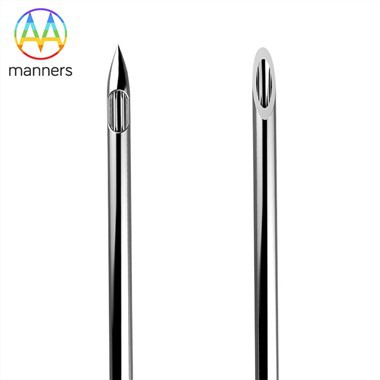
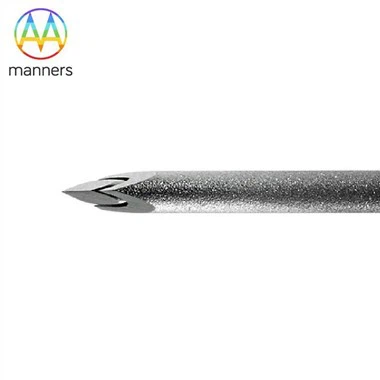
Material And Surface Treatment Of Histological Biopsy Needle PTC For Cervical Biopsy Safety
Nov 11, 2026
1. Clinical Pain Points
Substandard biopsy needle materials and rough surfaces bring multiple hidden risks. Poorly finished needles with burrs scratch normal cervical mucosa, causing heavy bleeding and prolonged vaginal spotting. Unqualified stainless steel may corrode after contacting mucus and body fluid, releasing metal debris and triggering local inflammatory reactions. If the needle lumen is contaminated by residual machining oil, the tissue sample may be polluted and affect pathological interpretation. Many adverse events are not caused by operator error but unstable manufacturing quality. Fixed-size needles cannot adapt to different cervical thickness and lesion locations, forcing clinicians to use mismatched instruments and increase trauma. Clinicians lack clear guidance on selecting polishing, plating or ultrasonic cleaning schemes for different patient scenarios.
2. Working Principle
Histological biopsy needle PTC adopts medical stainless steel as the main body, forming a hollow puncture-sampling channel. Under colposcopy 40× magnification, the needle reaches suspicious cervical erosion or atypical regions. The cutting tip harvests tiny tissue fragments for histology, the gold standard diagnosis when CTC is unclear or positive. Material performance controls rigidity, bending resistance and corrosion resistance. Surface treatment controls friction coefficient, surface cleanliness and biocompatibility. Smooth polished surfaces reduce dragging injury; plating improves wear resistance; ultrasonic cleaning removes micro-contaminants. Stable inner and outer surface quality prevents tissue squeezing, contamination and unexpected mucosal laceration during sampling.
3. Classification Based on Material and Surface Treatment
Base material: medical stainless steel as the mainstream, balancing rigidity, corrosion resistance and cost; custom alloy options for special anti-corrosion requirements. Classification by surface finish: polished needles for low-friction atraumatic superficial sampling; electroplated and plated needles for repeated sampling scenarios and higher structural strength; ultrasonic cleaned needles as the final purification step for all grades. By customization mode: standard diameter series 0.25–30 mm; custom versions manufactured from 2D drawings, 3D files or physical samples, with adjustable tip angle, side window and total length. Certification: ISO9001, packaging can be standard carton or customized sterile packaging.
4. Operation Guide for Material and Model Selection
Before biopsy, match needle diameter according to lesion depth and cervical thickness. Superficial mild erosion selects fine polished needles. Thick cervix or suspected deep lesions can adopt electroplated medium-size needles. For patients with recurrent cervicitis and fragile mucosa, prioritize fully ultrasonic-cleaned products to reduce foreign-body irritation. Avoid bending thin stainless steel needles during operation, which may deform the cutting edge. After sampling, inspect whether the specimen is intact. If obvious mucosal tearing occurs frequently, switch to a smoother polished model. Record bleeding volume and specimen quality for future needle selection reference.
5. Practical Experience
Polished fine PTC biopsy needles create the least tissue drag, which is ideal for young patients with thin cervical epithelium. Operators report that ultrasonic cleaning is non-negotiable for biopsy needles, because residual particles may cause granulomatous changes and interfere with histology. Electroplated needles resist kinking better when the sampling angle is steep, but overly thick coating may blunt the cutting edge and crush samples. Patients with long-term inflammatory erosion have friable tissue; in these cases, low-friction polished needles significantly reduce bleeding. Many senior colposcopists build a simple selection log: polished fine needles for screening biopsy, plated medium needles for thick tissue, customized samples for rare anatomical variants.
6. Summary
Material and surface treatment are foundational factors controlling the safety and diagnostic value of histological biopsy needle PTC. Proper surface treatment reduces bleeding, infection and specimen crush artifacts. Stainless steel balances mechanical performance and biocompatibility. Diversified customization solves the mismatch between standard instruments and individual cervical anatomy. Surface treatment options should be selected according to mucosa fragility and sampling depth.
7. Suggestion and Prospect
Manufacturers should implement full-process surface roughness testing and particulate inspection. They can publish a clinical selection guide for surface treatments. New low-friction biocompatible coatings will become a development direction. Gynecology departments should include needle surface performance in procedure quality control. Device suppliers need to maintain stable quality for customized orders while supporting fast turnaround for special clinical drawings. High-quality surface-treated PTC biopsy needles will make colposcopy biopsy safer and more reliable for cervical lesion screening.
< img alt="news-1-1" src="/uploads/24240/news/202604241539186d0ff.png " />