Beyond Renal Cysts: A Comprehensive Overview And Future Prospects Of PTC Needles in The Field Of Interventional Ultrasound
Apr 27, 2026
Beyond Renal Cysts: A Comprehensive Overview and Future Prospects of PTC Needles in the Field of Interventional Ultrasound
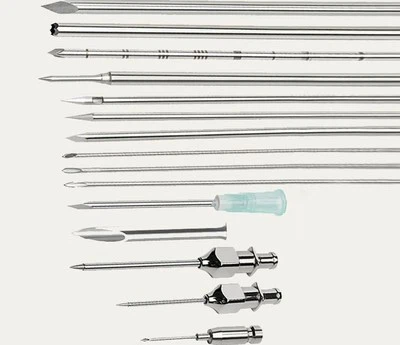
The literature focuses on renal cysts, but this is merely a classic example of how PTC needles have shone brightly in the vast field of interventional ultrasound. Based on this, a clear picture can be drawn of the application panorama and future trends of PTC needles.
Horizontal expansion: A platform for sclerotherapy of multiple organ cystic lesions
Based on the same "puncture - aspiration - hardening" principle, the PTC needle has become the first-line minimally invasive treatment tool for symptomatic cysts in multiple locations:
* Hepatic cyst: The treatment principle and operation process are highly consistent with those of renal cysts. It is one of the main application scenarios of PTC needles.
* Thyroid cysts and ovarian cysts: For cystic lesions that meet the criteria, PTC needle puncture and sclerotherapy under ultrasound guidance can avoid surgical scars and protect organ functions and aesthetics.
* Pancreatic pseudocysts and splenic cysts, etc.: Under strict adherence to the indications, PTC needle puncture and drainage is also an important treatment option.
Vertical deepening: From benign cyst fluid aspiration to interventional treatment of solid tumors
The value of PTC needles far exceeds that of simply "diluting a bag of water". Their ability to precisely create percutaneous channels makes them the cornerstone of tumor interventional diagnosis and treatment.
1. Biopsy: For solid lesions in organs such as the liver, kidneys, prostate, and thyroid, using a finer PTC needle (such as a 21G needle) for puncture is the "gold standard" method for obtaining tissue samples and making a clear pathological diagnosis. Its accuracy directly determines the success rate and safety of the biopsy.
2. Tumor ablation: In radiofrequency, microwave, and cryotherapy ablation treatments, the PTC needle or its evolved ablation electrode needle is the core instrument for delivering energy and inactivating the tumor. The treatment begins with a precise PTC needle puncture and positioning.
3. Chemical ablation: For early-stage liver cancer and other conditions, injecting anhydrous ethanol into the tumor through the PTC needle can achieve in situ tumor inactivation. This is an innovative application of the concept of sclerotherapy in solid tumors.
Future Trends and Technological Extensions
1. Integration with advanced imaging technology: In the future, the guidance of PTC needles will not only rely on conventional ultrasound, but also be able to integrate with ultrasound contrast imaging, CT/MRI imaging for navigation, and even artificial intelligence puncture planning systems, achieving "super-precise" strikes on even smaller and more concealed lesions.
2. Intelligence of the needle itself: Future PTC needles may incorporate micro sensors to provide real-time feedback on tissue impedance, temperature or pressure at the needle tip. The widespread availability of controllable curved needle heads will enable PTC needles to bypass obstacles and reach more complex lesions.
3. Continuous expansion of application fields: In pain treatment (nerve block), vascular intervention (percutaneous transhepatic portal vein puncture), and lymphatic vessel intervention, PTC needles play an irreplaceable role as the initial precise channel establishment tool.
Conclusion: The sclerotherapy for renal cysts is a perfect showcase of the core value of the PTC needle. Through it, we can see a grand vision where the PTC needle serves as the fundamental tool, with the concepts of "precision, minimally invasive, and visualization" as the guiding principle, and is continuously expanding into the diagnosis and treatment of various systemic diseases throughout the body. The PTC needle, this "embroidery needle" of modern medicine, is continuously driving clinical practice towards a more precise and more humanized future.