Research On Technological Innovation Routes And Next-Generation Product Concepts Of Chiba Needle Manufacturers
May 31, 2026
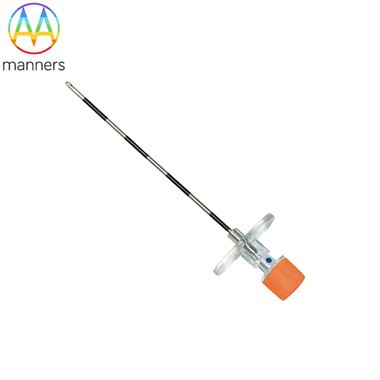
Ever since Professor Chiba invented this classic puncture needle, Chiba needles have evolved into iconic instrumentation within interventional medicine. Nevertheless, amid rapid advances in medical technology, stagnation on conventional designs equates to falling behind. Forward-thinking Chiba needle manufacturers have moved beyond manufacturing generic stainless steel tubing, actively engaging in R&D covering material innovation, structural redesign and intelligent component integration to upgrade this classic device toward superior precision, enhanced safety and embedded smart functions. From a technical evolution perspective, this paper forecasts the future developmental trends of Chiba needles.
I. Advancement of Material Technology: Beyond Conventional Stainless Steel and Nitinol
Composite substrate and functional coating technologies: Next-generation Chiba needles will adopt functional surface coatings on base substrates as a mainstream development direction:
- Hydrophilic lubricious coating: Hydration prior to insertion drastically cuts frictional drag against soft tissue to deliver near-atraumatic puncture, improving patient comfort and intraoperative positional accuracy.
- Antimicrobial coating: Silver ions or alternative antibacterial agents immobilized on needle surfaces physically mitigate the risk of access-tract infection, proving clinically vital for immunocompromised patients and complex infectious puncture procedures.
- Sustained-release pharmaceutical coating: For oncologic puncture applications, cannulas can be coated with chemotherapeutics or immune modulators. While establishing percutaneous access, drugs are gradually released along the needle tract to inhibit malignant cell seeding and metastatic spread along the puncture channel.
Exploration of biodegradable raw materials: For diagnostic interventions requiring only temporary access, cannulas fabricated from biocompatible degradable polymers represent a promising developmental path. Such devices degrade and absorb naturally in vivo after treatment without leaving residual foreign implants, though technical hurdles persist regarding mechanical strength and ultrasonic visibility performance at present.
II. Innovative Structural Design: From Single-Lumen Access to Multi-Functional Integrated Platform
Coaxial trocar system and multi-lumen architecture: Built upon standard single-lumen Chiba configurations, coaxial setups deploy a thin Chiba needle for initial localization, through which larger-bore biopsy or therapeutic cannulas are advanced to enable one-time positioning for sequential tissue sampling or interventional treatment. More advanced multi-lumen designs separate one channel for specimen aspiration and another for contrast or pharmaceutical injection, synchronizing real-time imaging and targeted therapy.
Steerable tip and variable-stiffness cannula design: While Nitinol brings inherent superelastic flexibility, active tip deflection remains a prominent research focus. Future Chiba needles may integrate miniature mechanical transmissions or shape-memory alloy actuators, allowing clinicians to remotely manipulate tip curvature extra-corporeally to navigate around vital blood vessels and bony structures, achieving curved-path puncture and drastically boosting targeting accuracy for anatomically complex sites.
Sensor-integrated smart needles (disruptive innovation direction): Miniaturized sensing elements can be embedded at needle tips or along cannula walls by manufacturers:
- Optical sensing: Embedded micro-fibers facilitate in-situ optical coherence tomography (OCT) or real-time spectroscopic analysis to differentiate neoplastic lesions from healthy parenchyma intraoperatively, realizing visualized biopsy and guaranteeing specimen retrieval from representative malignant tissue.
- Bioimpedance & pressure sensing: Real-time tissue impedance and pressure feedback instantly alerts operators once the tip penetrates into target lumens such as blood vessels or cysts, supplying supplementary navigational data beyond conventional imaging modalities.
- Thermal sensing: During radiofrequency or cryoablation, continuous tip temperature monitoring delivers precise feedback for fine-tuning ablation energy output.
III. Deep Integration with Image-Guided Navigation Systems
Future Chiba needles will no longer operate as standalone instruments, but serve as terminal end-effectors for image-guided robotic or augmented reality (AR) navigation platforms. Manufacturers must establish in-depth cooperation with imaging equipment and software developers to develop:
- Electromagnetically or optically tracked needles: Built-in tracking fiducials enable continuous real-time positional tracing by navigation hardware, overlaying the needle's 3D coordinates onto preoperative volumetric scans or live intraoperative images to achieve submillimeter spatial localization.
- Robotic needle manipulation and advancement units: Chiba cannulas are mounted onto high-precision robotic manipulator arms. Surgeons formulate pre-procedural puncture trajectories at control consoles, while robotic systems execute steady, tremor-free insertion to eliminate hand-induced positional deviation, especially critical for ultra-precise intracranial and spinal interventions.
Conclusion
Competition among next-generation Chiba needle suppliers hinges on cross-disciplinary innovation capacity. Manufacturers need to break away from conventional metal-processing mindsets and embrace emerging technologies across biomedical engineering, microelectronics and algorithm development. Evolving from passive blind puncture tools, future Chiba needles will mature into all-in-one intelligent interventional terminals integrating real-time sensing, image navigation, in-situ diagnosis and targeted therapy. Enterprises prioritizing early R&D layout and close alignment with cutting-edge clinical demands will set new industrial benchmarks within the high-end medical device marketplace and perpetuate the long-standing legacy of the Chiba needle brand.