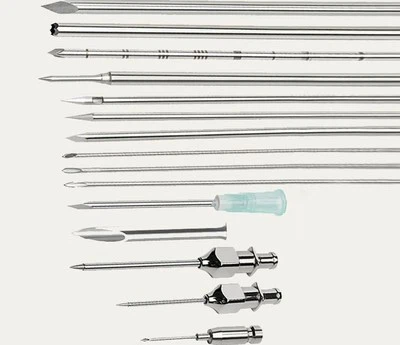
Regional Market Analysis And Development Opportunities Of Global PTC Puncture Needles
Apr 19, 2026
Regional Market Analysis and Development Opportunities of Global PTC Puncture Needles
The global market for percutaneous transhepatic cholangiography (PTC) puncture needles presents distinct regional disparities in development scale, growth momentum, and competitive landscape. The divergent development status across different regions is intrinsically correlated with local medical infrastructure construction, regional disease spectrum characteristics, clinical popularization of interventional techniques, medical insurance reimbursement mechanisms, and overall economic affordability of healthcare expenditure. At present, North America and Europe have established themselves as mature and dominant markets worldwide, while the Asia-Pacific region has evolved into the emerging market with the most tremendous untapped growth potential in the global industry.
North American Market: Technological Leadership and High-Value Industrial Cluster
North America, with the United States at its core, occupies a leading position in the global PTC puncture needle industry in terms of market size, technological reserve and industrial maturity. This region sustains a high-value market ecosystem driven by multiple favorable factors. It boasts sophisticated medical research and development systems, well-established third-party medical payment mechanisms and comprehensive medical insurance coverage, high clinical detection rates of biliary tract diseases including cholangiocarcinoma and cholelithiasis, as well as strong clinical preference for minimally invasive interventional therapies among physicians and patients. A cluster of world-renowned multinational medical device enterprises including BD, Argon Medical Devices and Boston Scientific are headquartered and operationally concentrated in this region. These leading manufacturers not only supply high-performance PTC instruments to the market, but also maintain long-term collaborative partnerships with top-tier academic medical centers to continuously optimize surgical protocols and iteratively upgrade device designs. The prevailing market trends in North America concentrate on high-end product iteration, intelligent device integration, persistent reduction of perioperative complications, and continuous improvement of intraoperative safety and postoperative patient comfort.
European Market: Rigorous Regulation and Balanced Industrial Development
The European PTC puncture needle market is another mature segment across the globe, with Germany, France and the United Kingdom acting as core regional economies. A defining feature of this market is its stringent regulatory framework for medical devices represented by the EU MDR regulation, which imposes strict requirements on product safety verification, clinical validity evidence, quality management and post-market surveillance. Europe maintains a well-balanced and widely accessible healthcare system, alongside high popularization of interventional radiology clinical applications. Epidemiological statistics indicate that approximately 10% of European adults suffer from various hepatic disorders, which underpins steady and sustainable market demand for biliary interventional instruments. European purchasers attach extreme importance to product quality, biocompatibility and regulatory compliance. Meanwhile, the region is actively adopting advanced surgical configurations, such as customized PTC puncture needles compatible with high-end imaging equipment in hybrid operating rooms, which further stimulates technical upgrading of localized product demand.
Asia-Pacific Market: Core Growth Engine and Global Developmental Focus
The Asia-Pacific region has become the primary growth driver fueling global expansion of the PTC puncture needle market. Countries including China, India and Japan are undergoing rapid economic advancement and systematic upgrading of national healthcare systems. Multiple endogenous factors trigger explosive market growth in this region: a massive population base accompanied by a heavy burden of hepatobiliary diseases such as hepatitis B and cholelithiasis, increasing governmental investment in public healthcare infrastructure, rising demand for high-end medical services driven by expanding middle-class populations, and rapid progress of domestic medical device manufacturing capabilities. Domestic Chinese enterprises represented by Shandong Weigao Group have captured substantial domestic market shares relying on outstanding cost control and continuously enhanced independent research and development capabilities, and have gradually stepped into international competitive layouts. Japan is home to specialized high-precision manufacturers including Hakko Co. and ASUKA MEDICAL Inc., which maintain competitive advantages in refined needle design and material technology.
Regional Opportunities and Challenges for Industrial Participants
For global medical device manufacturers, distinctive strategic opportunities and obstacles exist across different markets. In mature North American and European markets, core opportunities lie in sustaining brand premium and long-term customer loyalty through continuous technological innovation and functional optimization. Correspondent challenges include intense industrial price competition and increasingly rigorous regulatory approval examinations. In emerging Asia-Pacific markets, prominent opportunities originate from vast unoccupied market space and rapidly expanding clinical demand. Nevertheless, major challenges consist of uneven regional medical payment capacity, high costs of clinical market education, and the necessity of developing adaptive products and localized distribution networks matching regional clinical operation habits. Furthermore, the global universal pressure to reduce overall healthcare costs compels manufacturers to develop cost-effective product solutions. In conclusion, sustainable market competitiveness relies on the organic integration of global strategic layout and localized adaptive operation for all industrial participants.
Word count: 799