Radiofrequency (RF) Needles + Manufacturers: A Deep Dive Into Global Market Structure And Competitive Landscape
Apr 22, 2026
Radiofrequency (RF) Needles + Manufacturers: A Deep Dive into Global Market Structure and Competitive Landscape
As the core instrument in Radiofrequency Ablation (RFA) surgery, the RF needle occupies a pivotal position in the global minimally invasive interventional therapy market. RF ablation technology, which uses high-frequency electrical currents to generate thermal energy that precisely destroys pathological tissues, has become a key treatment modality across various medical fields, including pain management, oncology, and cardiac intervention. With the popularizationof the minimally invasive concept and the growing demand for precision medicine, the RF needle market is experiencing rapid expansion.
Global Market Distribution and Regional Dynamics
From a global perspective, the RF needle market exhibits significant regional variations. North America holds the largest global market share due to its advanced medical technology, high patient affordability, and robust healthcare infrastructure, a dominance expected to persist throughout the forecast period. The European market, represented by Germany, France, and the UK, benefits from mature medical regulatory systems and high technology acceptance. The Asia-Pacific region, particularly China, Japan, and India, is emerging as the fastest-growing market, driven by improving medical standards, an aging population, and enhancements in medical infrastructure. Although the markets in Latin America and the Middle East/Africa are currently smaller, their growth potential remains substantial.
Market Size and Segmentation
The global RF ablation equipment market continues to expand. According to industry reports, the market is projected to grow from XXbillionin2023∗∗to∗∗XX billion by 2030, achieving a significant CAGR. Pain management applications currently command the largest market share, while the tumor ablation segment is growing the fastest, largely due to rising cancer incidence and an increasing preference for minimally invasive treatments. The cardiac electrophysiology ablation market also maintains steady growth, primarily used for treating arrhythmias such as atrial fibrillation.
Competitive Landscape Analysis
The competitive landscape is characterized by diversification and high barriers to entry:
Global Giants: Industry titans like Medtronic, Boston Scientific, Abbott, and Johnson & Johnson lead the market with their comprehensive portfolios in rhythm management, pain management, and tumor intervention. These companies leverage powerful R&D capabilities, global distribution networks, and brand influence, consolidating their positions through continuous mergers, acquisitions, and technological integration.
Specialized Manufacturers: Companies like AngioDynamics, Merit Medical, and Stryker build competitive advantages in specific niches by offering highly specialized RF needle products.
Emerging Market Players: Local enterprises in emerging markets are expanding their presence through cost advantages and localized services.
Product Differentiation and Technical Parameters
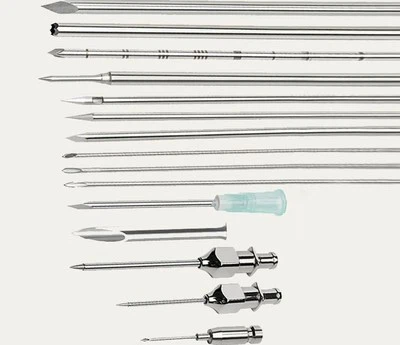
Product differentiation is key to competition. The design parameters of RF needles directly impact clinical efficacy, including cannula material, needle length, diameter, and insulation tip length.
Materials: Needle shafts are typically made of medical-grade stainless steel, providing strength, durability, biocompatibility, and resistance to the heat generated during ablation.
Length and Diameter: Needle length varies based on the procedure and target depth, while diameter is selected based on the target tissue size.
Insulated Tips: Feature specific lengths designed to prevent heat dispersion to surrounding healthy tissues.
Manufacturers optimize these parameters to develop specialized RF needles for diverse clinical scenarios, creating product differentiation.
Drivers of Market Growth
Multiple factors are driving the market:
Rising Disease Burden: Increasing global incidence of chronic pain, cancer, and cardiovascular diseases directly boosts the demand for minimally invasive interventions.
Patient Preference: Higher patient expectations for quality of life and treatment experiences favor minimally invasive options with shorter recovery times.
Technological Advancement: Continuous innovation makes RF procedures safer and more effective, expanding indications.
Aging Population: A greater prevalence of degenerative diseases among the elderly increases the need for interventional therapies.
Healthcare Spending: Growing healthcare expenditure and expanded insurance coverage improve the accessibility of RF procedures.
Regulatory Environment and Supply Chain Challenges
The regulatory environment significantly impacts market development. Stringent standards from the US FDA, EU MDR, and China's NMPA have raised market entry barriers, promoting industry standardization. Manufacturers must establish robust Quality Management Systems (QMS) to ensure compliance, which has become a core component of corporate competitiveness.
However, supply chain management and cost control remain significant challenges. The production of RF needles involves precision machining, material science, and electronic engineering. Fluctuations in raw material costs and high production standards pose challenges to cost management. Furthermore, the global trend of healthcare cost containment puts downward pressure on prices, forcing manufacturers to optimize cost structures without compromising quality.
Future Market Trends
The future of RF needles points toward intelligence, personalization, and further minimization of invasiveness.
Intelligent Systems: Real-time monitoring of tissue impedance and temperature, with automatic adjustment of energy output.
Personalized Design: Customizing needle parameters based on patient anatomy and pathology.
Single-Use Dominance: The popularization of single-use needles will change the market landscape. While increasing per-procedure costs, disposables significantly reduce reprocessing expenses and the risk of cross-infection, improving overall healthcare safety and efficiency.
Opportunities in the Chinese Market
The Chinese market presents unique opportunities. The advancement of the tiered diagnosis and treatment system and the improvement of primary healthcare capabilities will expand the demand for RF ablation surgeries at the grassroots level. Supported by national policies for domestic medical device innovation, local manufacturers can leverage technological advancements and cost advantages to accelerate import substitution and build competitiveness in the international arena.
Conclusion
In summary, the RF needle market is maintaining rapid growth globally, driven by technological innovation and robust clinical demand. Professional manufacturers are building competitive advantages through product differentiation and market expansion. With the continued popularization of minimally invasive surgical techniques and the growing demand for precision medicine, the market prospects for RF needles and related instruments are exceptionally broad, offering safer and more effective treatment options for patients worldwide.