Radiofrequency Needle + Manufacturer: Clinical Application Progress And Multidisciplinary Treatment Effect Evaluation
Apr 22, 2026
Radiofrequency needle + Manufacturer: Clinical Application Progress and Multidisciplinary Treatment Effect Evaluation
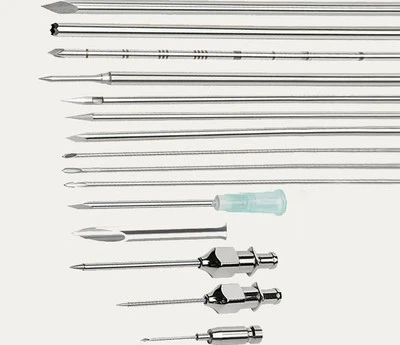
The radiofrequency needle, as the core tool of radiofrequency ablation technology, plays a significant role in multiple medical specialties. Its clinical application scope has expanded from traditional pain management to a wide range of fields such as tumor treatment, cardiac disease intervention, and cosmetic medicine. This multi-disciplinary application feature makes the radiofrequency needle an important pillar of modern minimally invasive interventional medicine, providing patients with treatment options that are less invasive and have a faster recovery for various diseases.
Pain management is the earliest and most mature application field of radiofrequency needles. Chronic pain conditions such as radicular pain caused by lumbar intervertebral disc protrusion, trigeminal neuralgia, and joint-related pain, have limited effects and obvious side effects from traditional treatment methods. Radiofrequency ablation provides an effective solution for chronic pain patients by precisely heating and coagulating the pain-conducting nerves, blocking the transmission of pain signals. [citation: provided by the user] Clinical studies have shown that the success rate of radiofrequency ablation for chronic pain can reach 70-80%, with effects lasting for 6 months to 2 years. Compared with drug treatment, radiofrequency ablation directly targets the pain source, avoiding systemic side effects; compared with open surgery, it has less trauma, faster recovery, and fewer complications. The selection of needle length and diameter is determined based on the depth of the target nerve and the surrounding anatomical structure, and the insulation tip length ensures that the heat is precisely applied to the target nerve, avoiding damage to surrounding important tissues [citation: provided by the user].
The field of tumor ablation has witnessed significant progress in radiofrequency needle technology. Radiofrequency ablation directly destroys cancer cells through high temperatures (typically 50-100°C), and has become an important treatment method for early-stage liver cancer, lung cancer, kidney cancer, bone tumors, and other solid tumors [citation: provided by the user]. For patients who are not suitable for surgery or refuse surgery, radiofrequency ablation provides an effective alternative. Clinical data show that the 5-year survival rate of small liver cancer (≤3cm) by radiofrequency ablation can reach 50-70%, which is comparable to surgical resection. The design optimization of radiofrequency needles improves the complete rate and safety of tumor ablation, and multi-needle array systems can create larger and more uniform ablation areas. Conformal ablation technology can adjust the heat field distribution according to the shape of the tumor. The needle shaft material must resist the high temperatures generated during radiofrequency ablation to ensure the structural integrity during the treatment [citation: provided by the user].
Cardiac electrophysiological ablation is an important application of radiofrequency needles in the field of cardiovascular medicine. Through a catheter, the radiofrequency needle is sent to a specific part of the heart to generate controlled thermal damage, blocking abnormal electrical conduction pathways, and treating arrhythmia diseases such as atrial fibrillation and supraventricular tachycardia [citation: provided by the user]. Compared with drug therapy, radiofrequency ablation has a higher cure rate and lower recurrence rate; compared with surgical procedures, it has less trauma and faster recovery. Modern cardiac radiofrequency ablation is guided by a three-dimensional mapping system to achieve precise positioning and real-time monitoring. The insulated tip design prevents heat from spreading to surrounding tissues, reducing the risk of complications [citation: provided by the user]. Clinical studies have shown that the success rate of radiofrequency ablation for paroxysmal atrial fibrillation can reach 70-80%, significantly improving the quality of life and prognosis of patients.
In cosmetic medicine, radiofrequency needles are used for skin tightening and rejuvenation treatments [citation: provided by user]. By using a minimally invasive method, radiofrequency energy is delivered to the dermis and subcutaneous tissues, stimulating the production and reorganization of collagen, and improving issues such as skin laxity, wrinkles, and acne scars. Compared to traditional lasers and phototherapy, radiofrequency needles can reach deeper tissue layers and have a more lasting effect; compared to surgical facelifts, they have less trauma, faster recovery, and lower risks. The length and diameter of the needles are selected based on the treatment area and depth. Fine needles are suitable for fine areas of the face, while thick needles are suitable for large-scale treatments on the body [citation: provided by user]. Clinical observations show that radiofrequency needle cosmetic treatments can improve skin elasticity by 30-50%, and the effect lasts for 1-2 years.
In the field of gynecology, radiofrequency needles are used for minimally invasive treatment of diseases such as uterine fibroids and endometriosis [citation: provided by user]. The radiofrequency needles are delivered to the affected area through the vaginal or laparoscopic approach. The heat energy causes the diseased tissue to coagulate and necrotize, which is then absorbed by the body. Compared with traditional hysterectomy, radiofrequency ablation retains the uterine structure, maintains reproductive function, and reduces surgical trauma. The needle length is designed considering the anatomical characteristics of the uterus to ensure accurate access to deep fibroids; the insulated tip prevents heat energy from damaging the surrounding normal tissues [citation: provided by user]. Clinical studies have shown that after radiofrequency ablation of uterine fibroids, the volume decreases by 50-90%, and the symptom improvement rate is over 80%, providing a new option for patients who wish to retain their uterus.
In the treatment of venous diseases, radiofrequency needles are used for endovenous ablation to treat varicose veins [citation: provided by user]. Through minimally invasive puncture, the radiofrequency needle is introduced into the diseased vein. The heat energy causes the vein wall to contract and fibrotize, eventually closing the abnormal vein. Compared with traditional venous stripping surgery, radiofrequency ablation has smaller trauma, less pain, faster recovery, and better cosmetic effect. The diameter of the needle is selected according to the size of the vein to ensure full contact with the vein wall; the insulation design prevents heat energy from damaging the surrounding tissues [citation: provided by user]. Long-term follow-up shows that the 5-year closure rate of the great saphenous vein by radiofrequency ablation is over 90%, and the complication rate is lower than that of traditional surgery.
In the field of spinal intervention, radiofrequency needles are used to treat spinal disorders such as intervertebral disc-related pain, facet joint syndrome, and sacroiliac joint pain [citation: provided by user]. By precisely heating and coagulating the pain-conducting nerves or the diseased intervertebral discs, chronic spinal pain is relieved. Compared with open spinal surgery, radiofrequency ablation retains spinal stability and avoids complications of fusion surgery. The length and curvature of the needle are designed based on spinal anatomy characteristics to ensure accurate targeting; real-time imaging guidance improves operational safety [citation: provided by user]. Clinical data show that the pain relief rate of lumbar facet joint radiofrequency ablation is 60-80%, and the effect lasts for 9-12 months.
In neurosurgery, radiofrequency needles are used to treat stubborn pains such as trigeminal neuralgia, glossopharyngeal neuralgia, and cancer-related pain, as well as certain movement disorders [citation: provided by user]. Using stereotactic techniques, the radiofrequency needles are precisely guided to the target points within the brain to heat and coagulate the diseased tissues or nerve nuclei. Compared with craniotomy surgery, radiofrequency ablation has smaller trauma, higher precision, and faster recovery. The tip temperature and ablation time are precisely controlled to ensure the treatment effect while protecting important neural functions [citation: provided by user]. Clinical studies have shown that the immediate pain relief rate of trigeminal neuralgia radiofrequency ablation is over 90%, and the long-term effective rate is 70-80%.
The surgical operation protocols are of vital importance for the treatment outcome. Before the operation, appropriate RF needle parameters need to be selected based on the type, location and size of the lesion; during the operation, image guidance is required for accurate positioning and real-time monitoring of impedance and temperature changes; after the operation, close observation of the patient's reaction is necessary, and complications should be promptly handled. Professional manufacturers provide training and technical support to help doctors master the usage skills of RF needles, thereby improving the success rate of the surgery.
Safety considerations are at the core of clinical application. Although radiofrequency ablation is relatively safe, potential risks still need to be noted. Improper positioning of the needle tip may damage important structures such as nerves, blood vessels, and organs; improper energy control may result in excessive ablation or insufficient ablation; some patients may experience complications such as bleeding, infection, and nerve damage. Strict adherence to surgical indications, meticulous operation techniques, comprehensive intraoperative monitoring, and postoperative management are the key to ensuring surgical safety.
The future directions for clinical application include expansion of indications, technological integration, personalized treatment, and optimization of therapeutic efficacy. With the deepening understanding of disease mechanisms and technological advancements, radiofrequency needles may be applied in more disease areas; combined with navigation systems, robotic technology, and artificial intelligence, to enhance surgical accuracy; customized treatment plans based on individual patient differences; and through parameter optimization and the application of new technologies, to improve therapeutic efficacy and safety.
Overall, radiofrequency needles have demonstrated extensive application value and excellent clinical effects in multiple medical specialties, providing effective minimally invasive treatment options for various diseases. With the advancement of technology and the accumulation of experience, the clinical application of radiofrequency needles will become more extensive and in-depth, bringing benefits to more patients. Professional manufacturers, through product innovation and technical support, are driving the development of this field, providing better tools for clinicians and better treatment for patients.