Quality Control And Complication Prevention Of Disposable Spinal Anesthesia Needles
Aug 09, 2026
In clinical spinal anesthesia practice, postoperative complication prevention is the core focus of anesthesia safety management. At present, many primary medical institutions still face prominent pain points in spinal puncture operation: unqualified product quality control leads to unsmooth needle body and burrs, which easily scratch spinal tissue and induce inflammatory infection; irregular needle specification matching leads to excessive cerebrospinal fluid loss and nerve compression injury; incomplete preoperative evaluation and non-standard operation process lead to frequent occurrence of brain hernia, nerve injury and intractable headache. In addition, the lack of unified quality inspection standards for traditional puncture needles results in uneven product quality, bringing unpredictable safety risks to spinal anesthesia surgery. As a high-standard sterile medical device, disposable spinal anesthesia needles solve the quality and safety problems of traditional products through strict industrial quality control, and become an important guarantee for preventing puncture complications.
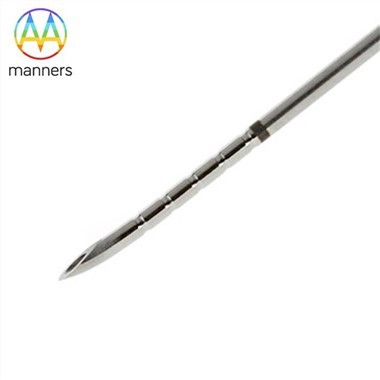
The safety protection principle of disposable spinal anesthesia needles is based on strict quality control system and humanized structural design. The product is made of high-purity medical stainless steel, which undergoes multiple precision polishing and surface treatment processes to ensure no burrs or defects on the needle body and tip, avoiding secondary damage to spinal tissue during puncture. The standardized needle body thickness and structural strength design prevent needle body bending and fracture during operation, ensuring puncture stability. The disposable independent sterile packaging adopts high-standard sterilization technology, which can effectively isolate external bacteria and pollutants and completely avoid cross-infection. The differentiated tip design avoids excessive dural cutting and nerve traction, and the scientific gauge classification controls the puncture wound area within a safe range, fundamentally reducing the incidence of various postoperative complications and realizing full-process safety protection of spinal anesthesia surgery.
Disposable spinal anesthesia needles have strict quality classification and specification standards, with each link meeting clinical safety requirements. In terms of material quality, all products adopt medical stainless steel that complies with international medical standards, with stable chemical properties, no allergy, no corrosion and good biocompatibility. In terms of structural classification, Quincke Point and Pencil Point two tip types have passed clinical safety verification, meeting the dual needs of efficient puncture and minimally invasive protection. The 16G-27G full gauge specifications correspond to unified international color codes, with accurate size error control and consistent product performance. The standard 90mm needle length is precisely customized according to human lumbar anatomical characteristics, and customized length products can meet special surgical needs. All finished products undergo strict sampling inspection on air tightness, sterility, sharpness and surface smoothness to ensure 100% compliance with clinical use standards.
To maximize the prevention of clinical complications, medical staff must follow standardized full-process operation guidelines for disposable spinal anesthesia needles. Before operation, strictly check the product quality, observe whether the packaging is damaged, whether the needle body is deformed, and confirm the sterilization validity period. Complete preoperative patient assessment, focus on screening patients with high intracranial pressure, skin infection and coagulation disorders, and formulate targeted anesthesia plans. Select appropriate needle specifications according to patient physical condition: use small-gauge fine needles for patients with sensitive constitution and low tolerance to reduce trauma. During operation, strictly implement aseptic operation specifications, standardize puncture position and angle, avoid repeated puncture and midline deviation, and prevent cauda equina nerve root injury. After operation, control postoperative nursing details, guide patients to rest in supine position, reduce cerebrospinal fluid leakage, and prevent low intracranial pressure headache and low back pain.
Years of clinical practical experience prove that standardized quality control and standardized operation of disposable spinal anesthesia needles can effectively block various puncture complications. Strict factory quality inspection ensures that the product has no structural defects, avoiding tissue scratch and infection caused by unqualified products. The disposable sterile design completely eliminates iatrogenic cross-infection, and the qualified rate of clinical infection prevention reaches 100%. Scientific needle selection and standardized puncture operation can reduce the incidence of nerve root injury and brain hernia to almost zero in standard surgical scenarios. The minimally invasive tip design effectively reduces dural damage, making the incidence of postoperative intractable headache drop below 1%, which is far lower than that of traditional reusable puncture needles. Perfect postoperative nursing cooperation can further shorten patient recovery cycle and improve surgical safety and comfort.
In conclusion, disposable spinal anesthesia needles build a full-link safety protection system through strict material quality control, standardized structural design and standardized clinical application specifications. It effectively solves the quality defects and safety loopholes of traditional puncture equipment, provides reliable technical support for the prevention and control of spinal anesthesia complications, and realizes the whole-process safety guarantee from product quality to clinical operation. It is an essential safety medical device for modern clinical spinal anesthesia.
In the future industry development, manufacturers should further improve product quality inspection standards, introduce more precise production and testing equipment, and realize full-process intelligent quality control. Medical institutions should strengthen the training of complication prevention knowledge, standardize the whole process of needle selection, operation and nursing. The industry should establish a unified product quality evaluation system, promote the iterative upgrading of high-quality products, eliminate low-quality and non-standard products, and continuously improve the safety and quality level of clinical spinal anesthesia.