How To Avoid Clogging When Preparing High-Viscosity Pharmaceuticals
Nov 09, 2026
The Growing Challenge of High-Viscosity Formulations The pharmaceutical landscape has evolved substantially over recent decades, with a rising share of novel drug products featuring high viscosity profiles. Biologics, monoclonal antibodies, concentrated antibiotic suspensions, lipid emulsions and depot preparations often possess thick properties that outperform conventional medication preparation workflows. These dense, sometimes paste-like substances create persistent operational hurdles for clinical compounding staff. Conventional fine-gauge needles clog rapidly, requiring repeated aspiration attempts and elevating risks of contamination and drug loss. Operators may resort to oversized sharp needles, which raise the likelihood of needlestick injuries and rubber stopper coring. The whole aspiration process becomes sluggish and labor-intensive, consuming precious working hours within busy pharmacy units. Excessive plunger traction applied to overcome flow resistance generates turbulence, introduces air bubbles and risks denaturing fragile biomolecules. This dilemma is amplified by the high cost of many viscous pharmaceuticals, meaning any wastage or dosing error carries substantial financial repercussions. Innovation Hub Blunt Filter Needles tackle this pain point by integrating wide-bore gauge selections, refined filter architecture and streamlined blunt bevel geometry to cut flow resistance while retaining reliable particulate filtration.
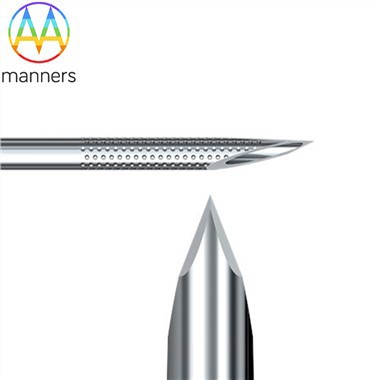
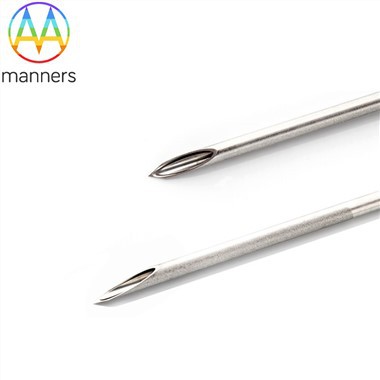
Flow Dynamics and Engineering Solutions Fluid movement through needle cannulas follows established fluid dynamic principles, governed by the Hagen-Poiseuille equation. This formula defines the correlation between flow rate, pressure differential, tube radius and fluid viscosity. It illustrates that flow rate scales with the fourth power of cannula radius - a modest increase in needle bore delivers a dramatic boost in flow capacity. This principle underpins the design logic of Innovation Hub Blunt Filter Needles. The 14G to 18G lineup features markedly wider lumens compared to regular needles, enabling viscous agents to flow under manageable resistance. The built-in 5-micron filter is engineered to strike a balance between particle retention efficiency and fluid permeability. The filter membrane boasts ample surface area to sustain steady flow while intercepting all particles larger than 5 microns. The filter is embedded within the hub to shorten the flow pathway and minimize turbulent disturbance, further refining fluid delivery performance. The 45° blunt bevel also supports optimized flow by lowering entry resistance at the needle tip. Unlike sharp bevels that create a narrow, high-resistance inlet, the blunt profile forms a gradual, spacious opening for smoother fluid entry into the cannula lumen.
Device Selection for Different Viscosity Profiles Innovation Hub Blunt Filter Needles offer diversified gauge options tailored to distinct viscosity tiers. The high-viscosity group covers 14G to 17G, built for the most demanding formulations including lipid emulsions, concentrated antibiotic suspensions and viscous biologic drugs. These large-bore cannulas deliver sufficient flow to make aspiration practical and efficient even for thick preparations. The reconstitution tier ranges from 18G to 20G, intended for medications that require mixing with diluents prior to withdrawal. This range supports fast reconstitution while maintaining precise volume control for accurate dosing. The standard solution group spans 21G to 23G, suited for most aqueous injectables and low-viscosity formulations. It balances flow speed and operational precision to fit a broad spectrum of routine compounding tasks. The sensitive compound tier includes 24G to 27G, reserved for delicate biomolecules vulnerable to shear stress. These fine gauges enable slow, gentle aspiration with minimal turbulence to protect active pharmaceutical ingredients from structural degradation.
Practical Protocol for Viscous Medication Preparation Handling viscous formulations with Innovation Hub Blunt Filter Needles calls for standardized operating practices. First, manage temperature: the viscosity of many pharmaceuticals is temperature-dependent; warming to ambient temperature or the manufacturer's recommended temperature can greatly improve fluidity. Second, prepare containers properly: disinfect vial stoppers with alcohol and allow full drying. For ampoules, tap the neck gently and break it using gauze for protection. Third, select the correct gauge according to the drug's viscosity. If uncertainty exists, start with a larger gauge and adjust based on observed flow performance. Fourth, follow proper aspiration technique: submerge the blunt tip fully beneath the liquid surface. Pull the plunger slowly and steadily to let the viscous drug pass through the filter naturally. Never force aspiration, as aggressive pressure triggers turbulence and may compromise sensitive drug structures. Fifth, perform post-aspiration checks: examine the syringe for visible particulates and confirm the withdrawn volume is accurate. Sixth, complete transfer: remove the filter needle and attach a suitable administration needle. Dispose of the used filter needle into a sharps container right away.
Real-World Experience with Viscous Formulations Compounding and hospital pharmacies that regularly process high-viscosity medications have reported measurable improvements after adopting Innovation Hub Blunt Filter Needles. A specialized compounding pharmacy in the United States found that 16G blunt filter needles cut aspiration time for viscous testosterone suspensions by roughly 50% versus traditional 18G sharp needles. The site also noted reduced drug waste, as the blunt tip leaves less residual product trapped inside the needle and hub. A Canadian hospital pharmacy saw similar positive outcomes with lipid emulsions, confirming that 14G blunt filter needles enabled smooth aspiration without the frequent clogging seen with smaller gauges. The team also observed fewer air bubbles, attributed to the streamlined flow brought by the blunt bevel design. Clinicians also shared key practical takeaways. The 5-micron filter may clog when used with extremely thick preparations, especially those containing suspended particles. In such cases, a larger gauge or an alternative filtration strategy should be considered. Some staff initially defaulted to small gauges for viscous drugs, resulting in slow withdrawal and operational frustration. The core lesson is clear: gauge matching is critical for viscous formulations, and larger bore options are indispensable for safe, efficient compounding.
Economic and Clinical Implications Streamlined transfer of viscous medications carries tangible clinical and economic value. Shorter aspiration cycles lift overall pharmacy throughput, allowing technicians to prepare more doses within the same timeframe. Less drug waste translates into direct cost savings, which is especially meaningful for high-priced biologics and specialty pharmaceuticals. Fewer entrapped air bubbles improve dose precision, since bubbles cause measurement errors and reduce the actual delivered drug quantity. Clinically, slow, gentle aspiration preserves the structural integrity of sensitive biomolecules, ensuring patients receive the full intended therapeutic effect. The cost-benefit profile of blunt filter needles remains compelling: although the unit price is slightly higher than standard needles, the gains from reduced waste, higher productivity and improved patient safety far exceed the incremental expense.
Conclusion and Future Outlook Innovation Hub Blunt Filter Needles deliver a reliable, practical solution to the challenges of viscous medication transfer. The combination of wide-bore gauge choices, optimized filter architecture and blunt bevel design supports efficient, low-shear aspiration of even the most difficult formulations. The clinical and economic advantages are evident: shortened preparation time, minimized drug loss, enhanced dose accuracy and preserved drug stability. Looking ahead, further advances targeting viscous drug handling are on the horizon. Low-shear filter media will offer gentler processing for fragile biomolecules. Thin-wall wide-bore cannula technology will push flow rates higher. Application-specific kits will be developed for distinct drug categories. As pharmaceutical developers keep launching more complex, high-viscosity formulations, blunt filter needles will grow into an indispensable tool to support safe, efficient and cost-effective medication compounding.