Production Quality Control Standards And Safety Assurance System For Medical Spinal Needles
Aug 02, 2026
Traceability Popular Science by 16G-27G Puncture Needle Manufacturer
As invasive Class III medical devices directly contacting spinal canals, cerebrospinal fluid and tissues surrounding central nerves, 16G-27G medical grade stainless steel spinal needles determine patient safety and surgical outcomes. Qualified medical device manufacturers must establish a full-process quality control system covering raw material procurement, precision processing, grinding, sterilization, finished product testing, packaging and delivery, complying with domestic and international manufacturing standards for medical instruments to guarantee compliance, safety and stability of every spinal needle. This article analyzes quality control standards and safety assurance systems of branded spinal needles throughout the whole production workflow.
Raw material quality control forms the first safeguard for product safety. Medical-grade stainless steel is adopted for all needle bodies, eliminating inferior industrial steel or low-standard medical steel. Before warehouse entry, raw materials undergo multiple inspections including composition analysis, biocompatibility testing, corrosion resistance testing and mechanical performance testing to ensure impurity-free materials without harmful substance precipitation, safe biocompatibility and qualified mechanical parameters. All raw materials are sourced from certified suppliers with complete traceability reports, eliminating hidden risks including material allergy, corrosion, fracture and contamination caused by metal precipitation at the source and laying a solid foundation for product quality.
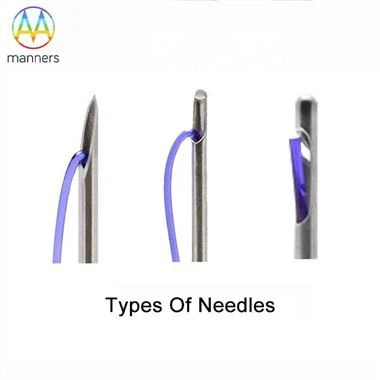
Standardized refined management is implemented in production and processing. The full range of 16G-27G puncture needles adopt integrated forming technology without joints, welding seams or dead space to avoid residual bacteria and impurities inside gaps and ensure aseptic safety. Needle shafts receive micron-level mirror polishing for smooth surfaces free of burrs and scratches, significantly reducing traction and laceration injuries to human tissues during puncture. Tips are manufactured via precision CNC grinding: Quincke Points deliver uniform sharpness and stable penetration, while Pencil Points feature regular radian for gentle tissue separation. Deviations of tip angles, shaft concentricity and wall thickness for each gauge are controlled within narrow industrial tolerance ranges to guarantee puncture accuracy.
Sterilization and aseptic control constitute core quality control links for invasive instruments. After production, all products undergo ethylene oxide sterilization with parameters strictly following medical device standards. Sufficient degassing is conducted after sterilization to eliminate residual sterilant that may irritate human tissues and cerebrospinal fluid. Every batch receives sterility testing, pyrogen testing and bacterial residue inspection to meet single-use sterile medical standards. Meanwhile, production workshops follow Class 100,000 cleanroom standards with dust-free and pollution-free manufacturing environments to prevent secondary contamination during production and preserve sterile quality of finished products.
Multi-dimensional verification mechanisms are adopted for finished product testing, covering appearance inspection, dimensional accuracy testing, mechanical property testing, clinical adaptability testing and safety performance testing. Appearance inspection screens shafts with scratches, burrs, deformation and incorrect color codes. Precise measurement verifies outer diameter, length and tip dimensions of all 16G-27G specifications to ensure unified accurate standards. Mechanical tests verify shaft hardness, toughness and bending resistance to prevent intraoperative fracture and deformation. Simulated clinical puncture tests evaluate puncture resistance, give-way feedback and penetration performance to match clinical operations. Final biocompatibility re-inspection eliminates risks of sensitization, hemolysis and toxicity. Only fully qualified products are allowed into storage, while defective goods are reworked or destroyed batch-wise.
Packaging and delivery quality control forms a closed loop to safeguard end-user safety. Products adopt independent vacuum sterile packaging with tight sealing, dustproof, moisture-proof and anti-breakage performance for long-term storage without quality deterioration. Outer packaging uses thickened standard cartons adapting to long-distance transportation and bulk storage, and customized packaging is available. Complete qualification documents, test reports and sterile certificates are attached to each batch to realize full product traceability. As professional manufacturers, we adhere to strict quality control standards and adopt testing requirements higher than industrial benchmarks to produce high-quality compliant spinal needles, building a solid safety barrier for clinical surgeries in medical institutions.