Precision Intelligent Manufacturing Solving The Accuracy Pain Points Of Minimally Invasive Instruments
Jul 01, 2026
https://www.citec-group.com/plsp/disposable-trocars-for-pediatric-laparoscopic-surgery-11.html
As minimally invasive surgeries develop towards refinement and precision, issues such as insufficient machining accuracy, structural flaws, and dimensional deviations in instruments have become industry pain points restricting the upgrade of high-end minimally invasive surgeries. The localized intelligent manufacturing of high-precision disposable trocars has become a hot topic in the minimally invasive instrument field for 2026. Relying on Japanese high-precision processing equipment and integrated molding technology, Manners Technology overcomes the shortcomings of traditional trocar manufacturing, achieving micrometer-level accuracy control and reshaping the industry standards for precision manufacturing of disposable trocars.
Traditional low-end disposable trocars generally suffer from processing defects, such as burrs at the tube ports, sharp edges, excessive dimensional tolerances, and shrinkage voids in plastic components. During surgery, these can easily scratch abdominal organs and scrape tissue fibers. Additionally, unsmooth inner walls of the cannula can cause instruments to catch or lag during insertion and withdrawal, affecting the surgeon's operational accuracy, increasing surgery duration, and raising the risk of complications. Most domestically produced low-end products rely on simple machine tools with lax precision control, failing to meet the needs of high-end complex minimally invasive surgeries, leading to a long-term reliance on imported high-end trocars.
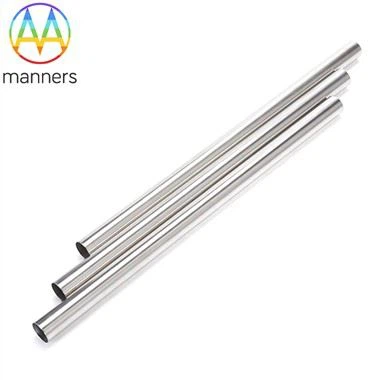
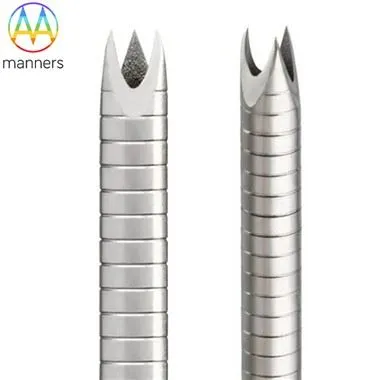
Manners has specifically built a full-process precision intelligent manufacturing system. Metal core components are processed using the Japanese Citizen Cincom L12-1M7 sliding headstock lathe, which simultaneously completes drilling, trimming, and deburring. This thoroughly solves the defects of sharp edges and micro-burrs at both ends of the tube body, strictly controlling flaw standards within 0.01 inches, with overall dimensional tolerances stably ≤ ±0.01 mm. Designed specifically for micro-precision medical parts, this equipment ensures uniform accuracy and consistent performance in mass-produced products, eliminating individual quality differences and adapting to standardized clinical surgical operations.
The product achieves seamless integrated molding of metal and plastic components. Relying on precision injection molding technology, the trocar head and sealing structure are produced using high-end transparent PC raw materials from Makrolon and Lexan. By strictly controlling injection molding parameters, the finished products are free of shrinkage, voids, and bubble impurities, featuring high light transmission properties. This helps surgeons clearly identify shallow tissue structures, enhancing the accuracy of puncture positioning. The sealing valves and insufflation ports are integrally molded, ensuring stable airtightness, preventing gas leakage during surgery, continuously maintaining a standard pneumoperitoneum environment, and guaranteeing a clear and stable surgical field of view.
After precision machining, the product undergoes standardized post-processing procedures. The electropolishing process optimizes the flatness and glossiness of the metal surface, eliminates micro-cracks and surface defects generated during processing, and improves corrosion resistance. 40 kHz high-frequency ultrasonic cleaning strips away fine dust, oil, and metal shavings, achieving thorough clean treatment without dead corners. Finished products undergo more than six quality inspection processes, including caliper dimension detection, 2D imaging accuracy verification, and manual flaw detection, comprehensively eliminating precision defects.
With its ultimate precision manufacturing advantages, Manners disposable trocars break the precision monopoly of imported brands. As a localized high-precision product, it is suitable for high-end minimally invasive scenarios such as laparoscopy, thoracoscopy, and vertebroplasty, becoming the preferred choice for equipment upgrades in minimally invasive departments of private hospitals and tertiary hospitals, promoting the transformation of the domestic minimally invasive trocar industry from low-end mass production to high-precision intelligent manufacturing.