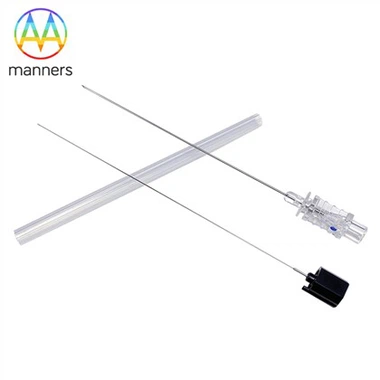
Precision As A System: Needle, Material, And Parameter In One Architecture
Oct 15, 2026
The Pain Point Every dispensing failure is a systems failure, even when it looks like a part failure. The needle is blamed for a dot that smeared, but the real cause was the gap. The material is blamed for a plug, but the real cause was the temperature. The machine is blamed for a drift, but the real cause was an ignored parameter. Because dispensing is treated as isolated parts-a needle here, a material there, a knob somewhere else-troubleshooting never ends; fixing one link simply exposes the next. The pain is the absence of a unifying view. The line needs to see the needle, the material's thixotropy, the temperature, the gap, the bore, and every parameter as one architecture, where each element is designed and controlled in relation to the others.
How It Works Precision dispensing is a system with defined roles. The material brings its physics-thixotropy, wet strength, viscosity that temperature controls. The needle brings its geometry-the bore and taper that shape the dot and set its sensitivity. The parameters-temperature, pressure, stroke, gap, speed, dwell-act as the controls that tune the material and the geometry together. Each element depends on the others: the thixotropy demands temperature control; the wet strength demands contact area from the needle; the bore's sensitivity demands gap control; the gap and bore together decide the dot. The high precision dispensing stainless steel needle is the fixed reference at the center-its bore true, its taper consistent, its material grade and finish holding the geometry stable-so that every parameter and every material behavior is measured against a known constant. The result is a process, not a collection of parts: an architecture where precision is engineered in the relationships, not just in the components.
Device Classification The system is classified by the role each element plays. The material is classified by its thixotropic curve, wet strength, and working temperature window. The needle is classified by bore, taper, material grade, and finish-the geometry and stability that anchor the process. The parameters are classified by what they control: temperature and viscosity govern the material; pressure and stroke govern volume; gap and bore govern dot shape; speed and dwell govern placement. The hub and attachment serve the duty. The architecture is the integration of these categories: the operator selects the material for its properties, the needle for its geometry, and the parameters for the coordinated control-always with the needle as the stable reference that makes every other decision meaningful.
Practical Guide Design the architecture before you run it. Start with the material: its thixotropic curve tells you the temperature window and the wet-strength requirement. Choose the needle for the dot: bore and taper to match the component and the volume. Set the parameters as a coordinated set: temperature to hold viscosity, stroke for volume, gap from the bore for shape, dwell for placement. Validate the whole system together: prime, establish the stroke-to-volume curve, run a witness pass, test the hold. When a failure appears, trace the architecture, not the part: a shrinking dot points to temperature; a smear points to geometry; a shift points to coverage. Keep every element verified. The discipline is to treat the needle, material, and parameter as one system and to engineer their relationships-not to firefight by component.
Field Experience Lines that treat dispensing as a system see the failures leave together. A PCB assembly that engineered the architecture-matched the needle to the material's viscosity, set the temperature window, calibrated the gap from the bore-achieved consistent dots that held through vibration, passing tests that component-level tweaks had failed. A medical line that integrated the thixotropy, the needle geometry, and the metering validated a void-free, auditable bond. An automotive application matched the wide bore, the stiff body, and the high-viscosity material into one architecture and reached the reliability that single-part fixes never reached. The common lesson is that the system is the unit of design. When the needle, material, and parameters are engineered together, precision is not a hope but an architecture.
Reflection Precision as a system is the mature philosophy of dispensing. It is tempting to buy a "high precision" needle and expect precision to follow; the reality is that precision lives in the relationships between the needle, the material's physics, and the parameters the operator controls. The high precision stainless needle is the fixed reference that makes the system coherent-its bore true, its geometry consistent, its finish clean-so that every other element can be measured and controlled against it. This is the deepest form of engineering: not a perfect part but a coherent whole, where the thixotropy, the wet strength, the gap, and the bore are one architecture delivering one result.
Outlook As dispensing grows more automated and auditable, the architecture will be engineered explicitly. Expect materials specified by their thixotropic curves, needles specified by bore and taper with published sensitivity data, and parameters set as coordinated, logged recipes. Expect closed-loop systems that sense a drift in the material and adjust the matching parameter, with the needle as the constant reference. For buyers, the forward-looking advice is to design the whole system-material, needle, parameters-as one, and to choose the high precision stainless needle as the stable center it is meant to be. In the architecture of precision, the needle is where the material, the control, and the parameter all come together.