Post-Puncture Complication Prevention & Value Of Manufacturer Atraumatic Pencil Point Spinal Needle
Aug 05, 2026
https://www.bmj.com/content/361/bmj.k1920
Lumbar puncture and spinal anesthesia are routine invasive operations in neurology and anesthesiology, but postoperative complications have always been key problems restricting clinical medical experience. Common complications represented by post-lumbar puncture headache and cauda equina nerve injury not only affect patients' postoperative recovery efficiency, but also increase the risk of medical disputes. The high-quality atraumatic pencil point spinal needle provided by professional manufacturers can effectively prevent various postoperative complications and bring high-value clinical solutions for standardized and minimally invasive spinal puncture operations.
Post-lumbar puncture headache is the most prevalent postoperative complication, with a high incidence in traditional puncture operations. The core pathogenesis is the temporary decrease of intracranial cerebrospinal fluid pressure caused by intraoperative cerebrospinal fluid loss. After the dural fiber is cut by traditional sharp needles, the wound cannot be closed quickly, resulting in continuous cerebrospinal fluid leakage. The typical positional headache will seriously affect the patient's rest and recovery. Most mild headaches can be relieved by rehydration and rest within 1 to 2 days, but a small number of patients will have persistent severe headaches, which require further neurological examination and auxiliary treatment, increasing the patient's pain and medical burden.
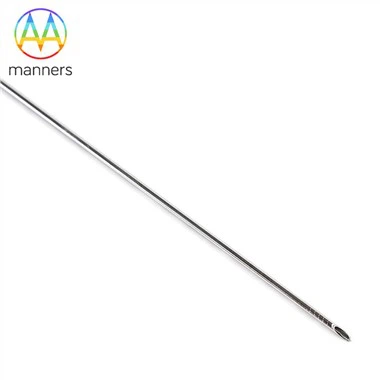
The manufacturer's atraumatic pencil point spinal needle fundamentally optimizes the complication prevention mechanism. The blunt pencil tip adopts a physical separation puncture mode, which will not cut the dural and subcutaneous fibrous tissues. The puncture wound is tiny and regular, and the fibrous tissue can rebound and close quickly after the needle is pulled out, effectively blocking cerebrospinal fluid leakage and maintaining stable intracranial pressure. Clinical application data shows that the product can greatly reduce the incidence of post-lumbar puncture headache, and the few mild symptoms that occur are shorter in duration and easier to recover, significantly improving patient medical experience.
For severe complication prevention, the manufacturer's professional products also have outstanding performance in avoiding cauda equina nerve injury. The anatomical structure of the cauda equina nerve is complex, composed of multiple groups of nerve roots, and connected with the spinal cord at the L1 conus medullaris. The nerve roots are densely distributed and fragile, and improper puncture operation or unqualified instrument tip is easy to cause nerve compression and stabbing injury, resulting in severe sequelae such as limb numbness and motor dysfunction. The atraumatic pencil point spinal needle produced by regular manufacturers has precise tip design and smooth transition, which can accurately enter the spinal space along the anatomical gap, avoid contact and extrusion with nerve roots, and effectively prevent cauda equina nerve injury.
In addition to safety advantages, manufacturer-standard products also have high comprehensive clinical value. The standardized specification color code system helps medical staff improve operation efficiency and reduce misoperation risks; the high-precision integrated needle body ensures stable puncture and improves the success rate of one-time puncture; the customizable length and specifications meet the needs of special groups and complex operations. While preventing complications, the product improves the overall efficiency of clinical diagnosis and treatment, reduces postoperative nursing pressure and additional medical costs, and is a high-value essential medical device for modern standardized spinal puncture operations.