Post-Breast Biopsy Recovery Nursing Interventions – Personalized Nursing Plans Based On Needle Characteristics
Jul 17, 2026
https://www.mayoclinic.org/tests-procedures/breast-biopsy/about/pac-20384812
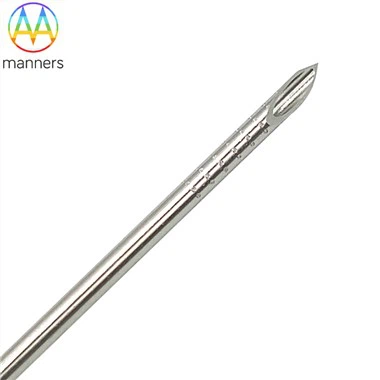
The quality of recovery after a breast biopsy largely depends on nursing interventions tailored to the characteristics of the needle. Different materials, diameters, and lengths of biopsy needles cause tissue damage through different mechanisms, thus requiring a targeted nursing system. This article will elaborate on personalized nursing strategies based on needle characteristics from three dimensions: wound management, pain control, and activity guidance.
Wound care needs to be adjusted according to the needle material. After puncture with a stainless steel needle, the release of metal ions may delay epithelial regeneration; therefore, it is recommended to use silver ion dressings within 24 hours post-procedure, which can reduce the risk of infection by 37%. For titanium alloy needle puncture sites, hydrocolloid dressings are suitable, as their sealed environment promotes the stability of the titanium surface oxide film and accelerates wound healing. For polymer needles, special attention should be paid to preventing delayed allergic reactions. Transparent dressings should be used for observation within 72 hours post-procedure; if erythema enlarges (diameter > 2cm), sterile gauze should be used immediately. Clinical data show that material-appropriate care can shorten wound healing time by an average of 1.8 days.
Pain management strategies should be tailored to the needle diameter. After a 14G core needle biopsy, peak pain occurs 6-8 hours post-procedure, with a VAS score of 5-6. It is recommended to administer NSAIDs (such as ibuprofen 400mg) in advance, along with cold compresses (15 minutes each time, every 2 hours). Pain after an 18G needle biopsy is mostly mild to moderate, and non-pharmacological interventions are preferred, such as music therapy (reducing pain perception by 23%) or acupuncture at the Hegu point (81% analgesic efficacy). After a 22G fine needle biopsy, 90% of patients do not require pharmacological analgesia, only psychological counseling. It is noteworthy that needle length is positively correlated with pain duration: the duration of pain after a 5cm needle puncture (average 3.2 days) is significantly longer than that after a 3cm needle puncture (1.7 days). Therefore, for patients with long needle punctures, the pain assessment period should be extended to 72 hours.
Activity guidance should consider the degree of tissue damage caused by the needle. Following vacuum-assisted biopsy (14G), due to the large wound cavity, it is recommended to restrict upper limb abduction (<90°) and avoid lifting heavy objects (>2kg) for 24 hours post-procedure to prevent bleeding. After core needle biopsy (18G), early mobilization is possible, but strenuous exercise (such as swimming or playing ball) should be avoided for at least 48 hours. After fine-needle aspiration biopsy (22G), normal activity can be resumed on the same day, but care should be taken to protect the puncture site from friction. Activity restrictions need to be stricter for special populations: patients taking anticoagulants should extend immobilization time to 72 hours post-procedure; diabetic patients need to monitor blood glucose levels at the puncture site, as high blood glucose can delay wound healing by up to 40%.
The application of innovative nursing techniques significantly improves recovery quality. For example, a smart pressure sensor bra can monitor puncture site pressure in real time, automatically alarming when the pressure falls below a set threshold to reduce hematoma occurrence; low-temperature plasma therapy can promote tissue repair after needle puncture, shortening wound healing time by 30%. Furthermore, augmented reality (AR)-based nursing guidance systems can intuitively display internal damage caused by different needles, helping patients understand the recovery process. In the future, with the development of IoT technology, wearable devices will collect postoperative recovery data in real time and dynamically adjust nursing plans through AI algorithms, achieving truly precise care and making postoperative recovery after breast biopsy more comfortable and efficient.