A Rehabilitation Revolution From Minimally Invasive To Non-invasive
Jul 17, 2026
https://www.mayoclinic.org/tests-procedures/breast-biopsy/about/pac-20384812
The history of the technological evolution of breast biopsy needles is essentially a history of innovation pursuing "less trauma and faster recovery." From the thick-needle incision biopsy of the late 19th century to today's vacuum-assisted minimally invasive systems, each breakthrough in needle technology has profoundly changed the postoperative recovery model. Looking to the future, with the integration of materials science, nanotechnology, and artificial intelligence, postoperative recovery after breast biopsy will usher in a revolutionary change.
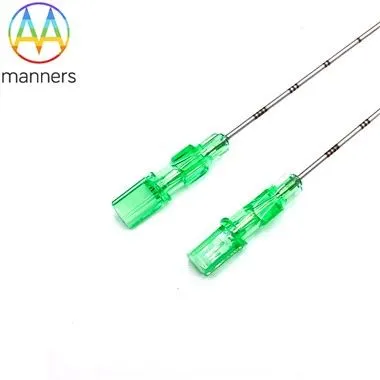
The first generation of biopsy needles (early 20th century) used needles with a diameter of 14G or more, requiring surgical incision to expose the lesion, leaving a 2-3cm scar postoperatively, with a recovery period of 4-6 weeks. The second-generation hollow needle (1970s) reduced its diameter to 18G and, with a spring-driven mechanism, enabled percutaneous puncture. Post-operatively, only 24 hours of pressure bandaging was required, shortening recovery time to 1-2 weeks. The third-generation vacuum-assisted biopsy needle (1990s) used negative pressure suction and rotational cutting for precise sampling under image guidance, resulting in virtually invisible scarring and further reducing the recovery period to 3-5 days. Currently, we are in the transitional phase of fourth-generation technology-emphasizing both minimally invasive procedures and functional preservation. For example, the 21G coaxial biopsy system allows for multiple sampling without repeated punctures, reducing post-operative pain scores by 50%.
Future technological breakthroughs will focus on three areas: first, intelligent responsive needles, such as shape memory alloy needles that can deform in vivo to achieve the optimal sampling angle, reducing traction on normal tissue; second, nanoscale biopsy needles, with diameters of only tens of micrometers, capable of obtaining single-cell level specimens with virtually no post-operative trauma; and third, optical biopsy technology, utilizing fiber optic probes to achieve "needle-free biopsy," using spectral analysis to determine the nature of the lesion. Animal experiments show that tissue repair after nanoneedle biopsy is three times faster than with traditional needles, with epithelial regeneration completed within 24 hours.
The revolution in postoperative recovery is equally promising. The concept of "Enhanced Recovery After Surgery (ERAS)" will be fully applied to the field of breast biopsy: preoperatively, AI predictive models assess patient recovery risk and develop personalized plans; intraoperatively, real-time elastography monitors tissue damage and dynamically adjusts puncture parameters; postoperatively, biodegradable bioscaffolds are used to fill the wound cavity, promoting in-situ tissue regeneration. Clinical trials show that the ERAS protocol can shorten postoperative hospital stay to 6 hours and shorten the return to normal work by 2 days.
Even more promising is the arrival of the era of "non-invasive biopsy." Liquid biopsy technology, by detecting circulating tumor cells (CTCs) and circulating tumor DNA (ctDNA) in the blood, can already achieve molecular subtyping diagnosis of some breast cancers; while magnetic resonance imaging (MRSI) can differentiate between benign and malignant lesions through metabolite analysis with an accuracy rate of 89%. Although these technologies cannot completely replace tissue biopsy, they have significantly reduced the need for invasive procedures. It is projected that within the next 10 years, 70% of breast lesions will be definitively diagnosed through non-invasive methods, and the remaining 30% requiring biopsies will also benefit from "intelligent microneedle" technology, with post-operative recovery time shortened to less than 24 hours.
From thick needles to thin needles, from invasive to minimally invasive, and towards future non-invasive procedures, the technological evolution of breast biopsy needles has consistently revolved around the patient-centered recovery philosophy. With the deepening of multidisciplinary innovation, we have reason to believe that post-operative recovery after breast biopsy will no longer be a burden for patients, but rather a comfortable and efficient part of the diagnostic and treatment process in the era of precision medicine, providing better technical support for the early diagnosis and treatment of breast cancer.