Positioning Of Ultra-Short, Fine-Gauge Tuohy Needles In Chronic Pain And Caudal Injections
Jun 22, 2026
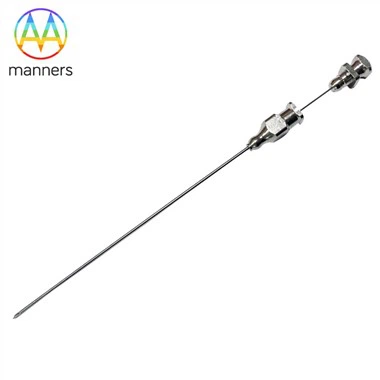
In the chronic pain clinic, the Caudal Epidural Injection (CEI) is a frequently utilized interventional modality for treating lumbar disc herniation, cauda equina syndrome, and chronic pelvic pain. Traditionally, 18G–20G Tuohy needles are employed to breach the sacrococcygeal ligament, followed by the injection of corticosteroid and local anesthetic mixtures, with optional indwelling catheters for continuous infusion. However, for geriatric patients with osteoporosis, those with needle phobia, or scenarios requiring minimal trauma for single-shot drug deposition, the 2.5 Fr (22G) Tuohy needle (22 mm length) offers a superior low-invasive alternative.
I. Ergonomics and Reduced Trauma
The 22 mm length is anatomically congruent with the vertical depth from the sacral hiatus to the sacral canal in most adults (typically 5–15 mm of subcutaneous tissue plus membrane thickness). Coupled with the 22G fine gauge, this significantly mitigates insertion pain, often allowing completion under local anesthesia alone.
II. Fluid Dynamics and Catheter Guidance
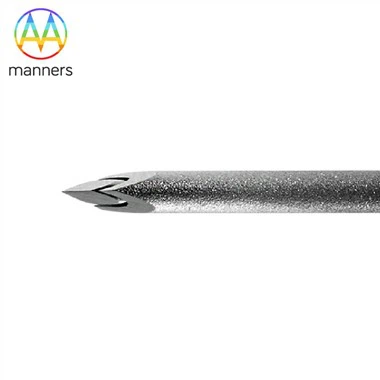
The retention of the Tuohy curved side-port (back-eye) offers distinct pharmacological and mechanical advantages:
- Fluid Dispersion: Unlike the pinpoint jet of a straight needle, the lateral-facing side port creates a fan-shaped distribution of the injectate, theoretically improving coverage of the target neural structures.
- Micro-Catheter Insertion: After confirming Loss of Resistance (LOR), the needle lumen accommodates ultra-fine multi-side-hole micro-catheters (e.g., 24G polyurethane micro-tubes), allowing the catheter to advance several centimeters into the sacral canal for enhanced drug diffusion.
III. Technical Considerations and Techniques
Given the micro-caliber lumen, specific precautions are necessary:
- Flow Resistance: The narrow bore increases resistance when injecting viscous contrast media or particulate steroid suspensions. Slow, steady injection is mandatory.
- Aspiration Check: Always observe for blood return to rule out placement within the rich sacral venous plexus.
- The Two-Step Technique: To balance confidence with minimal trauma, some clinicians use an 18G introducer to initially breach the hiatus and confirm position, then exchange it for the 22G Tuohy needle to gently follow the tract for injection. This combines the ease of initial localization with the benefits of a final micro-trauma profile.
IV. Pediatric Pain Management Application
This specification is also invaluable in neonatal and infant pain management:
- Anatomical Fit: In newborns, the sacrococcygeal distance is shallow, making the 22 mm length sufficient.
- Reduced Morbidity: The 22G gauge minimizes postoperative local exudation.
- Continuous Infusion: It facilitates the placement of micro-catheters connected to syringe pumps for several days of postoperative analgesia.
- Dural Protection: Crucially, compared to standard straight lumbar puncture needles, the Tuohy blunted curved tip significantly lowers the risk of piercing the terminal dura mater. This is vital in pediatrics, where small CSF volumes make the consequences of a dural puncture (e.g., severe PDPH) much more pronounced.
V. Conclusion
From the perspective of the pain physician, the 2.5 Fr (22 mm) Tuohy needle is a niche yet optimal instrument for ambulatory minimally invasive interventions and pediatric regional analgesia. It fills the gap between bulky conventional epidural needles and non-directional fine needles. It uniquely satisfies the clinical demand for superficial, short-range, low-pain procedures while retaining the signature Tuohy features of directional guidance and dural protection.