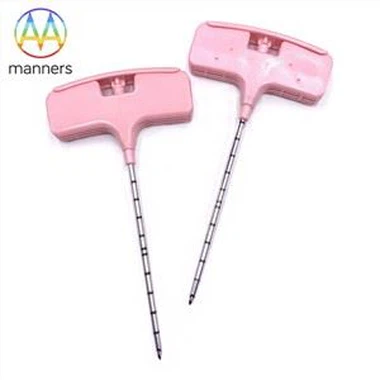
Pneumoperitoneum Establishment And Gas Control Technology Of Veress Needles
Aug 17, 2026
https://en.wikipedia.org/wiki/Veress_needle
Pain Points Unstable pneumoperitoneum establishment is a key factor affecting the quality of laparoscopic surgery. Traditional gas injection methods often suffer from slow insufflation, uneven abdominal expansion and poor pressure control. If gas flow is too high at the initial stage, intra-abdominal pressure may rise sharply, causing visceral compression, hemodynamic instability and carbon dioxide retention. If the needle is incorrectly placed into the extraperitoneal space, gas may accumulate in subcutaneous tissues, leading to subcutaneous emphysema and failed pneumoperitoneum. In addition, unregulated gas delivery can cause blurred vision, prolonged operative time and increased risk of gas embolism. These problems seriously affect surgical efficiency and patient safety, making standardized gas control an essential part of laparoscopic entry technology.
Working Principle Veress needles enable standardized pneumoperitoneum establishment through a dedicated central lumen and controlled gas delivery logic. After the needle correctly enters the abdominal cavity, medical carbon dioxide is introduced through the inner lumen at a low and stable rate. The gas gradually fills the closed abdominal cavity, lifting the abdominal wall and creating an expanded operational space. The key principle is to maintain low initial pressure and gradual volume increase, so that the abdominal wall can expand evenly without sudden compression of the viscera. The inner lumen diameter directly affects gas flow efficiency: larger lumens allow faster insufflation, while smaller lumens provide more delicate pressure control. When combined with pressure monitoring equipment, Veress needle technology helps surgeons establish a stable pneumoperitoneum environment before the main surgical procedure begins.
Equipment Classification Veress needles can be classified according to pneumoperitoneum efficiency and lumen design. First, standard gas delivery models, with inner lumen diameters of approximately 1.5–2 mm, suitable for routine laparoscopic surgery requiring moderate insufflation speed. Second, high-efficiency gas delivery models, with inner lumen diameters of 2–3 mm, designed for longer and more complex procedures where rapid pneumoperitoneum establishment is needed. Third, precise pressure-control models, which feature smooth lumen walls and consistent gas channel geometry, reducing turbulence and enabling more stable pressure monitoring. All classifications rely on the same principle of low-pressure gradual insufflation, but differ in flow capacity and application scenarios.
Practical Operation Guide Standardized pneumoperitoneum establishment includes three key steps: placement verification, graded gas injection and pressure maintenance. After Veress needle entry, the saline hanging drop test and negative aspiration test must be performed to confirm intraperitoneal placement. Blood, intestinal contents or abnormal resistance during aspiration indicate incorrect placement, and gas injection should not be started. Once correct placement is confirmed, CO2 is introduced at an initial flow rate of about 1 L/min, and initial intra-abdominal pressure should be kept below 8–10 mmHg. Pressure should be monitored continuously. If pressure suddenly rises above 15 mmHg without obvious abdominal expansion, gas injection should be stopped immediately to check for extraperitoneal placement or lumen blockage. After stable low-pressure establishment, flow can be gradually increased until the target pneumoperitoneum pressure is reached.
Practical Experience Clinical data shows that standardized Veress needle pneumoperitoneum technology can increase the one-time success rate of abdominal insufflation to over 99%. Compared with traditional open gas delivery methods, it reduces the incidence of subcutaneous emphysema and gas embolism by more than 65%. Stable low-pressure insufflation also reduces cardiovascular stress in patients, especially in elderly and high-risk cases. In long-duration surgeries, high-efficiency lumen models help maintain consistent pressure and clear vision, reducing operative difficulty and improving surgeon confidence. These advantages make Veress needles not only entry instruments but also important gas management tools in laparoscopic surgery.
Summary and Sublimation Pneumoperitoneum establishment is not a secondary function but a core technical component of Veress needles. The inner lumen design, gas delivery efficiency and pressure control logic directly affect the quality of the surgical environment. A well-established pneumoperitoneum provides clear vision, safe instrument space and stable operational conditions, while poor gas control leads to complications and prolonged surgery. Therefore, Veress needle technology should be evaluated not only by penetration safety but also by its ability to support standardized, stable and efficient pneumoperitoneum establishment.
Future Suggestions Future gas control technology may develop toward intelligence and automation. Integrated pressure-sensing Veress needles can provide real-time feedback on intra-abdominal pressure changes, helping surgeons identify incorrect placement early. In addition, the combination of Veress needles with intelligent insufflation systems may enable automatic flow adjustment according to real-time pressure data, reducing manual control errors. Further optimization of lumen inner wall smoothness and gas flow channels may also improve pneumoperitoneum uniformity, creating a more stable operating environment for complex laparoscopic procedures.