Pain Points And Innovative Principle Of Triple Cut Tip Lancet Needle In Routine Blood Sampling
Oct 12, 2026
1. Industry and Clinical Pain Points
Routine fingertip blood sampling is one of the most basic and widely used clinical detection operations, covering blood glucose monitoring, routine blood tests, biochemical screening and other scenarios, but traditional lancing equipment has long-standing industry pain points affecting patient experience and sampling efficiency. First, ordinary single-bevel lancet needles have blunt cutting performance, requiring excessive extrusion force to penetrate the skin, which easily causes skin tearing, tissue extrusion damage and severe pain, leading to patient fear and resistance, especially for long-term monitoring patients such as diabetic groups. Second, traditional lancets produce irregular puncture wounds, resulting in unstable blood outflow: insufficient blood volume leads to repeated pricking, while excessive bleeding increases postoperative hemostasis time and infection risk. Third, conventional lancing needles have single specification coverage, fixed diameter and length, unable to adapt to different skin thicknesses of adults, children and the elderly, resulting in poor sampling adaptability. Fourth, most ordinary lancets lack standardized surface treatment, with rough needle surfaces that easily carry bacteria, increasing the risk of cross-infection and wound inflammation after sampling. In addition, the lack of customized size options makes it impossible to match personalized sampling needs of special groups, restricting the standardized and humanized development of basic clinical blood sampling operations.
2. Working Principle of Triple Cut Tip Lancet Needle
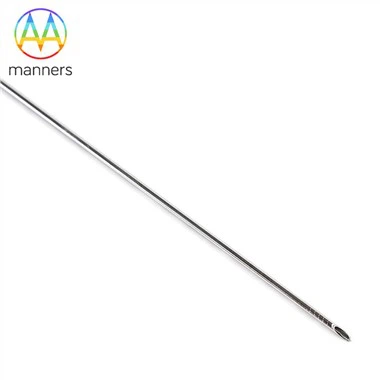
The Lancet Needle With Triple Cut Tip is an upgraded minimally invasive puncture instrument tailored for capillary blood sampling, and its core innovation lies in the three-sided cutting tip structure and optimized puncture mechanics principle. Different from traditional single-bevel needles that rely on forced extrusion to break skin tissue, the triple cut tip adopts three-sided symmetrical sharp cutting edges, which can separate skin fibers accurately and smoothly at the moment of puncture, forming regular micro-puncture wounds instead of tearing tissues. This structural design reduces the puncture resistance by nearly 30% compared with traditional products, realizing fast penetration and instantaneous retraction, minimizing stimulation of subcutaneous nerve endings and effectively reducing sampling pain. The product is made of high-quality medical stainless steel, with overall precision polishing treatment, smooth needle body without burrs, avoiding tissue adhesion and secondary damage during withdrawal. With the integrated injection and puncture instrument attribute, it can complete rapid capillary puncture and stable blood collection. The flexible size design covering 10G–36G needle sizes and 0.5–20MM diameters realizes controllable puncture depth and wound size, ensuring stable and sufficient blood output while maintaining minimal skin trauma.
3. Equipment Classification and Adaptive Scenarios
According to needle size, diameter specification and application groups, triple cut tip lancet needles are divided into three core categories to cover all routine blood sampling scenarios. First, ultra-fine gauge models (28G–36G, 0.5–1MM diameter), which are ultra-minimally invasive and low-pain, specially suitable for infant, elderly and sensitive skin groups, as well as daily repeated blood glucose monitoring for diabetic patients, effectively reducing cumulative skin damage and pain discomfort. Second, standard conventional models (18G–28G, 1–10MM diameter), the most widely used clinical specification, adapting to adult routine fingertip blood sampling, meeting the blood volume needs of routine blood tests, blood lipid and blood sugar detection, with balanced trauma and sampling efficiency. Third, thick gauge customized models (10G–18G, 10–20MM diameter), suitable for special scenarios requiring large blood volume, such as biochemical comprehensive detection and special disease screening, and can be customized with exclusive needle length according to clinical needs. In addition, according to processing technology, it can be divided into basic polished models and high-precision electroplated models; the latter has better anti-corrosion and sterile performance, suitable for high-standard sterile sampling scenarios in tertiary hospitals and professional testing institutions.
4. Standard Operational Guidelines for Fingertip Sampling
To give full play to the low-pain and high-efficiency advantages of triple cut tip lancet needles, clinical fingertip blood sampling must follow standardized operational procedures. First, preoperative preparation: clean the patient's fingertips with medical alcohol cotton pads, wait for natural air drying to avoid residual alcohol affecting blood samples and causing wound irritation; select the side of the fingertip for puncture, avoiding the sensitive central area and nail edge to reduce pain and infection risk. Second, equipment inspection: check the needle body integrity, tip sharpness and sterile packaging validity, confirm the matching needle size according to the patient's age, skin thickness and detection blood volume requirements. Third, standardized puncture: keep the patient's arm straight, hold the lancet needle firmly and vertically press it on the preset fingertip position for rapid puncture, maintain stable force to avoid excessive extrusion. Fourth, blood collection and adjustment: gently massage the fingertip from top to bottom to promote stable blood outflow; if blood flow is insufficient, replace the opposite fingertip for re-sampling instead of repeated extrusion of the same wound. Fifth, postoperative treatment: after completing blood collection, press the wound with sterile cotton swabs for hemostasis, disinfect the puncture site again, and discard the used lancet needle in a medical sharps box to avoid cross-infection.
5. Realistic Application Value and Industry Significance
In the field of basic clinical blood sampling and daily household monitoring, triple cut tip lancet needles have completely solved the multiple defects of traditional lancing equipment, forming unique application advantages. Its three-sided cutting structure realizes low-pain and minimally invasive sampling, greatly improving patient compliance with detection, especially solving the problem of patient resistance caused by long-term repeated sampling for chronic disease monitoring. The regular micro-puncture wound ensures stable blood output, effectively reducing the rate of repeated pricking and unqualified samples, improving clinical detection efficiency and saving medical resources. The diversified size specifications and customized services cover all age groups and detection scenarios, realizing personalized matching of sampling equipment. In terms of industry development, the product's standardized processing technology and flexible customization mode have set a new benchmark for the lancing needle industry, promoting the industry's transformation from single functional production to humanized and refined manufacturing. With the continuous popularization of household health monitoring and standardized clinical sampling requirements, high-precision triple cut tip lancet needles will gradually replace traditional single-bevel products, becoming the mainstream equipment for global capillary blood sampling.