Market Application And Future Development Trend Of PTC Histological Biopsy Needle
Oct 12, 2026
1. Industry Pain Points Faced by Global Histological Biopsy Needle Market
The global market for histological biopsy needles has long been trapped by multiple industry pain points restricting the popularization of high-precision cervical diagnosis tools. First, the market is dominated by high-priced imported biopsy devices, which bring heavy financial pressure to grassroots hospitals and maternal-child health institutions in emerging markets. Many primary medical facilities cannot afford imported precision biopsy equipment, resulting in insufficient biopsy capacity and delayed diagnosis of cervical lesions. Second, most mainstream products have fixed specifications and limited customization capacity. They cannot adapt to diversified lesion sizes and special clinical sampling requirements, failing to meet personalized pathological sampling demands. Third, many low-end biopsy needle products lack complete quality certification and strict process control. Poor surface treatment, unstable cutting performance and inconsistent batch quality often lead to unqualified tissue specimens, which directly affect pathological diagnosis results. Fourth, there is a disconnect between product manufacturing and clinical demand. Some manufacturers only focus on hardware production without understanding the full workflow of colposcopy, CTC screening and histological biopsy. The product design cannot perfectly match the three-step cervical cancer screening process. In addition, uneven after-sales and technical support services in the global market make it difficult for end users to obtain guidance for customized products and standardized operation training, hindering market penetration of high-performance biopsy needles.
2. Working Principle Supporting Large-scale Clinical Promotion of PTC Histological Biopsy Needle
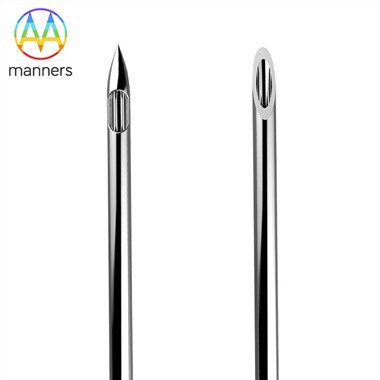
The core competitiveness of the PTC histological biopsy needle lies in its balanced design of clinical performance, controllable manufacturing cost and flexible customization capability, built on mature minimally invasive puncture and tissue harvesting principles. Manufactured from medical stainless steel, the needle body undergoes polishing, electroplating and ultrasonic cleaning to achieve ultra-low friction and anti-adhesion performance. Under 40× colposcopic magnification, clinicians can accurately locate cervical erosion and suspected cancerous lesions before using the needle to obtain intact histological samples. The double-layer cannula and inner stylet structure can capture complete tissue with preserved cell and glandular architecture, which is essential for pathologists to judge benign lesions, precancerous changes and invasive carcinoma. The product integrates injection and puncture functions, enabling local drug delivery after tissue sampling to simplify clinical workflow. Its diameter range from 0.25 mm to 30 mm, together with drawing and sample-based customization services, enables the same product platform to cover micro early lesions and large-area severe cervical lesions. Supported by ISO 9001 quality management system, the whole production process is traceable, balancing high sampling quality with competitive cost advantages for global market promotion.
3. Market-oriented Product Classification and Target Customer Groups
Based on market positioning and application scenarios, PTC histological biopsy needles are divided into three major categories for different customer segments. The first category is entry-level standard models, mainly 0.25 mm to 10 mm diameter with basic polishing treatment. They are cost-effective and suitable for grassroots hospitals, community health centers and large-scale population cervical cancer screening projects, where most cases are mild cervical erosion and CTC unclear results requiring preliminary biopsy confirmation. The second category is high-performance clinical models ranging from 10 mm to 20 mm, adopting electroplating reinforcement and precision surface finishing. These target secondary and tertiary hospitals and maternal and child specialist hospitals, used for moderate to severe cervical erosion, cervical intraepithelial neoplasia and suspected malignant lesion biopsy with high requirements for specimen integrity. The third category is fully customized high-specification models from 20 mm to 30 mm, developed according to customers' 2D/3D drawings or physical samples. They serve top-tier hospitals, medical research institutes and special clinical research projects, handling complex recurrent lesions and special pathological sampling needs. Package solutions can also be customized to meet brand requirements for medical distributors and international trading companies, expanding market coverage across global regions.
4. Practical Operation and Market Promotion Guidelines
Successful market promotion of PTC histological biopsy needles relies on combining product technical advantages with standardized clinical operation training. First, pre-sales technical communication: sales and technical teams communicate with medical institutions to understand their screening volume, lesion spectrum and existing equipment configuration, recommending matched needle specifications and surface treatment options. For large-scale screening programs, entry-level standard needles are preferred to control overall medical cost. For tertiary hospitals, high-performance or customized models are recommended for complex cases. Second, clinical demonstration training: organize on-site operation training with colposcopy simulation, teaching clinicians the full workflow including lesion positioning, needle selection, puncture control and specimen preservation, to help operators master standardized biopsy procedures and reduce sampling failure rate. Third, on-site application guidance: during clinical use, provide remote or on-site technical support to solve problems such as improper needle selection and non-standard specimen collection. Fourth, after-sales feedback collection: collect clinical data on sampling success rate, complication rate and pathologist evaluation of specimen quality, feed back user demands back to the production line for continuous product optimization. Fifth, packaging and logistics management: adopt standard export cartons or customized packaging, ensure sterile integrity during long-distance transportation to overseas markets, and maintain stable product quality when reaching end users.
5. Realistic Market Performance and Long-term Industry Prospect
In practical global market application, PTC histological biopsy needles fill the gap between expensive imported high-end biopsy devices and low-quality cheap alternatives. The combination of ISO 9001 certification, flexible customization and moderate cost makes it favored by medical distributors and medical institutions in multiple regions. It fits perfectly into the mature cervical diagnosis workflow: colposcopy observation, CTC cytology screening, and confirmatory histological biopsy when cytology results are ambiguous. As global women's health awareness rises and cervical cancer screening programs expand, the demand for reliable, minimally invasive histological biopsy instruments keeps growing. In the long run, the industry trend will move toward higher precision, smaller trauma, integrated functions and personalized customization. The PTC histological biopsy needle will continuously upgrade its material and surface processing technology, further improve sampling stability and reduce operation difficulty. Meanwhile, manufacturers will strengthen cooperation with gynecology and pathology experts to optimize product design according to real clinical feedback. With the improvement of global medical device regulatory systems, high-quality, certificated and customizable biopsy devices such as PTC histological biopsy needle will gain larger market share, helping more regions carry out standardized cervical lesion diagnosis and improve the early detection rate of cervical cancer worldwide.