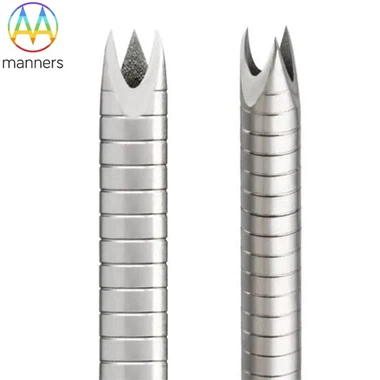
Pain Clinic RF Consumables
Oct 13, 2026
The Pain Points
Chronic pain departments buy RF needles but train for injections. The result is a mismatch between the device and the skill of the operator. RF ablation is not an injection; it is a precise thermal procedure that requires a different set of skills and a different understanding of the anatomy.
The consequences of this mismatch are severe. A needle that is placed too close to a motor nerve can cause weakness or paralysis. A needle that is placed too far from the target can cause incomplete denervation, leaving the patient in pain. A needle that is delivered with excessive energy can cause neuritis or neuroma formation, making the pain worse.
The problem is compounded by the use of reusable kits. Reusable needles may not be properly sterilized, introducing the risk of infection. Reusable needles may have degraded insulation, causing unintended energy delivery to normal tissue. Reusable needles may have inconsistent tip geometry, making the ablation zone unpredictable.
The clinical consequences are significant. A failed RF procedure means the patient remains in pain, often worse than before. The patient loses trust in the procedure and in the physician. The hospital bears the cost of the failed procedure and the potential liability of a poor outcome.
Principle
The principle of RF ablation in pain management is the same as in tumor ablation: ionic friction generates heat, which creates a controlled lesion. But the target is different. In pain management, the target is a nerve, not a tumor. The goal is to modulate or destroy the nerve that is transmitting the pain signal, without damaging the surrounding structures.
The same physics applies. The RF needle delivers high-frequency alternating current, oscillating up to 150,000 times per second. The ions in the tissue vibrate and collide, generating heat through friction. The heat creates a lesion in the tissue, which can be used to ablate the nerve.
But the target is small and delicate. The nerve may be only a few millimeters in diameter. The lesion must be precisely placed to affect the nerve without damaging the surrounding structures. This requires a different approach than tumor ablation.
The key difference is the use of sensory and motor stimulation testing. Before delivering the RF energy, the operator stimulates the nerve with a low-voltage electrical current. The patient's response to the stimulation confirms that the needle is in the correct position. The operator then delivers the RF energy to create the lesion.
The disposable RF needle is particularly well-suited for pain management. The consistent tip geometry ensures a reproducible lesion. The consistent insulation ensures that the energy is delivered only at the tip. The consistent sterilization ensures that the needle is safe for use.
Device Types
Several types of disposable RF needles are available for pain management procedures.
Facet Medial Branch RF Needles are designed for facet joint denervation. The medial branch of the dorsal ramus nerve innervates the facet joint, and ablation of this nerve can relieve chronic back pain. The needle is placed at the junction of the transverse process and the superior articular process, where the medial branch runs.
Trigeminal/Ophthalmic Micro RF Needles are designed for trigeminal neuralgia and other facial pain conditions. The trigeminal nerve is a large nerve that innervates the face, and ablation of the Gasserian ganglion can relieve severe facial pain. The needle is placed through the foramen ovale, and the RF energy is delivered to the ganglion.
Spinal Dorsal Root Ganglion Disposable Electrodes are designed for dorsal root ganglion (DRG) ablation. The DRG is a collection of nerve cell bodies located in the dorsal root of the spinal nerve. Ablation of the DRG can relieve chronic pain in a specific dermatome. The needle is placed in the epidural space, and the electrode is advanced to the DRG.
Pulsed-RF Non-Destructive Needles are designed for pulsed RF, a technique that delivers RF energy in short bursts with cooling intervals. Pulsed RF modulates nerve function without destroying the nerve, making it useful for neuropathic pain. The needle is placed near the nerve, and the pulsed RF is delivered for a longer duration at a lower temperature.
Cool-Tip Disposable Oncology/Pain Hybrids are designed for procedures that require both cooling and ablation. The needle has an internal cooling channel that circulates cool fluid, preventing the tissue around the tip from charring. This allows for larger, more uniform ablation zones.
Hands-on Guide
The following steps represent best practice for using a disposable RF needle in pain management.
Step 1: Perform Sensory/Motor Stimulation Test Before Lesion. Before delivering the RF energy, the operator should stimulate the nerve with a low-voltage electrical current. The patient's response to the stimulation confirms that the needle is in the correct position. For sensory nerves, the patient should feel a tingling sensation in the distribution of the nerve. For motor nerves, the patient should experience a muscle twitch.
Step 2: Keep the Lesion Within the Targeted Length. The lesion size is determined by the exposed tip length and the power setting. The operator should choose a needle with the appropriate exposed tip length and should adjust the power to create a lesion that is within the targeted length.
Step 3: Use Pulsed RF for Inflammatory Pain, Continuous for Denervation. Pulsed RF is used for inflammatory pain and neuropathic pain, where the goal is to modulate nerve function without destroying the nerve. Continuous RF is used for denervation, where the goal is to destroy the nerve to eliminate the pain signal.
Step 4: Document Impedance, Temperature, and Time. The operator should document the impedance, temperature, and time for each lesion. This documentation is essential for assessing the adequacy of the treatment and for planning any follow-up.
Step 5: Discharge Only After Motor Exam Stable. After the procedure, the operator should perform a motor examination to confirm that the motor function is intact. The patient should not be discharged until the motor exam is stable.
Field Experience
Pain clinics like disposable RF needles because billing, infection control, and reproducibility improve together. The disposable needle is a single-use device, which simplifies billing and reduces the risk of cross-contamination. The consistent performance of the disposable needle ensures reproducible lesions, which improves the outcome of the procedure.
One important lesson from the field: the sensory and motor stimulation test is the most important step in the procedure. The operator must take the time to perform the test carefully and to interpret the patient's response accurately. A poorly performed stimulation test can lead to a misplaced lesion and a poor outcome.
Another lesson: the RF energy should be delivered slowly and carefully. A rapid delivery can cause a steam pop, which can damage the surrounding tissue. The operator should increase the power gradually and monitor the temperature and impedance.
Summary
In pain medicine, the RF needle is not a "tumor killer"; it is a selective neural thermostat. The goal is to modulate or destroy the nerve that is transmitting the pain signal, without damaging the surrounding structures. The disposable RF needle provides the precision and consistency needed for this delicate procedure.
The result is a procedure that is safer, more effective, and more reproducible. The patient experiences relief from pain, and the operator has confidence in the outcome.
Outlook and Recommendations
The future of pain management RF will be shaped by advances in imaging and stimulation.
Ultrasound-Guided RF. Ultrasound will be used more frequently to guide the placement of the RF needle, reducing the need for fluoroscopy and improving the accuracy of the placement.
Stimulation-Integrated Needles. Future RF needles will incorporate stimulation electrodes, allowing the operator to perform the sensory and motor stimulation test without a separate device.
Protocol-Based Kits. Manufacturers will offer protocol-based kits that include the needle, the stimulation cable, the grounding pad, and the procedure card. This will simplify the procedure and improve the consistency of the outcome.
For procurement, the recommendation is to bundle the needle with the grounding pad, the stimulation cable, and the procedure card. Sell the protocol, not just the steel. This improves the outcome and builds a long-term partnership.