OEM RF Needle Procurement
Oct 13, 2026
The Pain Points
The RFQ says: "16G–26G disposable RF needle, best price." The factory ships: hub color drift, bent 26G, faded mark, impedance jump, no UDI. The lowest unit price becomes the most expensive project.
The problem is that the buyer is focused on the unit price, not on the total cost of ownership. The total cost includes the cost of returns, the cost of customs holds, the cost of regulatory delays, and, most importantly, the cost of a clinical complication.
A defective needle can cause a clinical complication, which can result in a lawsuit, a regulatory investigation, and a loss of reputation. The cost of a single complication far exceeds the cost of a quality disposable needle.
The problem is compounded by the lack of transparency in the supply chain. The buyer may not know the manufacturing process, the quality control procedures, or the regulatory compliance of the factory. The buyer may not know the material certification, the sterilization validation, or the traceability of the product.
Principle
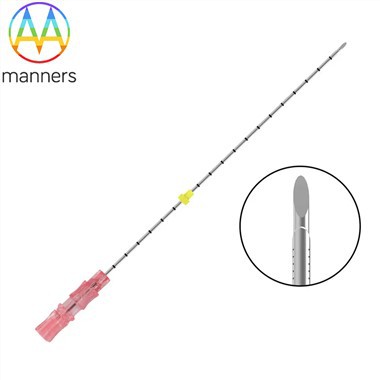
A compliant RF needle is a nine-node system: alloy, tube draw, necking/swaging, laser cut/mark, electropolish, insulation, sterilization, pouch, and traceability. One weak node changes the clinical behavior of the needle.
The alloy determines the mechanical properties and the biocompatibility of the needle. The tube draw determines the dimensions and the surface finish of the needle. The necking and swaging create the tapered tip and the hub connection. The laser cut and mark create the tip geometry and the identification marks. The electropolish creates the smooth surface finish. The insulation determines the exposed tip length and the energy delivery profile. The sterilization ensures the safety of the device. The pouch provides the sterile barrier and the traceability. The traceability provides the documentation needed for regulatory compliance and quality assurance.
Each node must be controlled to ensure that the needle meets the specifications. A variation in any node can affect the clinical behavior of the needle. For example, a variation in the alloy can affect the stiffness of the needle, which can affect the ability to penetrate tissue. A variation in the electropolish can affect the surface finish, which can affect the tissue interaction and the imaging visibility. A variation in the insulation can affect the exposed tip length, which can affect the size of the ablation zone.
Device Types
The market for OEM RF needles includes several categories.
Private-Label Blank Needles are supplied without any branding or packaging. The buyer applies their own label and packaging. This is a common arrangement for distributors and private-label brands.
Finished Sterile RF Kits include the needle, the connector cable, the grounding pad, and any other accessories needed for the procedure. These kits are sterilized and packaged for immediate clinical use.
Generator-Locked Connector Needles are designed to connect to a specific RF generator. The connector type and pin configuration are matched to the generator, ensuring compatibility. This prevents the use of incompatible combinations.
Custom Curve/Length/Insulation Needles are built to the specifications of the buyer. The buyer provides a 2D or 3D drawing, and the manufacturer produces needles to match. This custom capability extends to the needle size, curve angle, hub design, insulation length, and connector type.
Regulatory-Ready CE/FDA/NMPA Bundles are provided for buyers who need regulatory approval for the device. The bundle includes the technical files, test reports, and quality system documentation needed for regulatory submission.
Hands-on Guide for Buyers
The following steps represent best practice for procuring OEM RF needles.
Step 1: Audit the Alloy Cert. The buyer should request the material certificate for the stainless steel alloy. The certificate should specify the alloy composition and the mechanical properties. The alloy should be a high-quality stainless steel, such as 316L.
Step 2: Audit the OD/ID Tolerance. The buyer should request the tolerance specifications for the outer diameter and inner diameter of the needle tube. The tolerance should be within ±0.01–0.02 mm for a premium needle.
Step 3: Audit the Swage Impedance Continuity. The buyer should test the impedance continuity across the swage joint, where the hub meets the shaft. A high impedance at the swage joint indicates energy loss and a poor connection.
Step 4: Audit the Laser HAZ. The buyer should inspect the heat-affected zone at the laser-cut edge. The HAZ should be less than 10 µm to minimize the risk of micro-cracks.
Step 5: Audit the Electropolish Ra and Passivation. The buyer should measure the surface roughness with a profilometer. The Ra should be in the range of 0.05–0.15 µm for a premium needle. The buyer should also verify the passivation of the stainless steel.
Step 6: Audit the Insulation Adhesion. The buyer should test the adhesion of the insulation to the shaft. The insulation should not delaminate or peel during handling or use.
Step 7: Audit the EO Residue / Gamma Dose. The buyer should verify the sterilization method and the sterility assurance level. For EO sterilization, the buyer should verify that the EO residue is within the acceptable limit. For gamma sterilization, the buyer should verify that the dose is within the acceptable range.
Step 8: Audit the UDI + COA + IFU. The buyer should verify that the needle has a Unique Device Identifier (UDI), a Certificate of Analysis (COA), and an Instructions for Use (IFU). The UDI should be traceable to the lot number and the manufacturing date.
Step 9: Audit the Complaint/Recall SOP. The buyer should verify that the manufacturer has a complaint and recall procedure in place. This procedure should be documented and tested.
Field Experience
Importers who visit the factory QC lab transform from "price buyers" to "risk buyers." They see the quality control procedures, the inspection equipment, and the documentation systems. They understand that the cost of a quality needle is justified by the reduced risk of a clinical complication.
One important lesson from the field: the cheapest needle is not the most economical. A defective needle can cause a clinical complication, which can result in a lawsuit, a regulatory investigation, and a loss of reputation. The cost of a single complication far exceeds the cost of a quality disposable needle.
Another lesson: the buyer should not rely solely on the manufacturer's documentation. The buyer should perform independent testing and inspection to verify the quality of the product. This independent verification is essential for ensuring that the needle meets the specifications.
Summary
The lowest unit price becomes the most expensive project. This is the fundamental principle of OEM RF needle procurement. The buyer must consider the total cost of ownership, which includes the cost of returns, the cost of customs holds, the cost of regulatory delays, and, most importantly, the cost of a clinical complication.
A compliant RF needle is a nine-node system, and each node must be controlled to ensure that the needle meets the specifications. The buyer must audit each node to verify the quality of the product.
Outlook and Recommendations
The future of OEM RF needle procurement will be shaped by advances in traceability and quality assurance.
Blockchain Traceability. Blockchain technology will be used to create an immutable record of the manufacturing process, from the raw material to the finished product. This will provide complete traceability and reduce the risk of counterfeit products.
AI Quality Control. Artificial intelligence will be used to inspect every needle for defects, using computer vision and machine learning. This will improve the consistency of the product and reduce the risk of a defective needle reaching the market.
Digital Twin Manufacturing. Digital twin technology will be used to simulate the manufacturing process and optimize the parameters before production begins. This will reduce the risk of manufacturing defects and improve the consistency of the product.
For procurement, the recommendation is to treat RF needles as implants, not commodities. The buyer should audit the factory, verify the documentation, and perform independent testing. The cost of a quality needle is justified by the reduced risk of a clinical complication.