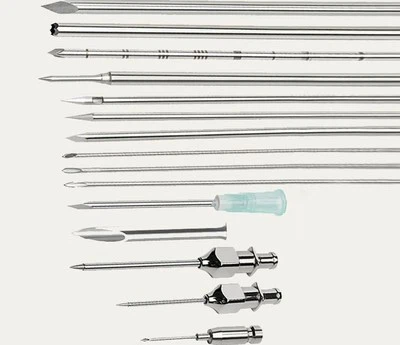
Full-Process Precision Intelligent Manufacturing And Cleanroom Processing: Artisan Craftsmanship Ensuring Veress Needles Meet Operating Room Standards
Apr 20, 2026
Full-Process Precision Intelligent Manufacturing and Cleanroom Processing: Artisan Craftsmanship Ensuring Veress Needles Meet Operating Room Standards
Minimally invasive abdominal puncture instruments are subject to stringent, non-negotiable requirements regarding machining precision, surface cleanliness, and sealing integrity. Even minor flaws in the production process can precipitate unexpected intraoperative failures such as pneumoperitoneum leakage, needle body jamming, or inadvertent tissue laceration. Professional Veress Needle manufacturers rely on fully automated, precision intelligent manufacturing production lines, coupled with closed-loop operations within Class 100,000 cleanrooms. From turning and forming to integrated shaping, and from clean sterilization to sterile packaging, every step is meticulously controlled to ensure the finished products directly meet the clinical immediate-use standards of sterile operating rooms.
Precise Integrated Machining of the Core Needle Body Eliminates Safety Hazards Associated with Splicing and Assembly
Manufacturers have abandoned crude, secondary splicing and assembly modes, adopting fully automated, high-precision CNC sliding headstock lathes for integrated machining of the entire raw material into shape. The conical tip, the internal ventilation lumen, and the connection base are synchronously machined across the entire domain, resulting in a one-piece molded product free of splicing gaps, welding points, and risks of assembly loosening. Throughout the entire process, micron-level tolerance closed-loop control is maintained; the needle body possesses balanced straightness and precise coaxiality, ensuring no eccentric shaking, jamming, or deviation during high-speed clinical puncture. The inner wall is smooth, free of residual burrs or metal debris from machining, ensuring smooth and unobstructed ventilation throughout, preventing intracavity debris shedding and falling into the abdominal cavity to cause postoperative foreign body infection, and adapting to the stable operation of long-duration complex laparoscopic surgeries.
Integrated Injection Molding and Traceless Transition Processes Enhance the Instrument's Practical Adaptability
Upon completion of the metal substrate machining for the needle body, the manufacturer uses medical-grade eco-friendly polymer materials for constant temperature and pressure integrated injection molding to cover the handle area. Injection molding process parameters are strictly controlled; the finished product is free of process defects such as surface shrinkage dents, internal air bubbles, impurities, cracking, or defects. The cladding layer fits tightly with the metal substrate without loosening or delamination; medical staff achieve a non-slip, stable grip during hand-held operation, preventing slipping or fatigue during long-duration puncture operations, allowing for precise control of puncture force and depth. The sealing process at connection interfaces has been strengthened and upgraded, equipped with medical-grade, highly compatible sealing washers, ensuring no air leakage, aging, or deformation during long-term use, guaranteeing the stability of the closed pneumoperitoneum pressure, and avoiding surgical interruption due to intraoperative air pressure leakage.
Dual Deep Cleaning + Sterile Independent Packaging Closes the Loop to Guarantee Clinical Cleanliness and Safety
After the completion of finished product processing, electropolishing is first used to optimize the surface texture of the needle body across the entire domain, removing microscopic machining burrs and stress concentration points, strengthening corrosion-resistant cleanliness performance. This is followed by high-frequency ultrasonic sealed deep cleaning to thoroughly flush out hidden residual machining oil stains, metal dust, and impurity particles from the inner lumen micropores and the conical tip. The entire process involves zero-contact by personnel, preventing secondary pollution. Immediately after meeting cleanliness standards, products are transported to clean workstations for independent sterile vacuum sealed packaging, labeled with production batch numbers, sterilization dates, valid shelf life, and traceable QR codes. Prior to leaving the factory, 100% sterility inspections are conducted on sampled batches to fully comply with the production acceptance specifications for Class II sterile minimally invasive surgical medical devices; the product is ready for direct use upon opening in high-grade sterile laparoscopic surgeries.