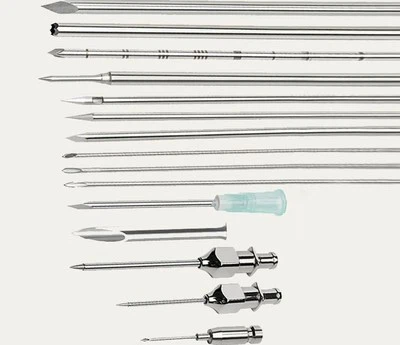
Ngineering Design & Manufacturing Perspective: EBUS-TBNA Needles — Precision Puncture Engineering Under Flexible Constraints
Apr 11, 2026
Engineering Design & Manufacturing Perspective: EBUS-TBNA Needles - Precision Puncture Engineering Under Flexible Constraints
From an engineering design standpoint, the EBUS-TBNA needle is a miniature precision system engineered to deliver reliable functionality under extreme spatial constraints and complex mechanical environments. Its design must resolve the inherent contradiction between "flexible delivery" and "rigid puncture." Every technical detail is the result of multidisciplinary engineering optimization.
I. System-Level Design Challenge: Performing Precision Operations at the End of a "Winding Tunnel"
The working environment of the EBUS-TBNA needle is exceptionally specialized: it must first navigate a highly compliant path through the bronchoscope's working channel-a tortuous, narrow lumen over 1 meter long with a diameter of only ~2 mm. Upon reaching the target area, it must instantaneously transition to a state of high rigidity and sharpness to penetrate the bronchial wall and lymph node capsule. This demands a design capable of controlled mechanical state transformation.
II. Analysis of Core Engineering Parameters
Pushability and Bending Stiffness:
Contradiction: High bending stiffness is required to ensure penetration efficiency and straight trajectory, yet low insertion force is needed to pass smoothly through curved lumens.
Solution: Precision tube drawing techniques control the wall thickness and diameter of the stainless steel needle tube, optimizing its slenderness ratio. This minimizes push resistance while satisfying puncture stiffness. The introduction of Nitinol (NiTi) alloys offers another approach, leveraging superelasticity to maintain lumen patency during bending while providing support when straightened.
Puncture Mechanics and Needle Tip Geometry:
The bevel angle, number of cutting edges, and symmetry directly affect the initial puncture force, tissue deformation, and sample quality. The back-cutting point design, featuring a second cutting facet, effectively reduces tissue crushing and improves the yield of core tissue specimens. This requires extensive finite element analysis (FEA) and ex vivo tissue simulation testing for optimization.
Engineering Realization of Ultrasound Visibility:
Echo enhancement on the needle body is not arbitrary. Typically, laser micromachining is used to create arrays of micron-level pits on specific areas of the needle tip. The dimensions, depth, and arrangement of these pits are meticulously designed to maximize ultrasound backscatter signals while ensuring no significant compromise to structural integrity or increase in surface roughness (which could lead to tissue retention).
III. Precision Application of Materials Science
AISI 304/316L Stainless Steel: The selection is based not only on biocompatibility but also on predictable and stable mechanical properties, excellent fatigue resistance, and mature precision processing capabilities. The hardness range of 200–250 HV is the result of precise heat treatment process control, ensuring that needle tip sharpness does not degrade rapidly after repeated punctures.
Nitinol Alloys: Their superelasticity and shape memory effects offer possibilities for designing more flexible and durable needle bodies, particularly suitable for navigation scenarios requiring extreme bending angles or complex paths. However, their processing, heat treatment, and consistency control are significantly more challenging than stainless steel.
IV. Manufacturing Precision and Quality Control
Micron-Level Tolerances: The tolerances for inner/outer diameters of the needle tube and the concentricity of the needle tip must be controlled within the ±0.01 mm range. This ensures smooth compatibility with the bronchoscope's working channel and unimpeded aspiration of samples.
Surface Integrity Engineering: The inner lumen must be electropolished to a mirror finish to reduce sample transit resistance and cellular adhesion; the outer surface must be free of burrs to prevent damage to the endoscope's working channel.
V. Conclusion
The EBUS-TBNA needle is an engineering masterpiece in the field of miniature medical devices. It perfectly exemplifies how, under stringent physical limitations, the synergistic innovation of material selection, geometric optimization, surface engineering, and precision manufacturing can translate clinical needs into stable and reliable performance. Every successful biopsy is a victory for underlying engineering logic.