Inical Value & Technological Innovation Perspective: EBUS-TBNA Needles
Apr 11, 2026
Clinical Value & Technological Innovation Perspective: EBUS-TBNA Needles - The "Endoscopic Sniper Rifle" for Precision Lung Cancer Diagnosis
In the field of lung cancer diagnostics, the EBUS-TBNA needle is hailed as the "eyes" and "sniper rifle" for interventional pulmonologists. It is not merely a hollow needle but a highly integrated diagnostic system combining precision navigation, minimally invasive sampling, and real-time imaging feedback. This technology has fundamentally transformed the paradigm of mediastinal and hilar lymph node biopsy, converting procedures that previously required thoracotomy or mediastinoscopy into precise, minimally invasive operations that can often be completed on an outpatient basis.
I. Core Clinical Role: Breaking the "Diagnostic Dead Zone" for Precise Lung Cancer Staging
The core value of EBUS-TBNA lies in resolving the pain point of traditional bronchoscopy: "visible but unreachable and unobtainable." Its clinical mission is clearly defined:
Achieving Precise Lung Cancer Staging: Performing safe and accurate puncture sampling of mediastinal (stations 2, 4, 7) and hilar (stations 10, 11) lymph nodes is one of the "gold standards" for determining the N stage (nodal metastasis) of lung cancer, directly dictating the treatment strategy (surgery vs. medical therapy).
Diagnosing Unexplained Hilar/Mediastinal Lymphadenopathy: Providing critical histopathological evidence for the differential diagnosis of benign and malignant diseases such as sarcoidosis, tuberculosis, and lymphoma.
Biopsy of Central Pulmonary Lesions: For lung tumors adjacent to large airways, direct puncture avoids the risks of pneumothorax and hemorrhage associated with percutaneous transthoracic needle biopsy (PTNB).
II. Decoding Technological Innovation: How to "Retrieve Objects Through Walls"
The success of an EBUS-TBNA needle relies on its perfect synergy with the endoscopic ultrasound system. Its technical highlights include:
Real-Time Ultrasound Guidance: Under the direct visualization of endoscopic ultrasound, the needle tract, target (lymph node), and adjacent critical vessels (e.g., pulmonary artery, aorta) are clearly displayed. This enables millimeter-level precision puncture, drastically avoiding the risk of accidental vascular penetration.
Echo-Enhancing Design: Special micro-textures or coatings on the needle body or tip create a high-echo signature on ultrasound images. This allows physicians to confirm the exact location of the needle tip in real-time, solving the critical problem of "where is the tip?"
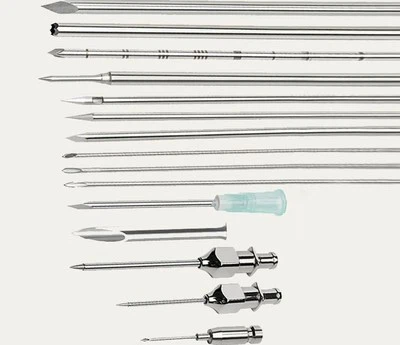
Optimized Needle Tip Mechanics: Proprietary tip designs, such as the back-cutting edge, allow the needle to easily penetrate the bronchial wall and lymph node capsule while obtaining high-quality tissue cores (rather than just cells). This meets modern pathology's sample requirements for architectural assessment, immunohistochemistry, and molecular testing.
III. Clinical Balance of Materials and Performance
Needle Body Material: Utilizes medical-grade 304/316L stainless steel. Its core value lies in providing sufficient longitudinal pushability and kink resistance, ensuring responsive manipulation over long, tortuous channels, while maintaining excellent biocompatibility and corrosion resistance.
Core Performance Parameter: Hardness is precisely controlled at 200–250 HV. This is a delicate equilibrium-if too hard, the needle becomes brittle and risks jamming or damaging the flexible endoscope during passage; if too soft, it cannot effectively penetrate the tough lymph node capsule. This specific hardness ensures "flexible passage, yet sharp penetration."
IV. Conclusion
The EBUS-TBNA needle is a jewel in the crown of modern respiratory interventional technology. It represents a diagnostic paradigm shift from "blind puncture" to "visualization," and from "cytology" to "histology." Understanding its positioning as a precision sampling system guided by imaging-rather than merely viewing it as a "needle"-is the foundation for evaluating its clinical value and driving the popularization and innovation of the technology. Its continuous evolution is propelling lung cancer care into an era of minimally invasive, highly precise, personalized diagnosis and treatment.