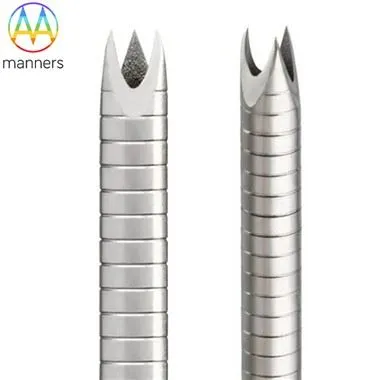
Multi-Depth Incision Technology Of Blood Collection Solid Lancet Needles
Oct 03, 2026
1. Industry Pain Points
Many conventional lancets on the market only provide fixed single incision depth, which cannot adapt to diversified skin conditions of different crowds. Using fixed shallow depth on thick calloused adult fingertips leads to insufficient blood outflow and repeated puncture. Fixed deep incision for infants, seniors and thin-skin users causes excessive wound depth, heavy bleeding and prolonged healing time. Operators lack adjustable depth selection, and have to switch multiple separate lancet models for different patients, increasing inventory pressure and operational complexity. Without matched depth guidance, many medical staff choose incision depth only by experience, resulting in inconsistent sampling quality. The lack of multi-depth solid lancet solutions also brings troubles for point-of-care testing, where blood volume requirements vary for different test items. Fixed-depth limitation restricts flexible clinical application of routine blood collection consumables.
2. Core Principle of Multi-Depth Incision
Blood Collection Solid Lancet Needles are stainless steel injection and puncture instruments with optional multiple incision depths. The solid lancet tip delivers consistent and predictable penetration. The product is equipped with an ergonomic plastic hub for direct immediate use, and integrates a clear channel to observe blood sample volume in real time. Its gauge range covers 10G–36G, needle diameter 0.5–20 mm, and needle length can be customized according to customer 2D/3D drawings or samples. Packaging supports standard carton or customized packaging. The core principle of multi-depth incision design is to match puncture depth with skin thickness and target blood volume. Different preset depths control how far the solid stainless steel tip penetrates capillary layers, realizing controllable incision size, stable blood output and adjustable trauma level, avoiding over-penetration or insufficient cutting.
3. Product Classification by Incision Depth
Solid lancets are divided into three depth series. First, shallow-depth solid lancets: low penetration, for infants, elderly, sensitive skin and low-volume blood glucose monitoring, minimizing wound size and pain. Second, medium-depth solid lancets: balanced penetration, mainstream model for most adults' routine physical examination and daily capillary testing, balancing blood yield and recovery speed. Third, deep-depth solid lancets: larger incision depth, designed for thick calloused fingertips and test projects requiring large blood volume, ensuring sufficient sample in one puncture. All three depth series adopt ergonomic plastic hubs and clear viewing channels, support custom needle length and custom development by drawings or samples, and can be packed in standard or customized packaging.
4. Multi-Depth Selection and Operation Guidelines
Assess patient skin condition and required blood volume before selecting incision depth. Choose shallow depth for children, seniors and thin skin users; select medium depth for general adult routine testing; adopt deep depth for thick calloused fingertips and high-volume sampling. Hold the ergonomic plastic hub firmly, disinfect lateral fingertip skin and wait for full drying. Perform vertical puncture with the solid lancet. Observe blood flow through the built-in clear channel and stop sampling once reaching target volume. Never squeeze finger hard; only gentle massage from finger base to tip is permitted. Wipe the first drop of blood to remove tissue fluid. After sampling, apply sterile cotton swab for hemostasis. Dispose of the whole single-use solid lancet into sharps container. When using custom-length solid lancets, recheck the actual incision depth before formal use.
5. Practical Experience of Multi-Depth Application
Hospitals adopting multi-depth solid lancets achieve obvious optimization in routine blood collection. Nurses can quickly switch depth specifications according to patient skin without stocking many unrelated lancet types, reducing inventory management pressure. Shallow-depth solid lancets greatly reduce wound trauma and pain for pediatric patients, improving children's cooperation rate during screening. Deep-depth models solve the problem of insufficient blood on thick calloused fingertips and cut repeated puncture rate. The transparent channel helps operators judge blood volume accurately under different depth settings. Clinical statistics show that multi-depth solid lancets reduce patient complaints about excessive pain or inadequate blood samples by more than 35%. Custom depth solid lancets developed from customer samples also show stable and repeatable incision performance in specialized laboratory sampling.
6. Summary and Sublimation
Multi-depth incision capability is the core differentiated advantage of Blood Collection Solid Lancet Needles, solving the pain point of fixed single depth that cannot adapt to diverse skin and testing demands. The adjustable depth system controls the penetration of solid stainless steel lancet tip precisely, matching trauma level and blood output to different patient groups and test scenarios. Combined with ergonomic plastic hub and built-in clear observation channel, the product realizes controllable, observable routine blood collection. Custom needle length and drawing-based customization further expand depth adaptation space. Multi-depth design pushes capillary blood collection consumables from one-size-fits-all fixed specification to refined, scenario-oriented sampling solutions.
7. Prospect and Suggestions for Multi-Depth Technology
Manufacturers should continue to refine depth grading, add more fine depth gears for segmented crowds. Mark depth identification clearly on plastic hubs and outer packaging for rapid visual recognition by clinical staff. Optimize the solid tip processing to ensure incision consistency under each preset depth. Develop standardized depth selection decision flow charts for medical staff and home users. Carry out batch stability testing for each depth specification to guarantee consistent penetration across production batches. Cooperate with medical institutions to formulate clinical depth matching guidelines. Improve certification system for multi-depth solid lancets, and promote the standardized application of adjustable-depth solid lancets in global routine blood collection markets.