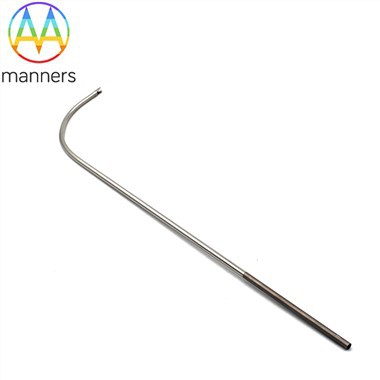
Minimally Invasive Advantages Of Standard Breast Biopsy Procedure
Sep 25, 2026
1. Clinical Pain Points
Traditional breast biopsy procedures have prominent defects of excessive trauma and poor patient comfort. Early coarse biopsy instruments have blunt needle tips and thick tube walls, causing large damage to breast adipose tissue and glandular tissue during puncture. Unoptimized needle body structure is prone to tissue extrusion and tearing during sampling, leading to severe postoperative pain, obvious bruising and long recovery cycle. In addition, repeated puncture caused by inaccurate positioning further expands wound area, increasing the risk of postoperative infection and poor wound healing. Severe procedural trauma not only reduces patient medical experience and compliance, but also may affect the morphological structure of breast tissues, interfering with subsequent imaging re-examination and follow-up observation.
2. Core Working Principle
The minimally invasive performance of modern breast biopsy procedures is derived from the optimized structural design and precision manufacturing of medical biopsy needles. The core principle is to reduce tissue damage from puncture and sampling links through ultra-fine precision processing and ergonomic structural optimization. The super sharp beveled needle tip is polished by micron-level precision grinding, which can pierce breast skin and gland tissue smoothly with minimal tissue extrusion and stripping. The thin-wall large-core structural design reduces the outer diameter of the needle body while ensuring sufficient sampling volume, effectively reducing puncture wound area. The no-forward-throw control structure avoids excessive needle penetration into deep tissues, and the streamlined needle body reduces friction with surrounding tissues during insertion and withdrawal, realizing low-trauma and minimally invasive sampling.
3. Minimally Invasive Equipment Classification
According to minimally invasive grades and application scenarios, breast biopsy procedure instruments are divided into three categories. First is ultra-fine minimally invasive biopsy needles (18G-20G), with ultra-thin wall and slender needle body, minimal puncture trauma, suitable for screening sampling of superficial small lesions and high-sensitivity patient groups. Second is standard precision biopsy needles (14G-16G), balancing trauma degree and sampling efficiency, the most widely used general-purpose model for routine clinical biopsy procedures. Third is large-core biopsy needles (8G-12G), with optimized thin-wall large-capacity sampling cavity, suitable for large lesion sampling while controlling trauma within a reasonable range. All products are made of biocompatible 304/316 medical stainless steel to avoid tissue irritation and adverse reactions.
4. Standard Minimally Invasive Operation Guidelines
To maximize the minimally invasive advantages of breast biopsy procedures, clinical operations need to follow standardized trauma-control specifications. Firstly, select the optimal needle specification according to lesion size and depth: prioritize ultra-fine needles for superficial tiny lesions to reduce wound area. Secondly, implement precise layered local anesthesia to ensure full anesthesia of puncture channel tissues and reduce intraoperative pain. Thirdly, adopt slow and stable linear needle insertion under ultrasonic guidance to avoid repeated shaking and twisting of the needle body, reducing tissue friction and tearing. Fourthly, complete sampling quickly and accurately with one-time positioning, avoid repeated puncture operations. Finally, conduct precise local compression hemostasis after surgery, and implement standardized wound care to reduce postoperative complications.
5. Practical Clinical Experience
Clinical application data show that optimized minimally invasive breast biopsy procedures have significant advantages over traditional operations. The super sharp precision-ground needle tip reduces intraoperative tissue trauma by more than 50%, with basically no obvious intraoperative bleeding. The thin-wall large-core design ensures complete lesion tissue sampling while minimizing wound size, and most patients have no obvious pain after local anesthesia. The no-forward-throw structure completely avoids deep tissue and vascular damage, and the postoperative bruising and infection rate is reduced to less than 2%. Patients have faster postoperative recovery, most of whom can return to normal daily activities within 1-2 days, and the patient satisfaction rate of minimally invasive biopsy procedures is as high as 98%, greatly improving clinical medical experience.
6. Summary and Sublimation
Minimally invasive performance is an important development symbol of modern breast biopsy procedures. Through the precision optimization of biopsy needle structure and material technology, the procedure fundamentally solves the pain points of large trauma, severe pain and slow recovery of traditional biopsy operations. The integration of sharp needle tip penetration, thin-wall large-core sampling and anti-forward-throw protection realizes the organic unity of efficient sampling and minimal tissue damage. Standardized minimally invasive operations not only reduce clinical postoperative complication rates, but also improve patient medical compliance, providing a more humanized and safe diagnostic mode for breast disease screening and diagnosis.
7. Industry Prospect and Suggestion
Future breast biopsy procedures will develop towards ultra-minimally invasive, painless and intelligent directions. It is suggested to continuously optimize the micro-grinding process of needle tips to further reduce puncture trauma. Develop gradient thin-wall biopsy needles with variable flexibility to adapt to different tissue densities of breast glands and fat. Combine intelligent flexible puncture technology to realize automatic low-trauma needle insertion and sampling. Standardize clinical minimally invasive operation processes, form unified trauma evaluation standards, and further improve the safety, comfort and humanization level of breast biopsy diagnosis.