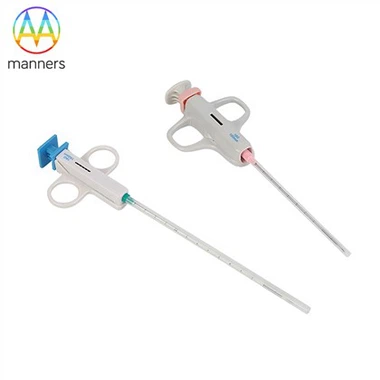
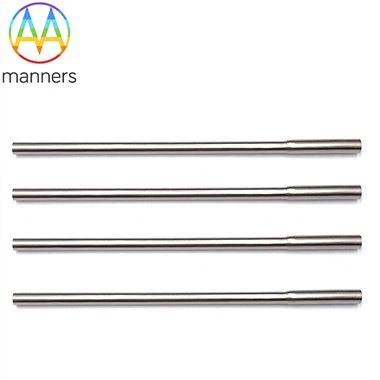
Materials Science Of Medical Puncture Needles: Evolution, Selection, And Frontier Exploration
May 11, 2026
As one of the most widely used instruments in modern medicine, the performance of medical puncture needles is fundamentally rooted in their materials. From primitive bone and bamboo needles to today's high‑performance alloys and smart materials, every breakthrough in needle‑making materials has driven progress in clinical techniques. From a materials‑science perspective, this paper provides an in‑depth analysis of the material‑selection logic, mainstream options, and future trends for medical puncture needles.
I. Core Requirements: Why Materials Matter
The selection of puncture‑needle materials is never arbitrary; it must satisfy a strict set of physiological and engineering criteria:
1. Biocompatibility: Non‑toxic, non‑sensitizing, and free from excessive immune or rejection reactions when in contact with human tissue and blood.
2. Mechanical performance: Sufficient strength, hardness, and toughness to resist axial compressive and lateral bending forces during puncture, preventing fracture or permanent deformation. Excellent elasticity is also required for full recovery after bending.
3. Corrosion resistance: Resistance to degradation from blood, interstitial fluid, and disinfectants (e.g., chlorine‑based solutions), ensuring long‑term stability and preventing metallic ion leaching.
4. Machinability: Suitability for precision processes such as grinding, stamping, and laser cutting to produce ultra‑fine tubing or solid needles with complex geometries (e.g., multi‑bevel tips, side ports), while maintaining dimensional stability and surface finish.
5. Functional expandability: Tailored physicochemical properties to meet specialized therapeutic needs, such as electrical conductivity, MRI compatibility, and shape memory.
II. Mainstream Material Systems: The Dominance and Challenges of Stainless Steel
Much like the robotic surgical jaws referenced in the source materials, which are predominantly made of stainless steel, austenitic stainless steels - notably AISI 304 and 316L - have long dominated the medical‑puncture‑needle sector.
- AISI 316L Stainless Steel: The undisputed gold standard. The "L" denotes low carbon content, granting exceptional resistance to intergranular corrosion after welding or machining. Molybdenum (Mo) alloying drastically enhances pitting and crevice corrosion resistance in chloride‑rich environments such as bodily fluids, a critical feature for indwelling or reusable needles. Its well‑balanced mechanical properties and mature processing capability make it the primary choice for injection, biopsy, and suture needles.
- Martensitic Stainless Steel: Grades such as 440C (high‑carbon, high‑chromium) and 630 (17‑4PH precipitation‑hardening stainless steel) achieve extreme hardness (HRC 58‑65) via heat treatment. These materials are used for styli requiring superior wear resistance and edge retention, such as bone‑marrow biopsy needles for hard or calcified tissue. High hardness ensures the tip remains sharp during penetration of dense tissue.
III. High‑Performance and Specialty Materials: Addressing Complex Clinical Scenarios
Advancements in interventional radiology, cardiovascular care, and precision medicine have raised performance expectations, fueling the adoption of specialty materials.
1. Nitinol: A nickel‑titanium shape‑memory alloy defined by superelasticity and shape‑memory effects. Superelasticity enables the needle to recover its original shape after extreme bending, making it ideal for navigating around vital organs along curved trajectories in complex interventions. The shape‑memory effect allows pre‑programmed tip configurations that deploy at body temperature for targeted anchoring and positioning.
2. Titanium and Titanium Alloys: Outstanding biocompatibility, low density, high specific strength, and paramagnetic properties (minimal MRI artifacts). Commonly used for MRI‑compatible puncture needles, long‑term implantable access ports, and microsurgical devices. Anodization creates a porous titanium‑oxide surface that promotes osseointegration, suitable for bone‑graft needles.
3. Advanced Polymers: Such as PEEK (polyetheretherketone) and high‑performance engineering plastics. They offer excellent electrical insulation, radiolucency (no imaging artifacts), and tunable mechanical properties. Widely used for biopsy cannulas, catheter sheaths, and insulating/structural layers in composite needle assemblies.
IV. Surface Engineering: Giving Materials a Second Life
Bulk material performance is dramatically enhanced by advanced surface‑modification techniques, a philosophy consistent with the electropolishing of robotic surgical jaws to boost performance.
- Lubricious Coatings: PTFE (polytetrafluoroethylene) coatings are the most common. They reduce insertion force by 30–50 %, significantly alleviating pain, especially for subcutaneous and repeated puncture procedures.
- Ultra‑Hard Wear‑Resistant Coatings: DLC (diamond‑like carbon) or TiN (titanium nitride) coatings. Depositing a micrometer‑scale DLC layer imparts near‑diamond hardness, drastically improving wear resistance and edge retention. These needles slice through fascia, calcified plaques, and cartilage with minimal resistance.
- Antimicrobial Coatings: Silver/copper ions or antibiotics (e.g., vancomycin) are immobilized on the surface via plasma immersion ion implantation or magnetron sputtering. This "active defense" inhibits bacterial colonization along the needle tract, lowering the risk of catheter‑related bloodstream infections from central venous catheters and indwelling devices.
V. Future Trends: Intelligence, Biodegradability, and Functional Integration
1. Smart‑Needle Composites: Composite needles integrated with micro‑sensors (fiber Bragg gratings for force/temperature measurement; electrochemical sensors for pH, glucose, and tumor‑biomarker detection). Puncture is synchronized with real‑time tissue‑property sensing and biochemical analysis for instant diagnosis.
2. Biodegradable/Absorbable Materials: Needles fabricated from PLA (polylactic acid) and PCL (polycaprolactone) degrade predictably in‑vivo after tissue suturing, drug delivery, or fixation, eliminating secondary removal surgery and the risks of foreign‑body inflammation. They represent the future of soft‑tissue fixation and sustained‑release delivery.
3. Nanostructured Functional Surfaces: Femtosecond laser etching and anodization create tailored micro‑/nanoscale topographies. Examples include shark‑skin‑inspired textures to reduce tissue adhesion, or hydrophilic/hydrophobic patterns for precise on‑demand drug release at the tip.
Conclusion
The materials science of medical puncture needles traces an evolutionary path from meeting basic safety requirements to pursuing extreme performance and embedding intelligent functionality. From classic stainless steel to versatile nitinol and cutting‑edge polymers and composites, each material innovation unlocks new clinical capabilities. Looking ahead, the deep convergence of materials genomics, additive manufacturing (3D printing), and surface engineering will transform the medical needle from a simple puncture tool into a miniaturized, intelligent, and programmable theranostic platform integrating diagnosis, treatment, and monitoring.