Material Technology Advantages Of High-Quality Redon Needles
Aug 27, 2026
Pain Point Proposion The material performance of medical needles directly determines clinical safety and operational effect. Many ordinary medical needles on the market adopt inferior alloy materials, which have prominent defects such as poor corrosion resistance, easy deformation and rough surface. In the process of high-temperature sterilization and clinical tissue contact, inferior materials are easy to rust and peel, bringing hidden dangers of wound infection. The insufficient hardness of the needle body leads to bending and breaking during puncture operation, causing secondary damage to patients. In addition, the non-ergonomic design of ordinary needle bodies leads to easy hand fatigue of medical staff after long-time operation, unstable operation accuracy, which seriously affects the safety and standardization of clinical diagnosis and treatment.
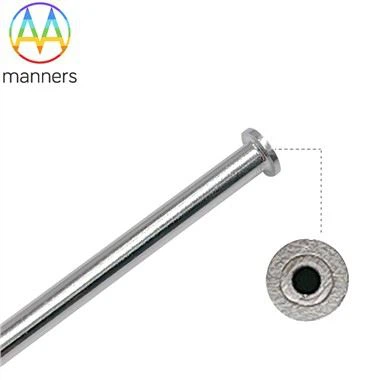
Principle Introduction The excellent clinical performance of Redon needles is derived from strict high-grade material selection and scientific structural design. The whole needle body is made of medical high-purity stainless steel, which has ultra-high corrosion resistance, oxidation resistance and structural stability. This material can withstand repeated high-temperature high-pressure sterilization without deformation, rust and performance attenuation, and fully meets the strict medical disinfection standards. The smooth polishing process of the needle body surface reduces tissue friction resistance, realizes low-trauma puncture. The integrated forming process makes the needle body uniform in stress and strong in bending resistance, avoiding fracture and deformation during operation. The material's good biocompatibility ensures no rejection reaction with human tissues, ensuring the safety and comfort of clinical use.
Equipment Classification and Explanation Redon needles form a differentiated product system based on material process and structural design. According to material process, they are divided into standard medical stainless steel models and enhanced high-hardness stainless steel models. Standard models are suitable for conventional therapeutic puncture and minor postoperative drainage, with cost-effective and stable performance. Enhanced models adopt upgraded smelting and polishing process, with higher hardness and smoother surface, suitable for hard tissue puncture and long-term complex drainage operations. According to structural design, they are divided into conventional straight needle models and ergonomic optimized models. The optimized models adjust the needle body radian and holding structure, effectively reducing the operating pressure of medical staff and adapting to long-term continuous clinical work.
Operational Guidelines To ensure the maximum service life and clinical effect of Redon needles, standardized operation and maintenance are required. First, select matching material models according to clinical scenarios: use standard models for routine soft tissue operations and enhanced high-hardness models for hard tissue and long-term drainage operations. Before use, check the surface smoothness and structural integrity of the needle body to exclude products with burrs and deformations. During operation, avoid excessive force bending and violent twisting of the needle body to prevent structural damage. After single use, discard it uniformly in accordance with medical waste management specifications, and do not reuse it to avoid cross infection. For preoperative sterilization, follow the standard high-temperature sterilization process adapted to stainless steel materials to avoid performance damage caused by improper disinfection.
Practical Experience In long-term clinical application and medical equipment testing, Redon needles made of high-grade stainless steel show far more stable performance than ordinary alloy needles. In repeated sterilization tests, Redon needles have no rust, peeling or deformation, and maintain stable structural performance. In complex tissue puncture operations, the high-hardness needle body effectively avoids bending and fracture, and the smooth surface greatly reduces tissue friction and trauma. Medical staff feedback that the ergonomic optimized Redon needles are more labor-saving to operate, and the accuracy of long-time continuous operation is significantly improved. Patients have no adverse tissue reaction after use, and the wound healing effect is better than that of ordinary needle products.
Summary and Sublimation Material technology is the core foundation of the excellent performance of Redon needles. Adhering to the selection of high-grade medical stainless steel and advanced processing technology, Redon needles completely solve the safety and performance pain points of inferior material medical needles. It achieves comprehensive breakthroughs in corrosion resistance, stability, safety and operability, and provides reliable material guarantee for minimally invasive, precise and safe clinical medical operations. The combination of high-quality materials and humanized design makes it not only a simple medical tool, but also a high-standard clinical auxiliary equipment integrating safety, efficiency and comfort.
Prospect and Suggestion With the continuous improvement of medical material standards, the industry has higher and higher requirements for the quality of medical precision needles. It is suggested that medical institutions prioritize Redon needles with high-standard stainless steel materials to replace low-quality alloy needle products, so as to reduce clinical safety hidden dangers. Manufacturers can further upgrade material formulas, develop antibacterial stainless steel materials, and enhance the anti-infection performance of products. At the same time, optimize the material processing technology, reduce production costs on the premise of ensuring quality, and promote the popularization of high-quality Redon needles in primary medical institutions, so as to improve the overall standard of grassroots medical services.