Material Performance And Durability Analysis Of Disposable Spinal Anesthesia Needles
Aug 09, 2026
Material performance is the core foundation that determines the safety and service effect of spinal anesthesia puncture needles. Traditional puncture needles mostly adopt ordinary alloy materials, which have prominent clinical pain points: poor surface smoothness, easy to produce friction damage to spinal tissue during puncture; insufficient material hardness, easy to bend and deform in the face of thick tissue, leading to puncture deviation; poor corrosion resistance, easy to produce material residues after disinfection and repeated use, inducing infection and inflammation. In addition, unqualified medical materials have poor biocompatibility, easy to cause patient allergy and local tissue irritation, affecting postoperative recovery. These material defects are important factors leading to high complication rate and poor safety of traditional spinal puncture surgery. High-quality material selection of disposable spinal anesthesia needles fundamentally solves the above industry pain points and ensures the stability and safety of clinical operation.
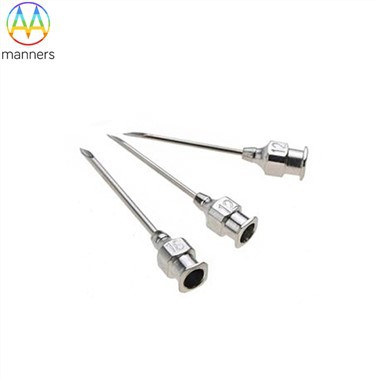
The working principle of disposable spinal anesthesia needles based on high-quality stainless steel materials is reflected in excellent mechanical properties and biological safety. Medical-grade stainless steel has ultra-high hardness and tensile strength, which can resist the extrusion and friction of skin, ligament and bone tissue during puncture, ensure that the needle body remains straight and stable, and avoid bending and fracture. After multi-channel precision polishing treatment, the material surface reaches a mirror smooth effect, which minimizes tissue friction damage during needle insertion and extraction, reduces dural and ligament tearing, and lowers the incidence of postoperative low back pain and headache. The material has stable chemical properties, no chemical reaction with human tissue and anesthetic drugs, excellent biocompatibility, no allergy and no irritation. The disposable use mode avoids material aging and performance degradation caused by repeated disinfection, and maintains the optimal mechanical performance of the product for single clinical use.
Disposable spinal anesthesia needles form a differentiated material performance system according to product specifications and application scenarios. All series of products adopt high-standard medical stainless steel as the core raw material, with unified biological safety standards, and meet international medical device safety certification. In terms of mechanical performance classification, large-gauge thick needles (16G-20G) strengthen the material wall thickness and structural toughness, which is suitable for high-resistance puncture scenarios such as thick adipose and tough ligaments, with strong pressure resistance and not easy to deform. Small-gauge ultra-fine needles (21G-27G) adopt ultra-thin wall precision processing technology, which ensures the flexibility and minimally invasive effect of the needle body while maintaining structural stability, suitable for fine minimally invasive surgery. Different specifications of products match standardized color coding and 90mm standard length, and support customized material processing according to special needs, ensuring that each product has stable and reliable clinical performance.
The standardized operation guidelines based on material performance characteristics can give full play to the advantages of disposable spinal anesthesia needles and extend the effective application value of products. Before operation, check the material integrity of the product, confirm that there is no rust, burr, deformation and other defects on the needle body, and ensure that the material performance meets the puncture requirements. Select matching needle specifications according to tissue resistance: use high-hardness large-gauge needles for high-resistance tissue puncture, and flexible ultra-fine needles for low-resistance fine puncture. During operation, according to the material toughness characteristics, control the insertion force uniformly, avoid violent extrusion leading to needle body deformation, and maintain stable puncture direction. After successful puncture, use the stable drug delivery performance of stainless steel needle body to ensure uniform and smooth injection of anesthetics. After operation, discard the used products uniformly in accordance with medical waste management specifications to avoid secondary use risks.
Clinical practical experience verifies that high-quality stainless steel materials endow disposable spinal anesthesia needles with excellent clinical application effects. The high hardness and stability of the material ensure a high one-time puncture success rate, avoid repeated puncture caused by needle deformation, and reduce surgical trauma and operation time. The ultra-smooth surface performance greatly reduces tissue friction damage, making the postoperative complication rate far lower than that of ordinary material puncture needles. Good biocompatibility completely avoids material-induced allergy and tissue irritation, improving patient medical comfort. The disposable use mode ensures that each product is used in the best performance state, avoiding performance degradation and safety risks caused by repeated use of traditional products, and effectively improving the overall safety and stability of spinal anesthesia surgery.
In conclusion, the excellent material performance of disposable spinal anesthesia needles is the core guarantee for its clinical safety and high efficiency. High-quality medical stainless steel materials solve the multiple defects of ordinary materials such as easy deformation, large trauma and poor safety. Through differentiated material processing and specification matching, the product adapts to diverse clinical puncture scenarios, realizes stable, safe and minimally invasive spinal anesthesia operation, and provides reliable material technical support for standardized clinical anesthesia.
In the future industry development, manufacturers should continue to upgrade material technology, develop higher toughness, smoother and more biocompatible new medical alloy materials, and further improve product minimally invasive performance and safety. Strengthen material quality inspection and production process control to ensure consistent product performance of each batch. Medical institutions should standardize the selection and use of products according to material performance characteristics, give full play to product advantages. The industry should guide the elimination of low-performance material products, and promote the upgrading and iteration of spinal anesthesia needle material technology.